
Why You Need More Physical Capacity Than Daily Life Requires
Essential Points:
Build more capacity than daily life requires. Having extra strength, balance, endurance, and mobility creates a physical reserve that helps you handle fatigue, illness, distractions, and unexpected challenges.
Simple physical tests reveal important clues about healthy aging. Walking speed, grip strength, chair-stand performance, and single-leg balance are associated with broader health outcomes, but no single test can predict your future.
Train to improve your abilities, not just your test scores. The goal isn't simply to perform everyday activities successfully. It's to make those activities require less of your available capacity, giving you a greater margin for error and helping preserve independence.
Working as a physical therapist in assisted living communities has changed the way I think about independence.
I work with people of all different ages and abilities. Some have complex medical problems that make independent living difficult. Others have been through injuries, hospitalizations, neurological conditions, or simply long periods of inactivity.
But there is one pattern I see over and over again.
Many people don't have much physical reserve left.
They may technically be able to stand from a chair, but it takes nearly everything they have. They can walk to the dining room, but they're exhausted when they arrive. They can maintain their balance in a quiet hallway, but add a head turn, conversation, obstacle, or fatigue and things start falling apart.
They're functioning. But they're functioning very close to their maximum capacity.
That's why I often tell my patients that my goal isn't simply to get them strong enough to perform their daily activities.
I want them to have more capacity than their daily life requires.
I want a buffer.
Because real life rarely happens under perfect conditions.
Being Able to Do Something Isn't Always Enough
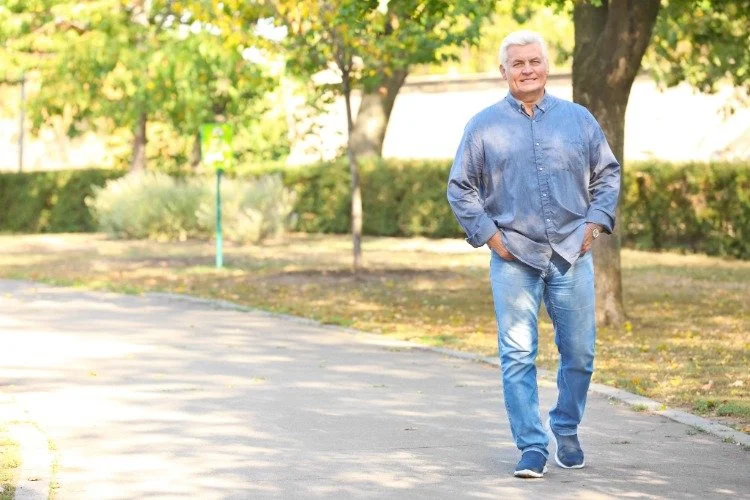
Imagine two people who can both stand up from the same chair.
The first person is strong enough that standing requires only a small percentage of their maximum strength. The second person can also stand, but the movement requires nearly everything they have.
On paper, both people completed the task. Functionally, they're in very different situations.
The first person has room to spare.
They could probably stand from a slightly lower chair. They could do it several times. They might still succeed when they're tired or carrying something.
The second person has very little margin for error.
Make the chair slightly lower, add fatigue, take away a convenient armrest, or ask them to stand after being sick for a few days and suddenly the task may become impossible.
That space between what life demands and what your body is capable of producing is what I think of clinically as your functional reserve.
Researchers use related terms such as physiological reserve and physical resilience to describe our ability to tolerate increased demands, respond to stressors, and recover when something challenges the system. The terminology isn't perfectly standardized, but the underlying idea is important. When reserve becomes smaller, relatively minor challenges can have much larger consequences. (1)
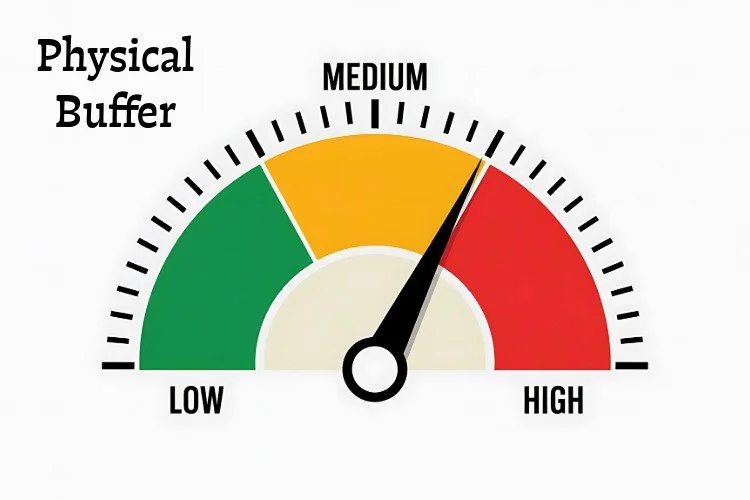
In simpler terms, I don't want everyday life to require 100% of what you have.
I want you to have something left in the tank.
Your Reserve Changes Throughout the Day
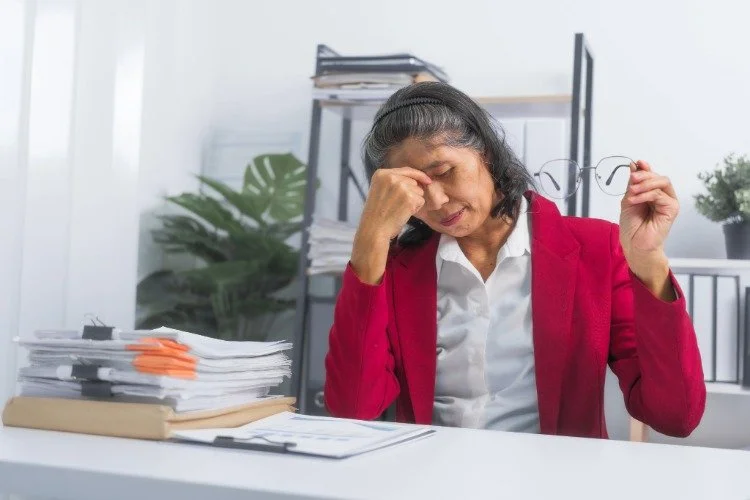
Your maximum capacity isn't a fixed state.
Think about how differently you move when you're fresh compared with when you're exhausted.
Maybe you normally walk safely through your home. After spending an afternoon shopping, climbing stairs, or working in the yard, your legs are tired and your feet don't clear the floor quite as well.
Maybe you balance perfectly well while concentrating on walking. Then your phone rings, someone starts talking to you, and you turn your head while continuing to move.
Maybe you usually stand from your favorite chair without difficulty. Then you get the flu, spend several days in bed, eat poorly, and suddenly that same chair feels much harder to escape.
The demands of the activity may not have changed, but your available capacity did.
This is one reason having a reserve matters so much.
If an activity normally requires only 30% or 40% of what you're capable of doing, losing some capacity temporarily may not matter very much.
If the activity already requires 90% or 95%, there isn't much room for anything to go wrong. So many aspects of daily life can alter your reserve including:
Fatigue
Illness
Distraction
Pain
Poor sleep
Unfamiliar environments
Falls often happen when several of these things combine at exactly the wrong moment.
Falling Can Be a Reserve Problem Too
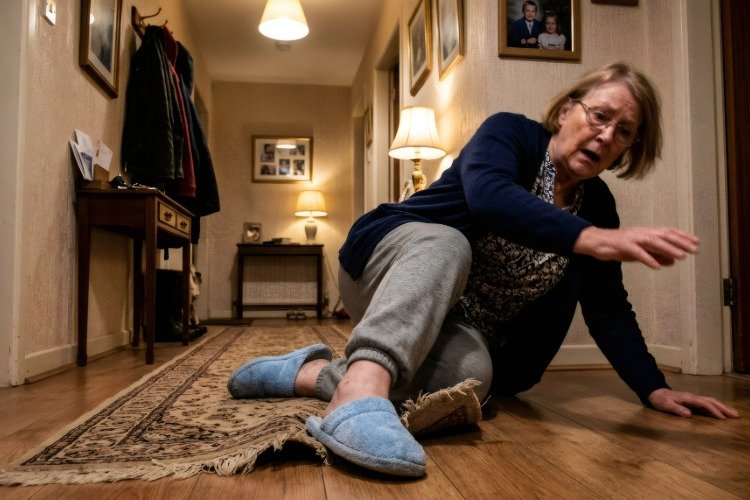
I've previously written about the idea that falling can be viewed partly as a movement-capacity problem.
You need enough strength to support and move your body. You need power to react quickly. You need balance to control your position. You need mobility to give yourself movement options. You need endurance to maintain performance over time. You need adaptability when the environment doesn't cooperate.
But I'd take that idea one step further.
Having just enough of those abilities isn't ideal.
You need reserve within them.
Suppose you have exactly enough leg strength to stand from your normal chair. What happens when you stumble and suddenly need to produce more force than usual?
Suppose you have exactly enough balance to walk safely down an empty hallway. What happens when someone steps in front of you?
Suppose you have enough endurance to make it around the grocery store. What happens when you still need to navigate the parking lot afterward?
The unexpected parts of life often require more capacity than the expected ones. A trip doesn't ask whether you're ready before it pulls your body forward. A wet floor doesn't care how tired you are. The dog doesn't check your balance before running between your feet.
Building reserve gives you more options when normal movement suddenly becomes abnormal.
Can We Actually Measure Physical Reserve?
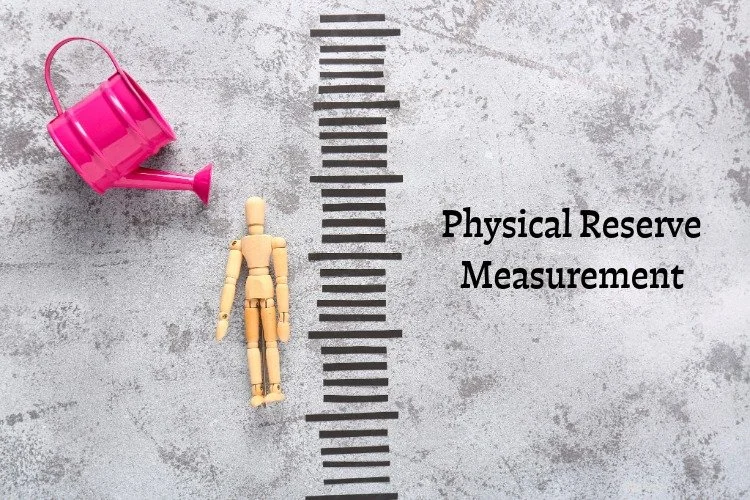
Not perfectly. There isn't one simple test that tells us exactly how much functional reserve someone has.
But there are several surprisingly simple physical tests that give us clues about someone's overall physical capacity.
Researchers have studied measures such as walking speed, grip strength, chair-rise performance, and standing balance for decades. Poorer performance on these tests has been associated with mortality, while individual measures can also provide information related to mobility, frailty, falls, and other aspects of physical function. (2, 3, 4, 5)
That's where these tests sometimes get turned into dramatic headlines:
“Can't stand on one leg for 10 seconds? Your risk of dying is higher.”
“Your walking speed predicts how long you'll live.”
“Grip strength is a biomarker of longevity.”
There is some legitimate research behind statements like these.
But the interpretation matters and these tests aren't crystal balls. They're windows into your broader physical capacity and health.
Walking Speed Is More Than Walking Speed

Walking seems simple because most of us have done it thousands of times. Physiologically, it isn't simple at all. Walking requires your nervous system to coordinate repeated movements between your legs while your body continually shifts its center of mass forward. It also requires:
Adequate strength
Adequate power
Adequate joint mobility
Adequate balance
Adequate sensation and feeling
Adequate cardiovascular and muscular endurance
Enough vision and vestibular function to understand where you are in space
Adequate cognition to navigate the environment and adapt your walking when something changes
That means walking speed can sneakily capture information from many different systems at once.
In a pooled analysis involving more than 34,000 community-dwelling adults aged 65 and older, faster usual walking speeds were associated with better survival. (6)
But that does not mean walking faster magically makes you live longer.
Someone may walk slowly because they're weak, deconditioned, painful, neurologically impaired, fearful, chronically ill, or dealing with several problems at the same time.
Walking speed may partly reflect all of those things.
That's what makes it useful. It's a proxy.
When someone's normal walking speed becomes dramatically slower, I don't just see a number. I start asking why, and investigate further.
Walking Speed - Research Reference Point
A commonly used research and clinical cutoff is 0.8 meters per second (about 2.6 feet per second). The EWGSOP2 consensus considers walking at or below this speed an indicator of low physical performance. That doesn't mean 0.81 m/s is “healthy” and 0.79 m/s is “unhealthy,” but slower speeds can be a reason to look more closely at someone's overall physical capacity. (7)
Grip Strength Doesn't Mean Your Hands Control Your Lifespan
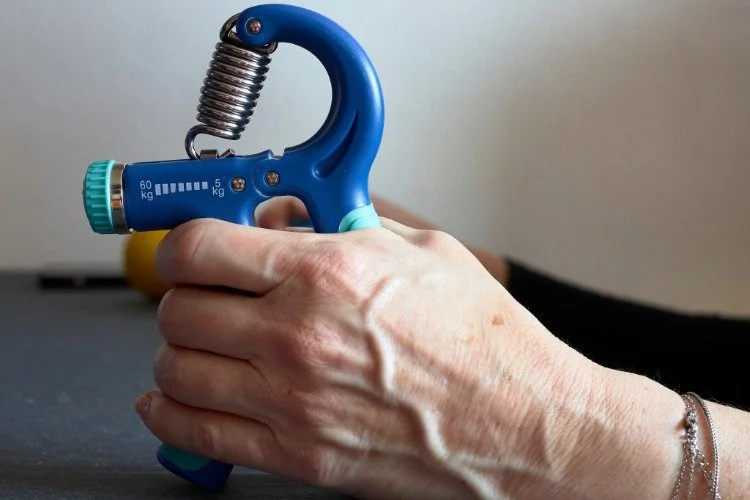
Grip strength is another fascinating example.
Studies repeatedly find relationships between grip strength and future health outcomes, including mortality, fractures, and cognitive decline. (2, 5)
That can create a strange interpretation.
Should everyone buy a hand gripper and start squeezing it because stronger hands make you live longer? Probably not.
Training your hands may improve your grip strength, which can certainly be useful. But your forearm muscles are unlikely to possess some secret ability to control every system in your body.
Grip strength works well partly because it's an easy, inexpensive measure of force production that tends to provide information about someone's broader physical condition.
A very weak grip may accompany generalized weakness, low muscle mass, disease burden, frailty, inactivity, or other factors affecting the whole person.
Again, the test is giving us a clue.
The measurement isn't the health outcome itself.
Grip Strength - Research Reference Point
EWGSOP2 uses grip strength below 27 kg (about 60 lb) for men and 16 kg (about 35 lb) for women as cutoffs for low muscle strength. These aren't ideal targets everyone should aim to barely exceed. They're screening thresholds that can suggest broader weakness deserves attention. (7)
Standing From a Chair Tells Us How Much Work Daily Life Requires
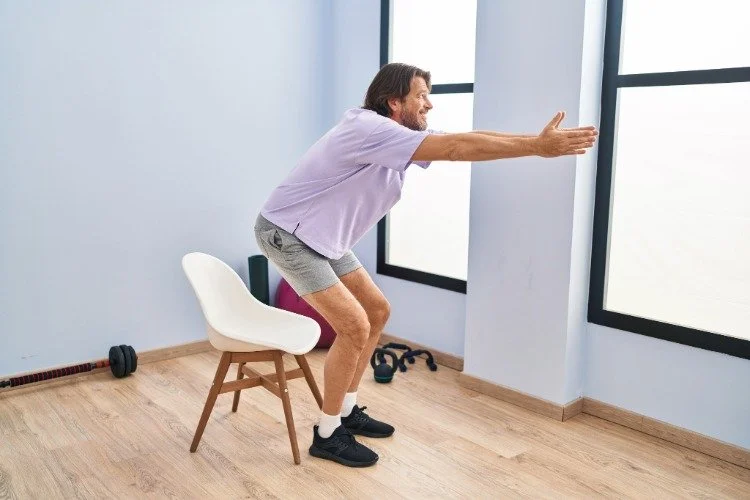
Sit-to-stand testing may be even more intuitive.
Getting out of a chair requires lower-body force production, coordination, balance, and enough mobility to shift your body forward and upward.
It is also something most people need to do many times every day.
Chair-stand tests are commonly used when assessing older adults, and poorer performance can help identify limitations in mobility and physical function. (3)
But I think there is another useful way to look at the movement. Ask how close standing up is to the person's maximum ability.
If someone can barely stand once without using their hands, that single repetition tells me much more than whether the task technically resulted in a success.
They have very little reserve.
The person who can comfortably perform repeated stands has a larger buffer for situations where the chair is lower, their legs are tired, or their positioning isn't perfect.
That buffer matters in real life.
Five-Times Sit-to-Stand - Research Reference Point
For a standardized five-repetition chair-stand test, EWGSOP2 uses more than 15 seconds as a cutoff indicating low muscle strength. Other research suggests performance varies substantially with age, testing method, chair height, and positioning, so the number is best treated as a reference point rather than a universal pass/fail standard. (7)
Balance Tests Are Useful, but Balance Is Bigger Than a Stopwatch
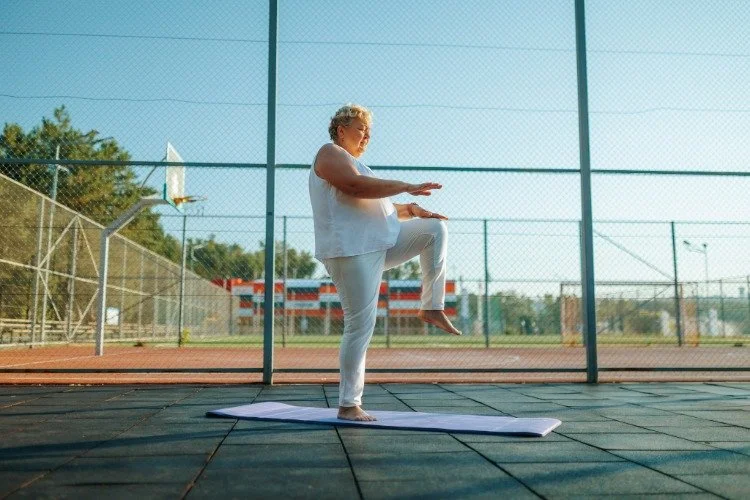
Single-leg balance gets plenty of attention too.
One widely reported study found that the inability to complete a 10-second one-leg stance was associated with higher mortality during follow-up in middle-aged and older adults. (8)
That finding is pretty interesting, but it doesn’t mean balancing for 10 seconds protects you from death.
Single-leg balance requires contributions from vision, vestibular function, sensation, strength, coordination, mobility, attention, and the nervous system's ability to control your body over a relatively small base of support.
Research examining balance tests and falls has also found that single-leg stance can help distinguish older adults with and without a history of falling, although no simple balance test perfectly predicts future falls. (4)
This is important to understand. If you can balance for nine seconds instead of ten, you haven't crossed some biological cliff that destines you to fall.
And if you can stand on one leg for a minute, that doesn't mean you're protected from every possible fall.
You're looking through another window.
Single-Leg Balance - Research Reference Point
In the study discussed above, being unable to maintain a one-leg stance for 10 seconds was associated with greater mortality risk among middle-aged and older adults. That does not make 10 seconds a universal fall-risk cutoff or mean that holding 11 seconds makes someone “safe.” (8)
These Tests Are Warning Lights, Not Your Destiny
This is probably the most important thing to understand about so-called functional biomarkers.
An association is not the same thing as causation:
If people with slower walking speeds experience more disability or die sooner on average, that doesn't mean slow walking itself caused those outcomes.
If weaker grip strength is associated with poor health, squeezing harder on a dynamometer doesn't automatically fix whatever caused the weakness.
If people with poor balance fall more often, practicing one balance test until you become excellent at that exact test doesn't guarantee that you'll never fall.
The tests matter because they provide information that acts as a proxy to the larger picture of your health and ability.
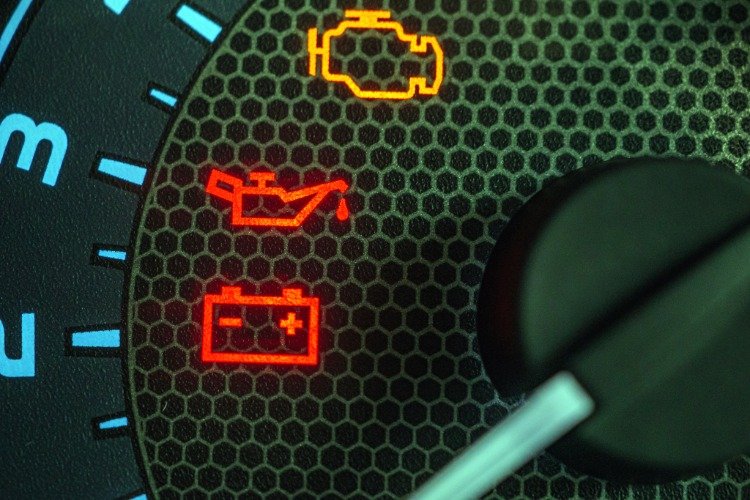
Imagine the warning lights on the dashboard of a car. When a warning light appears, putting tape over the light doesn't repair the engine. The light tells you to investigate.
Physical performance testing should work the same way.
If your walking has slowed substantially, why?
If standing from a chair has become much harder, why?
If your balance has declined, why?
If your strength is disappearing, why?
And perhaps most importantly, what can you still improve?
What Happens When the Buffer Disappears

Loss of reserve doesn't always happen dramatically. It can happen one small compromise at a time.
A person becomes slightly weaker. Walking becomes a little more tiring. Because walking is tiring, they walk less. Because they walk less, their endurance and strength decline further. Now leaving the house seems difficult, so they avoid it.
Stairs become harder. Standing from low chairs becomes frustrating. Balance becomes less challenged because they spend more time sitting. Eventually, everyday activities begin approaching their maximum capacity.
Then something happens.
They become sick. They fall. They spend several days in the hospital. They develop pain. They stop exercising because they're afraid of another fall.
Whatever the event may be, they lose another portion of an already-small reserve.
Suddenly an activity they could barely perform before is no longer possible.
This doesn't explain every loss of independence. Medical conditions, cognition, home environment, social support, finances, medications, vision, neurological disease, and many other factors can determine whether someone needs assistance or a different living environment.
I've certainly worked with people whose situations were far more complicated than physical deconditioning. But I've also met many people in assisted living whose physical capacity has become extremely low.
Sometimes I can't help wondering how different their lives might have looked if we had begun building that reserve years earlier.
Don't Train Only for the Minimum
This is why my rehabilitation goals often extend beyond simply completing a task, and if you’ve been a longtime Science of Falling reader you may have caught on to that philosophy.
If someone needs to stand once, I eventually want them capable of doing more than one stand when appropriate. I aim to have most people stand up ten times with ten pounds as a minimum goal.
If they need to walk 200 feet to reach the dining room, I don't necessarily want 200 feet to be their absolute maximum. I shoot for 1000 feet.
If they need to turn safely in their apartment, I want to challenge turning under controlled conditions until the real-world version feels easier. I set up a complicated obstacle course with turning while playing loud music and talking about their day.
If they lose their balance when distracted, I don't want every exercise performed in perfect silence forever. I annoy them with math and 80s movie trivia while balancing.
Training should create capacity above the minimum requirements of life.
That doesn't mean throwing unsafe challenges at someone or pushing through pain and exhaustion. It means gradually raising the ceiling:
Strength training can increase the amount of force available.
Power training can improve how quickly that force can be used.
Balance training can expand the situations you can control.
Endurance training can help you maintain good movement for longer.
Mobility can give you additional movement options.
Practice under varied conditions can improve adaptability.
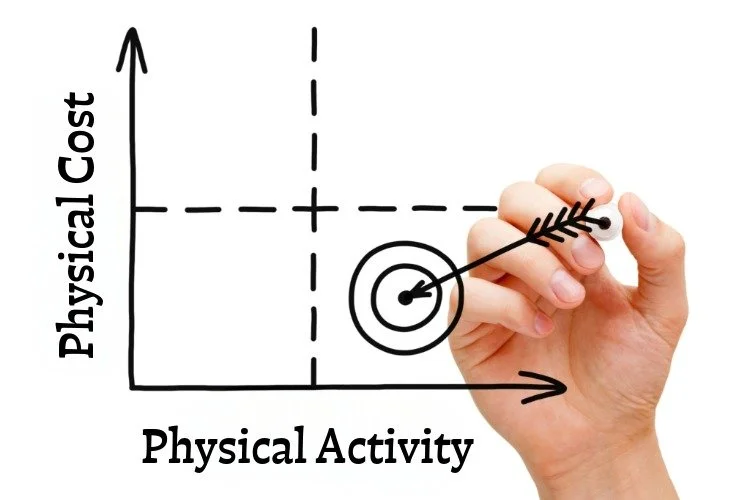
The goal isn't simply to make the test score better. The goal is to make life cheaper to perform relative to your capacity.
Make Daily Life Physically Cheap
I love thinking about movement this way.
For a strong person, getting out of a chair is cheap.
For someone with severe weakness, the same task is expensive.
Walking across a parking lot may be cheap for one person and consume nearly everything another person has.
Climbing stairs may be a small expense or an enormous one.
The more physical capacity you build, the smaller percentage of your available resources many ordinary tasks require.
That gives you room for error, fatigue, distractions.
It gives you room when the surface isn't perfect, the chair is lower than expected, or you suddenly need to take a quick recovery step.
And perhaps most importantly, it gives you something to draw from when life temporarily knocks you backward.
Research on physical resilience describes this ability to resist or recover from functional decline following a health stressor as an important part of aging well. (1)
We can't guarantee that exercise will prevent disease, hospitalization, disability, or the need for assistance.
But entering those challenges with more capacity seems very different from entering them with almost nothing left in reserve.
Final Thoughts: The Goal Isn't a Perfect Score
You don't need the grip strength of a powerlifter, or need to sprint through your neighborhood.
You don't need to balance on one leg like a gymnast, and you certainly don't need to obsess over whether one test says you're above or below some magical cutoff.
These tests are useful because they help us see changes that might otherwise be easy to ignore.
But your body is bigger than any single number.
What matters more is the overall direction of your physical capacity:
Can you produce enough force?
Can you control your balance?
Can you move through the ranges your life requires?
Can you react quickly when something unexpected happens?
Can you maintain those abilities when you're tired?
And do you have anything left over after you've met the normal demands of your day?
That's the question I care about most.
Because independence isn't merely being able to do something under perfect conditions. Real independence requires enough capacity to keep functioning when conditions aren't perfect.
So don't aim to have just enough strength, balance, endurance, and mobility to scrape through daily life. Build a buffer. Give yourself some room for error. You may never know exactly when you'll need that reserve.
That's precisely why it's worth having.
What’s Your Fall Risk Score?
Most people don’t notice their balance declining until something goes wrong.
This 10-minute self-assessment will show you:
• How stable your balance really is
• Where you're most at risk (strength, coordination, or falling ability)
• What to focus on first
No equipment. No guesswork. Just clear answers.
References
Whitson HE, Duan-Porter W, Schmader KE, Morey MC, Cohen HJ, Colón-Emeric CS. Physical resilience in older adults: systematic review and development of an emerging construct. J Gerontol A Biol Sci Med Sci. 2016;71(4):489-495. doi:10.1093/gerona/glv202
Cooper R, Kuh D, Hardy R; Mortality Review Group; FALCon and HALCyon Study Teams. Objectively measured physical capability levels and mortality: systematic review and meta-analysis. BMJ. 2010;341:c4467. doi:10.1136/bmj.c4467
Mehmet H, Yang AWH, Robinson SR. What is the optimal chair stand test protocol for older adults? A systematic review. Disabil Rehabil. 2020;42(20):2828-2835. doi:10.1080/09638288.2019.1575922
Kozinc Ž, Löfler S, Hofer C, Carraro U, Šarabon N. Diagnostic balance tests for assessing risk of falls and distinguishing older adult fallers and non-fallers: a systematic review with meta-analysis. Diagnostics. 2020;10(9):667. doi:10.3390/diagnostics10090667
Cooper R, Kuh D, Cooper C, et al. Objective measures of physical capability and subsequent health: a systematic review. Age Ageing. 2011;40(1):14-23. doi:10.1093/ageing/afq117
Studenski S, Perera S, Patel K, et al. Gait speed and survival in older adults. JAMA. 2011;305(1):50-58. doi:10.1001/jama.2010.1923
Cruz-Jentoft AJ, Bahat G, Bauer J, et al. Sarcopenia: revised European consensus on definition and diagnosis. Age Ageing. 2019;48(1):16-31. doi:10.1093/ageing/afy169
Araújo CGS, de Souza e Silva CG, Laukkanen JA, et al. Successful 10-second one-legged stance performance predicts survival in middle-aged and older individuals. Br J Sports Med. 2022;56(17):975-980. doi:10.1136/bjsports-2021-105360