
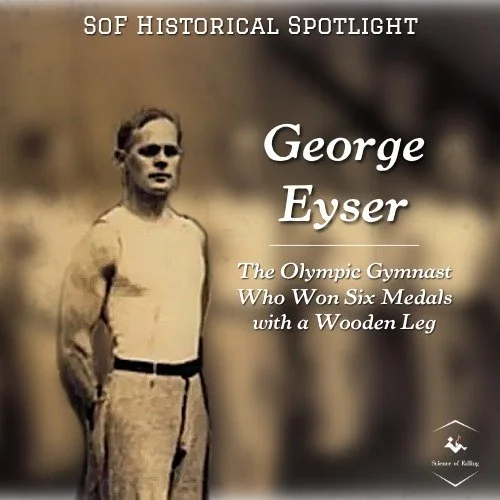
SoF Historical Spotlight: George Eyser - The Olympic Gymnast Who Won Six Medals with a Wooden Leg
Essential Points:
Balance and movement ability are task-specific. Eyser struggled much more with running and long jumping than with traditional gymnastics events. Your ability in one movement doesn't perfectly predict your ability in another.
The body is remarkably adaptable. Eyser couldn't move exactly like an athlete with two biological legs, so years of training helped him develop movement strategies that worked with the body and prosthesis he had.
Disability doesn't automatically define physical capability. More than half a century before the first Paralympic Games, Eyser competed directly against other Olympic gymnasts and won six medals in a single day.
On October 28, 1904, George Eyser had one of the most remarkable days in Olympic history.
He won six medals in gymnastics. Three were gold. Two were silver. One was bronze. And every one of them was earned.
That would be an extraordinary Olympic performance under any circumstances.
But Eyser competed with a wooden prosthetic leg.
Long before carbon-fiber running blades and decades before the Paralympic movement even existed, a 34-year-old bookkeeper from St. Louis was competing against able-bodied gymnasts at the Olympic Games.
And he was beating them.
From Germany to St. Louis

George Louis Eyser was born in Germany in 1870 and immigrated to the United States at age 14. His family initially settled in Denver, Colorado. Eyser later moved to St. Louis, became a U.S. citizen in 1894, and worked as a bookkeeper for a construction company. (1)
At some point when he was young, Eyser was involved in a serious accident when a train ran over his leg.
The injury resulted in an amputation, and Eyser eventually used a wooden prosthetic leg. Unfortunately, surviving accounts don't give us much detail about the accident or even the exact design of the prosthesis he eventually competed with. (1)
What we do know is what he did afterward.
Eyser became a gymnast.
He joined the Concordia Turnverein in St. Louis, one of the German-American athletic clubs that helped spread organized gymnastics throughout the United States during the late 1800s and early 1900s. These Turner societies combined physical training with broader social and cultural activities, and German athletic traditions had a major influence on the development of American gymnastics. (2, 3)
Eventually, Eyser became good enough to compete at the Olympics, which in itself was no small feat considering his disability.
The Very Strange 1904 Olympics
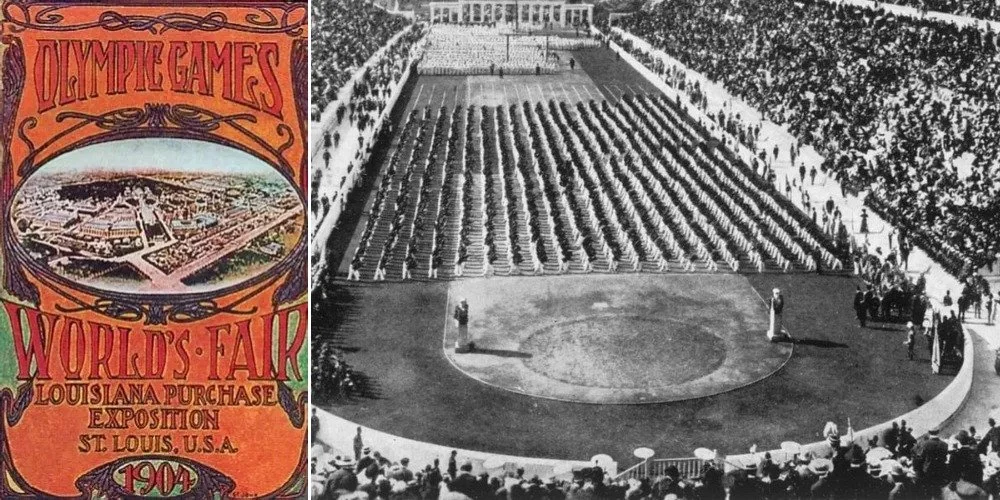
It's worth mentioning that the Olympics George Eyser competed in looked very different from the Games we watch today.
The 1904 Olympics were held in St. Louis, Missouri alongside the St. Louis World's Fair. Events played out across several months, international participation was limited, and even deciding which competitions should count as official Olympic events has kept sports historians a bit unsure ever since. (4)
Gymnastics was particularly strange.
Competitions were held during different parts of the year, and the July all-around competition mixed traditional gymnastics with track and field events.
Competitors performed on the horizontal bar, parallel bars, long horse, and side horse. Then they had to run 100 yards, long jump, and throw the shot put. (5)
That format wasn't exactly ideal for an athlete competing with a wooden leg as you can imagine.
And Eyser's results show it.
He performed much better in the gymnastics portions of the competition but struggled in the running and jumping events. Olympedia records him finishing last in both the 100-yard dash and long jump portions of the field-sports competition. His 100-yard time was 15.4 seconds and his long jump measured 13 feet. (1)
Those numbers aren't particularly impressive for an Olympic athlete.
Until you remember that he was running and jumping with a wooden prosthetic leg. Then they become pretty remarkable.
But Eyser's best opportunity was still coming.
Six Olympic Medals in One Day
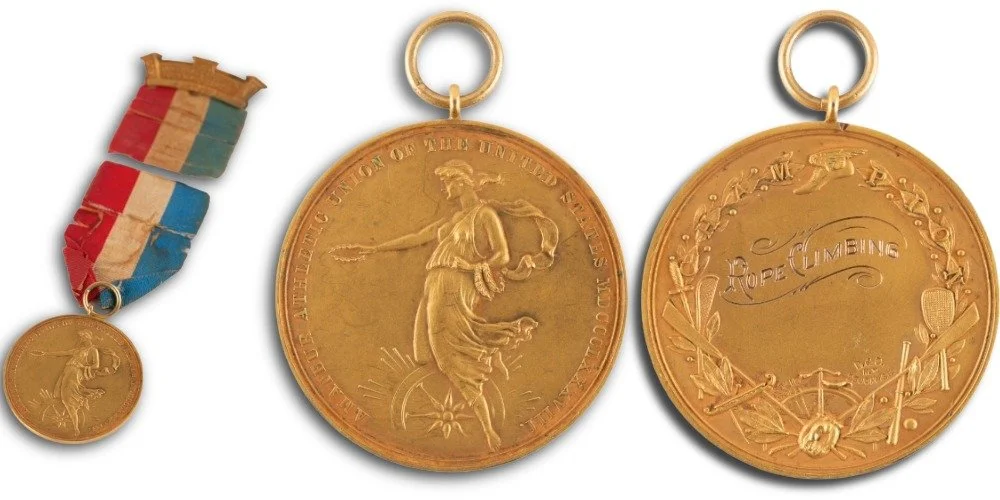
George Eyser’s 1904 Olympic rope climbing medal from auction photos
On October 28, the Olympic gymnastics program shifted toward individual traditional gymnastic events.
This time, Eyser thrived.
He won:
Gold in the parallel bars
Gold in the vault
Gold in rope climbing
Silver in the four-event all-around
Silver in the side horse vault
Bronze on the horizontal bar
Six Olympic medals in one day. (1,6)
And some of the individual performances make the story even better.
On the parallel bars, Eyser scored 44 out of a possible 45 points, beating Anton Heida by a single point. (7)
On the horizontal bar, he finished with 39 points. The winning score was 40. (8)
Then there was the rope climb. Gymnasts had to climb a 25-foot rope as quickly as possible. Eyser reached the top in 7 seconds flat. He won Olympic gold by two-tenths of a second. (9)
But from a Science of Falling perspective, there's one event that really stands out.
He Won Gold in the Vault
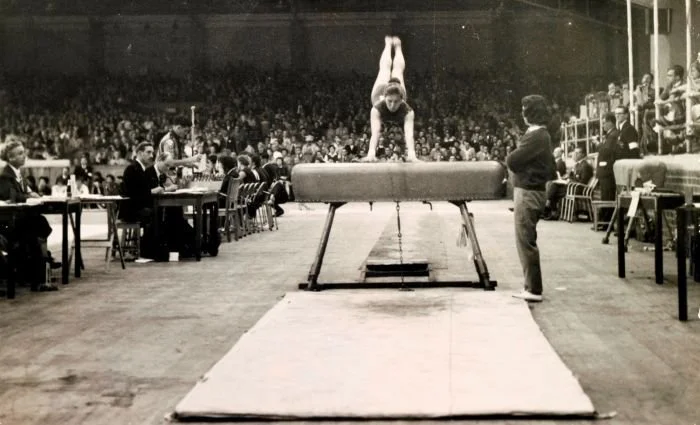
I couldn't locate a surviving image of Eyser competing in the vault. This image shows an example of the vault from the 1956 Olympic Games in Melbourne
Yes, the vault.
Eyser tied Anton Heida for Olympic gold with a score of 36 points. (10)
Think about what vault requires. You're not simply hanging from an apparatus using tremendous upper-body strength.
You have to run towards the vault, generate momentum, interact with the vault, move your body through space, control rotation and eventually return to the ground on your legs…or leg in this instance.
And Eyser was doing this with a prosthetic leg made more than 120 years ago.
We should be careful here.
We don't have detailed biomechanical records showing exactly how Eyser moved, how his prosthesis was constructed, or what strategies he used during his vault. So it would be easy to invent a modern explanation for something we simply don't know.
But we don't need to because the result tells us enough.
Eyser found a movement strategy that worked for him. And he developed it well enough to win Olympic gold.
Balance Isn't Just One Ability
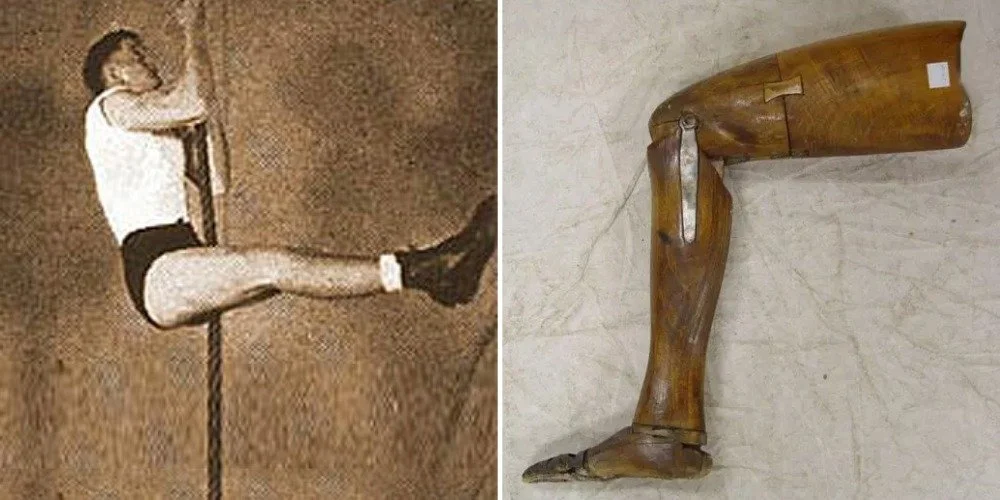
George Eyser climbing rope, and a look at his left prosthetic leg
This is the part of Eyser's story I find especially interesting. People often talk about someone having “good balance” as though balance were a single physical characteristic.
It unfortunately isn't.
Your ability to control your body depends enormously on what you're trying to do. (11)
Standing quietly is different from walking. Walking is different from running. Running is different from landing. Standing on one leg is different from swinging around parallel bars. And George Eyser gives us a pretty extreme historical example.
The same athlete who finished at the bottom of the 100-yard dash and long jump standings could become an Olympic champion on the parallel bars, rope climb, and vault.
His underlying physical condition hadn't suddenly changed.
The task had.
Some events exposed the limitations created by his amputation and prosthesis much more strongly.
Other events allowed his enormous upper-body strength, coordination, timing, technique, and years of practice to become the dominant factors.
That idea matters well beyond Olympic gymnastics because it applies to us all.
Your Body Learns Solutions
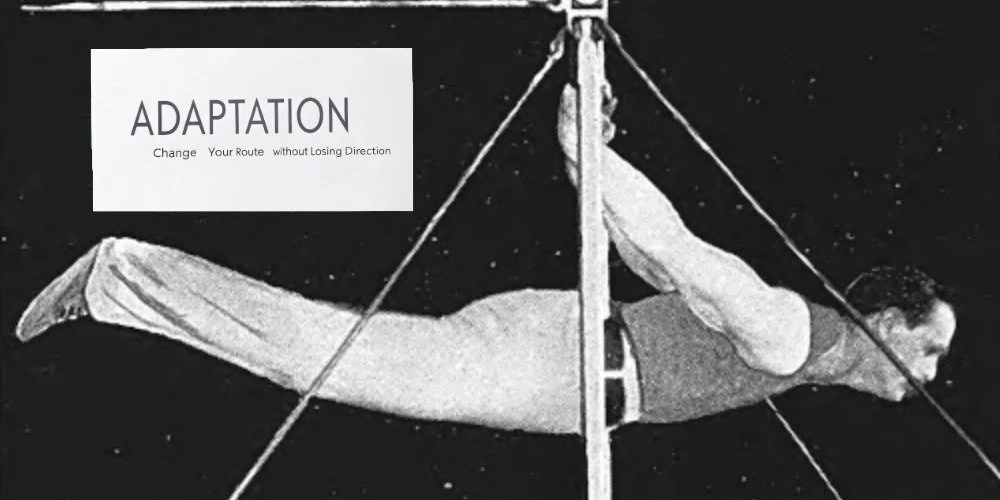
One of the most fascinating things about human movement is that there isn't always one correct way to accomplish a task.
Your nervous system continuously works with the body available to it. So, if something changes, your movement strategy can and probably will change too. (12)
After an injury, you might shift your weight differently. If one joint loses mobility, another part of your body can contribute more. If sensation changes, you might begin relying more heavily on vision or other sensory information if available. If strength changes, you can adopt an entirely different strategy for getting out of a chair or climbing stairs.
Some adaptations are useful, while others can eventually cause problems.
But adaptation itself is one of the fundamental abilities of the human movement system.
Eyser had lost an entire limb. He didn't have the same movement options available to him as the competitors standing beside him.
So he developed different ones.
We don't know exactly how he did it. But six Olympic medals tell us that he became incredibly effective at them.
More Than 50 Years Before the Paralympics
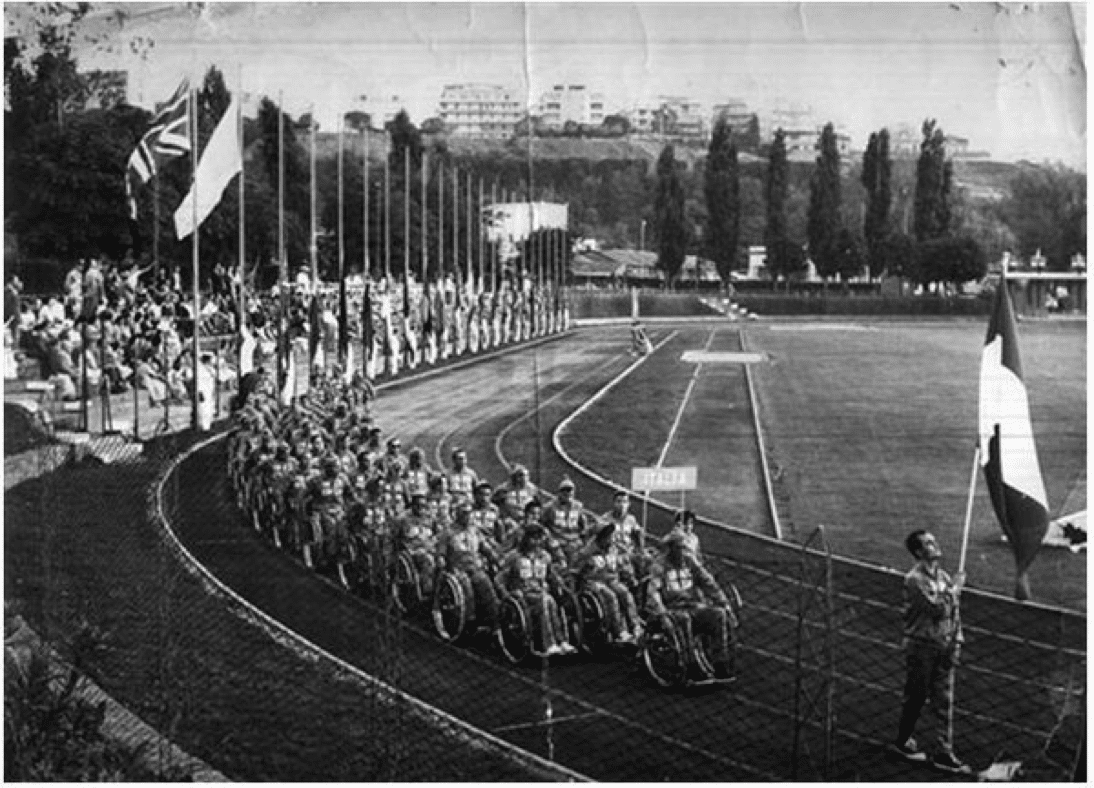
Eyser's accomplishment becomes even more special when you put it on a historical timeline.
The first Stoke Mandeville competition for athletes with spinal cord injuries wouldn't take place until 1948. The first official Paralympic Games wouldn't be held until 1960 in Rome. (13)
Eyser was competing in 1904.
Guinness World Records recognizes him as the first athlete with a disability to compete at an Olympic Games and the first to win an Olympic medal. (14)
And he wasn't simply allowed to participate. He became one of the most successful athletes of the entire St. Louis Games.
Across all sports, Eyser's six medals put him among the most decorated competitors of the 1904 Olympics. (4)
The Athlete We Almost Forgot
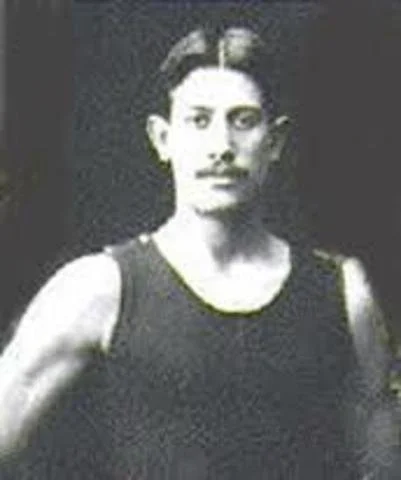
For such a remarkable athlete, we know surprisingly little about George Eyser. I didn’t even know he existed until I started doing research on amazing people adjacent to the Science of Falling world.
There aren't hours of interviews, or video footage showing us exactly how he performed his routines. There aren't detailed descriptions of his rehabilitation after losing his leg. Even the precise circumstances surrounding his amputation remain poorly documented.
What survives is largely a collection of competition results, photographs, club records, and brief pieces of biography.
We do know that Eyser continued competing after the Olympics. He remained involved with the Concordia Turnverein and participated in successful gymnastics competitions in Germany in 1908 and Cincinnati in 1909. He died in 1919 at age 48. (1)
But perhaps those old competition results tell us something important on their own.
A wooden prosthetic leg certainly changed what George Eyser could do, but it most definitely didn't determine everything he could do.
Final Thoughts: What George Eyser Can Teach Us
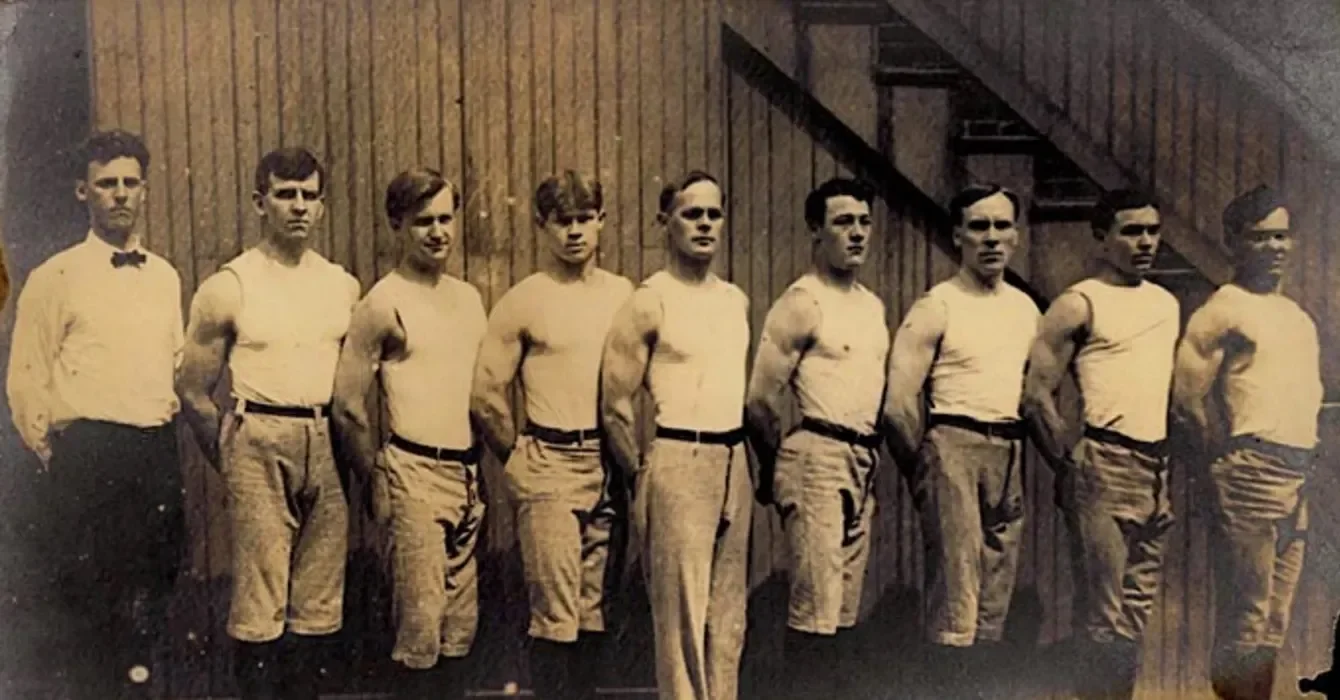
It's easy to turn a story like this into a simple message about “overcoming disability.” And while that’s important, I think there's something more interesting here.
Eyser didn't somehow make his amputation disappear. His Olympic results actually show its detrimental effects pretty well.
Running and long jumping were difficult for him. Other activities weren't. Instead, he trained within the physical reality he had and became extraordinarily capable at certain tasks.
That's a useful way to think about rehabilitation and movement in general.
Sometimes the goal isn't restoring every physical characteristic you once had. That might be impossible in some cases.
But rather, sometimes it's discovering what your body can do now, what strategies you can improve, and what problems you can learn to solve differently.
George Eyser solved those problems well enough to stand beside the best gymnasts in the world.
Then, on one October day in St. Louis, he walked away with six Olympic medals. With a wooden leg.
Not half-bad for a bookkeeper if you ask me.
What’s Your Fall Risk Score?

Most people don’t notice their balance declining until something goes wrong.
This 10-minute self-assessment will show you:
• How stable your balance really is
• Where you're most at risk (strength, coordination, or falling ability)
• What to focus on first
No equipment. No guesswork. Just clear answers.
References
Olympedia. George Eyser. Accessed September 6, 2026.
Library of Congress. America at Leisure. America at Work, America at Leisure: Motion Pictures From 1894 to 1915. Accessed September 6, 2026.
National Park Service. Turner Hall National Historic Landmark documentation. Accessed September 6, 2026.
Olympedia. 1904 Summer Olympics overview. Accessed September 6, 2026.
Olympedia. All-Around, Individual (Apparatus Work and Field Sports), Men. 1904 Summer Olympics. Accessed September 6, 2026.
Olympedia. Medal winners, St. Louis 1904. Accessed September 6, 2026.
Olympedia. Parallel Bars, Men. 1904 Summer Olympics. Accessed September 6, 2026.
Olympedia. Horizontal Bar, Men. 1904 Summer Olympics. Accessed September 6, 2026.
Olympedia. Rope Climbing, Men. 1904 Summer Olympics. Accessed September 6, 2026.
Olympedia. Vault, Men. 1904 Summer Olympics. Accessed September 6, 2026.
Horak FB. Postural orientation and equilibrium: what do we need to know about neural control of balance to prevent falls? Age Ageing. 2006;35(suppl 2):ii7-ii11. doi:10.1093/ageing/afl077.
van der Kruk E, Silverman AK, Koizia L, Reilly P, Fertleman M, Bull AMJ. Age-related compensation: neuromusculoskeletal capacity, reserve & movement objectives. J Biomech. 2021;122:110385. doi:10.1016/j.jbiomech.2021.110385.
International Paralympic Committee. History of the Paralympic Movement. Accessed September 6, 2026.
Guinness World Records. First para-athlete to compete at an Olympic Games. Accessed September 6, 2026.