
Postural Control Explained: The Hidden System That Keeps You Upright
This Article is part of the SoF Quick Read Series: Trimmed-down, real-life strategy guides for handling everyday balance moments. Lighter reads. Still grounded in science. Always worth your time, and linked to deeper articles for when the itch to learn arises.
Essential Points:
Postural control is your body's balance system. It is the brain and nervous system's ability to keep your center of mass positioned over your base of support, allowing you to stand, walk, move, and recover from instability without falling.
Balance is an active process, not a static one. Even when standing still, your body is constantly making tiny adjustments using information from your visual, vestibular, and somatosensory systems to keep you upright.
Good postural control helps prevent falls. Your brain continuously gathers sensory information, makes corrections, and uses recovery strategies like ankle, hip, and stepping responses to regain stability when balance is challenged.
Prefer to listen? Here’s a quick audio breakdown with a few extra insights:
Stand up for a moment.
It probably feels effortless, right? Yet, you aren’t consciously controlling dozens of muscles, calculating joint angles, or making hundreds of balance corrections every minute. But that is exactly what your body is doing every time you stand, walk, reach for something, or move through the world.
Honestly, it’s kind of a miracle, and abilities like this are what got me so interested in balance and falling in the first place.
The ability to maintain, achieve, and restore balance is known as postural control. (1) It’s a vital part of everyday life. When it works well, you barely notice it. When it doesn’t, even simple activities can become difficult or dangerous.
At its core, postural control is your brain and nervous system's ability to keep your body's center of mass (CoM) positioned over its base of support (BoS). In simpler terms, it’s what keeps your body (CoM) balanced over your feet (BoS).
Whether you’re standing still, walking across uneven ground, landing from a jump, or recovering from a stumble, postural control is what keeps you from ending up on the ground.
When you lose it, that’s when a fall occurs.
Balance Is Not Static

Many people think balance means standing perfectly still.
And yeah, from the outside, it certainly looks that way. But what’s happening behind the scenes is much more involved.
Your body is constantly moving, even when you think you are standing motionless. (2) Physical therapists often call this quiet standing. During quiet standing, tiny movements occur at the ankles, knees, hips, and trunk. Your brain continuously detects these movements and makes small adjustments to keep you upright.
This means postural control isn’t about eliminating movement, at least not really.
It’s about controlling movement that never stops.
A person with good postural control is not actually motionless. Their body is just so well-tuned that the adjustments are nearly invisible. The result is the appearance of effortless balance.
The Three Systems of Balance
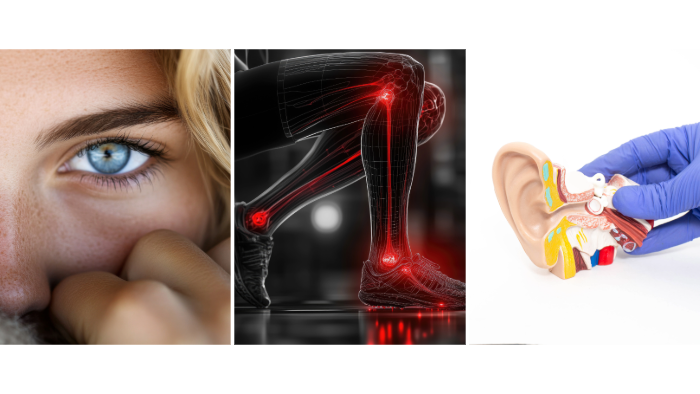
To maintain balance, your brain relies on information from three different systems. (3) I like to call them the three bodily balance systems:
The Visual System
Your eyes provide information about the world around you and your position within it.
Visual information helps you determine whether you are moving, how fast you are moving, and where obstacles might be located.
This is one reason balancing becomes more challenging in dark environments or crowded spaces. When visual information becomes less reliable, your brain has to rely more heavily on other systems.
The Vestibular System
Located in your inner ear, the vestibular system acts like an internal motion detector.
It helps your brain understand head position, acceleration, rotation, and your orientation relative to gravity. In simple terms, it tells your brain whether you are moving up and down, side to side, or turning your head.
When this system is damaged or disrupted, people may experience dizziness, vertigo, or a feeling that the world is spinning around them.
The Somatosensory System
This system is all about what you feel.
Specialized sensors in your muscles, tendons, joints, and skin constantly send information to your brain about body position and pressure.
One important part of this system is proprioception. Proprioception is your ability to know where your body parts are without looking at them. It’s how you know your elbow is bent or your foot is behind you even with your eyes closed.
Without proprioception, movement would become incredibly difficult such as in the rare case of Ian Waterman.
How Your Brain Combines These Systems
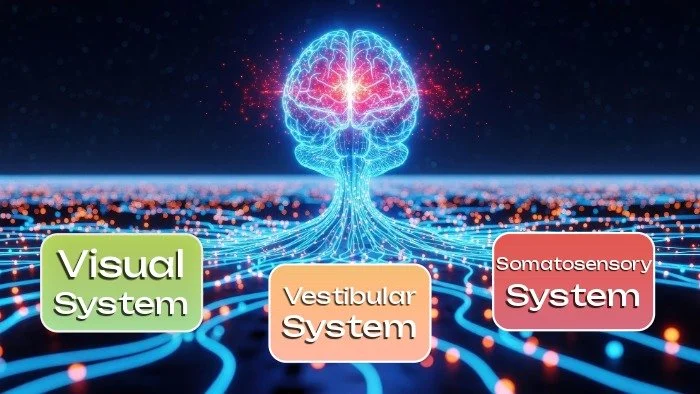
Your brain doesn’t treat all three systems equally all the time.
Instead, it constantly decides which information is the most reliable in a process known as sensory reweighting. (4)
For example, if you’re walking in the dark, visual information becomes less useful. Your brain automatically shifts more reliance toward your vestibular and somatosensory systems.
The opposite can happen if you’re standing on a soft or unstable surface. In that situation, information coming from your feet and ankles becomes less reliable, so your brain may depend more heavily on vision and vestibular input.
This balance flexibility is one reason healthy people can thrive in such a wide variety of environments.
When one of these systems becomes impaired due to injury, disease, or aging, the brain has fewer reliable sources of information to work with. As a result, maintaining balance becomes more difficult and falls become more likely.
Postural Control Is a Continuous Feedback Loop
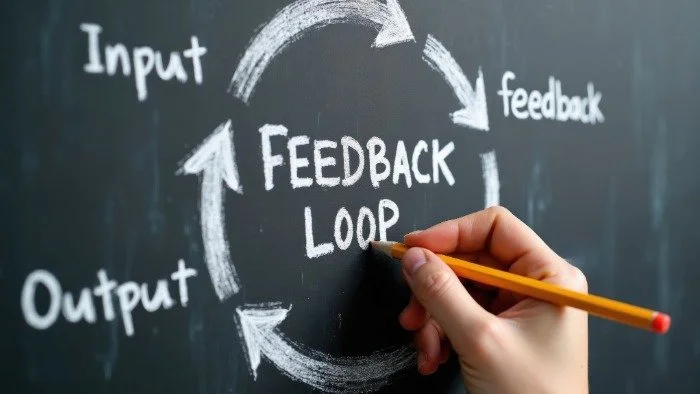
Postural control operates as a never-ending cycle.
Even while you are reading this article, your brain is constantly checking whether you are balanced and making adjustments as needed. That remains true whether you are standing, sitting, or lying down. Your brain is constantly making its best guess about what your body is doing, then checking to see if it got it right.
The process looks something like this:
The balance systems detect movement.
Your brain interprets the information.
Your muscles generate a corrective response.
New sensory information confirms whether the correction worked.
Then the cycle repeats.
This process occurs all day long, often hundreds of times every minute. When you lean forward to grab your coffee, this process constantly cycles through the loop to ensure you remain balanced the entire time.
Most of these adjustments happen completely outside of your awareness, a lot like breathing.
What Happens When Balance Is Thrown Off?

When something pushes your body away from stability and towards chaos, postural control becomes much easier to see.
Imagine stepping onto an unexpected patch of ice.
Your body immediately detects the change. Muscles activate in a coordinated sequence. Your arms may move, your trunk may bend, and you may rapidly step to reposition your feet underneath your body.
These responses are known as balance recovery strategies.(5)
Depending on the situation, your body may use different strategies:
An ankle strategy for small disturbances.
A hip strategy for larger disturbances.
A stepping strategy when balance cannot be maintained in place.
The goal is always the same. Prevent a fall.
Why Postural Control Matters

Postural control influences nearly every movement you make. In many ways, you cannot function independently without it.
Athletes depend on it to react quickly while opponents move around them. Older adults rely on it to reduce fall risk and safely navigate their homes. Skydivers use it during parachute landings. Children develop it as they learn to walk, run, and explore the world.
When postural control becomes impaired, the risk of falls increases dramatically.
Take peripheral neuropathy as an example. This condition damages nerves that carry sensory information from the feet and legs. As sensation decreases, the brain receives less reliable information about body position, making balance more difficult and falls more common.
This is also why balance training is about much more than standing on one leg or using a wobble board.
Effective balance training challenges your brain's ability to perceive, process, and respond to changes in stability. The best programs are specifically designed around the individual's impairments and needs.
Final Thoughts: Postural Control Keeps Allows You to Live!

One of the most overlooked truths about postural control is that it’s fundamentally a system designed to manage and prevent falling. In fact, walking itself can be described as a controlled series of falls.
With every step, your body intentionally moves its CoM (trunk) beyond its current BoS (the foot). The next step catches you before you hit the ground. It’s perfect postural control in motion.
The difference between successful movement and an actual fall is your ability to control and recover from that loss of balance.
In other words, postural control is not the absence of falling. It’s your body's remarkable ability to experience thousands of tiny losses of balance every day, adjust, recover, and keep you upright before gravity wins.
And well, that system is what allows you to continue living an amazing life on your feet with the people you love. Enjoy it!
What’s Your Fall Risk Score?

Most people don’t notice their balance declining until something goes wrong.
This 10-minute self-assessment will show you:
• How stable your balance really is
• Where you're most at risk (strength, coordination, or falling ability)
• What to focus on first
No equipment. No guesswork. Just clear answers.
References
Ivanenko Y, Gurfinkel VS. Human postural control. Frontiers in Neuroscience. 2018;12:171. doi:10.3389/fnins.2018.00171
Yamamoto T, Smith CE, Suzuki Y, et al. Universal and individual characteristics of postural sway during quiet standing in healthy young adults. Physiological Reports. 2015;3(3):e12329. doi:10.14814/phy2.12329
Hasegawa N, Mani H. Underlying control of balance. In: Elsevier eBooks. ; 2025:39-58. doi:10.1016/b978-0-443-21484-4.00002-8
Assländer L, Peterka RJ. Sensory reweighting dynamics in human postural control. Journal of Neurophysiology. 2014;111(9):1852-1864. doi:10.1152/jn.00669.2013
Shumway‐Cook A, Woollacott MH. Motor Control: Translating Research into Clinical Practice.; 2006. https://touroscholar.touro.edu/nymc_fac_pubs/4647