
Stepping Strategies: How to Train Automatic Protective Steps Using the Science of Falling Method
Essential Points:
Most falls are stopped by a fast, automatic step, not balance alone. Protective stepping strategies are your last line of defense when balance is lost, and they are highly trainable at any age.
Effective stepping reactions must be trained progressively and in all directions. The Science of Falling 7-step system builds reliable reactions by first teaching awareness of balance limits, then layering in intentional and unexpected loss of balance, including crucial cross-stepping skills.
Well-trained stepping doesn’t just prevent falls, it reduces injury when falls happen. Early, decisive steps slow trunk momentum, improve body control, and dramatically lower the forces that lead to serious injuries like hip fractures
Prefer to listen? Here’s a quick breakdown with a few extra insights:
When people imagine “fall prevention,” they usually picture only balance exercises in their mind. But the truth is this:
Most falls aren’t stopped solely by balance; they’re stopped by a instinctual step after a loss of balance has occurred.
This protective stepping strategy is the last line of defense when balance is lost before going to the ground is inevitable. And just like balance, stepping is a trainable skill. Stepping strategies serve as a powerful bridge between balance training and safe falling skills. They teach your body how to react instantly, automatically, and in the right direction.
Over my career in physical therapy, I have often taught these stepping strategies and developed a 7-step system to teach them effectively to my patients. This article explains why stepping strategies matter and walks you through that very same seven-step progression I use clinically to retrain the fast, protective reactions that keep people on their feet.
What Exactly Is a Stepping Strategy?

A stepping strategy is your body’s automatic reaction to step out and widen your base of support (BoS) when your center of mass (CoM) moves too far. That is a mouthful so let’s put it in simple terms:
If you’re about to fall, your body throws a foot out to catch you.
You have three tools when balance is challenged:
Ankle strategy – small corrections at the ankle
Hip strategy – larger trunk shifts
Stepping strategy – the "catch yourself" step
These three tools are just a few of the motor strategies we use to keep balance against outside forces. But, most real-world losses of balance bypass ankle and hip strategies entirely because the perturbation (an outside force that makes you lose your balance) is too large. Slip on ice? Trip on a curb? Someone bumps you in a crowd? Your brain needs a fast, accurate, directional step, or you’re going down.
Unfortunately, it’s not uncommon for adults (especially 45–60+) to develop faulty stepping habits:
Stepping too late
Stepping too short
Stepping in the wrong direction
Freezing and doing nothing
Crossing the feet during the wrong type of threat
Not knowing how to cross-step when it’s needed
The SoF stepping strategy method fixes this through a graded, progressive system, that teaches you from the ground up.
The SoF 7-Step Stepping Strategy Progression
What follows is the same progression I use in clinical settings to rebuild reliable, automatic stepping reactions. These skills are typically trained alongside balance work, strength development, and safe falling techniques, since all three influence how effectively someone can recover from a loss of balance. Although this framework was developed through hands-on clinical practice, much of it can be learned independently when approached thoughtfully and with a strong emphasis on safety. The key is understanding what each phase is designed to develop and why it appears in this order.
In this article, I’m intentionally presenting a high-level overview of the stepping strategy system rather than detailed training prescriptions. The goal is to help you understand the logic, progression, and purpose behind each phase, not to replace individualized instruction or provide exercise-by-exercise protocols.
If stepping strategies are something you want to train more deeply, or if you’re a clinician or coach looking to teach them effectively, the Master Your Fall program contains the complete breakdown, including safety considerations, progressions, and practical implementation.
If you prefer to learn visually, this explainer video walks through the stepping strategy framework from a clinician’s perspective.
1. Basic Stepping Patterns - Straight Plane
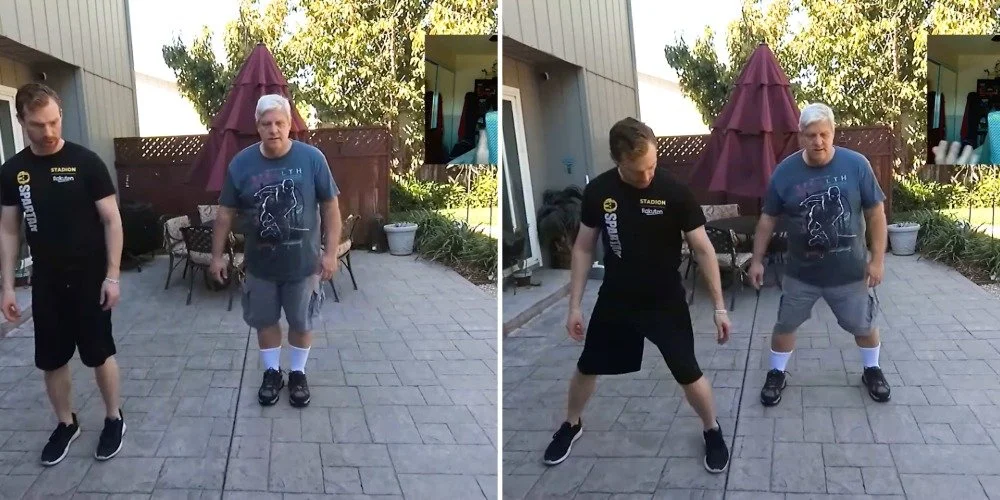
Before reactive stepping can protect you during a fall, the brain needs a clear library of basic foot placements. Basic stepping patterns form the foundation for every protective response that comes later. If the body cannot confidently place a foot forward, backward, or sideways under calm conditions, it will not suddenly do so correctly under threat.
At this stage of stepping strategy training, the focus is not speed or surprise. Instead, the goal is to build clarity, commitment, and awareness in each step. Think of this phase as teaching the nervous system what a successful step actually feels like before asking it to react automatically.
Primary goal
Develop clean, confident foot placement in all primary directions before adding speed, imbalance, or external perturbation
Key concepts emphasized
Each step should fully accept body weight rather than functioning as a light tap
The center of mass must move over the stepping foot to truly widen the base of support
Visual awareness plays a role, knowing where you are stepping reduces secondary trips
Larger, more deliberate steps reduce the risk of catching the trailing foot during recovery
Common breakdowns seen in practice
Very small steps that fail to stop forward or sideways momentum
Hesitation that keeps body weight on the trailing leg
Treating the drill as a balance task instead of a stepping task
Ways to scale the challenge
External support (countertop or chair) allows attention to stay on stepping mechanics rather than balance
Slower, intentional stepping builds confidence before adding speed
Gradual exposure to faster stepping prepares the nervous system for real-world demands
How this evolves in later phases
Step speed increases to match real fall timing
Upper-body involvement is layered into mimic grabbing for support (If an area of focus)
Mild balance disturbances are introduced to bridge toward reactive stepping
At this stage, the goal isn’t to simulate a fall, it’s to prepare the nervous system to respond correctly when one eventually occurs. These stepping patterns become the building blocks that later allow safe, automatic reactions under pressure.
2. Base of Support (BoS) Leans - Straight Plane
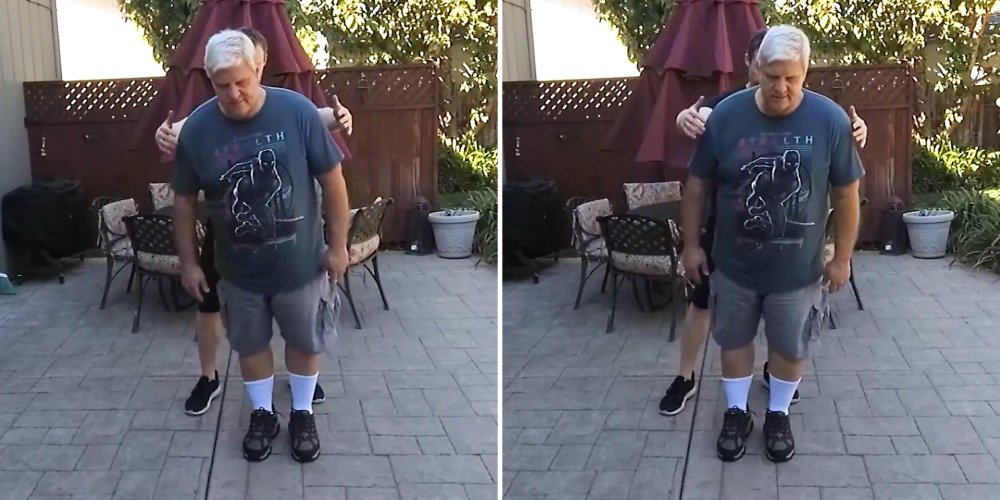
Once basic stepping patterns are established, the next skill is learning where balance actually ends. Many people fall not because they lack strength, but because they misjudge how far they can safely move their body without stepping. Base of support (BoS) leans train this awareness while introducing the sensation of impending loss of balance, an essential precursor to reactive stepping and fall training.
In stepping strategy training, this phase teaches controlled exposure to imbalance. The body approaches the edge of stability without crossing it, allowing the nervous system to experience the warning signals that normally precede a fall, without yet requiring a step.
Primary goal
Improve awareness of balance limits while developing controlled movement toward (but not beyond) the edge of the base of support
Key concepts emphasized
Balance loss is preceded by a predictable sensory “warning” that can be trained
The body should move as a single unit, primarily around the ankles rather than the hips
Feeling the urge to step, without actually stepping, is an important learning signal
Partial loss of foot contact at extreme leans is normal and expected
Common breakdowns seen in practice
Using a hip strategy to avoid reaching true balance limits
Staying too conservative and never approaching the edge of stability
Leaning so far that a stepping reaction is forced prematurely
Ways to scale the challenge
Smaller leans allow gradual exposure while confidence develops
External support (countertop or rail) helps reduce fear and over-guarding
Slower, more deliberate leans improve control and sensory awareness
How this evolves in later phases
Lean speed increases to resemble real-world balance threats
Lean magnitude expands as confidence and control improve
The controlled “almost fall” becomes the entry point for intentional stepping and fall initiation
This phase is not about preventing a step it’s about teaching the body where a step would become necessary. By learning to approach the edge safely, later stepping and falling reactions become faster, cleaner, and far less panicked.
3. 360° Base of Support Leans
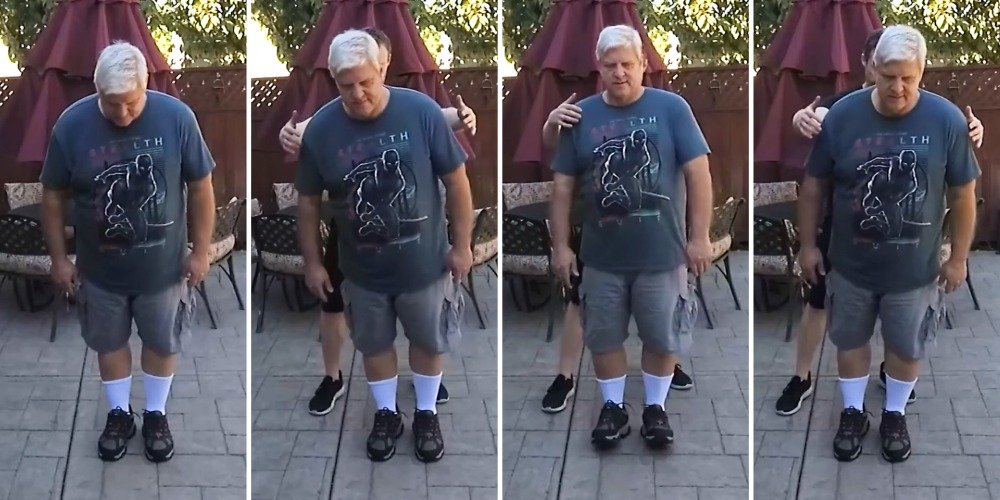
Real-life balance loss rarely happens in a straight line. People are bumped, turn their heads, pivot, or lose balance diagonally, yet most training only prepares them for forward or backward instability. This phase expands balance awareness to all directions, helping the nervous system learn how instability feels regardless of where it originates.
By rotating lean direction through a full circle, the body begins to map the relationship between body position, gravity, and available base of support (BoS). This spatial awareness is a critical bridge between controlled balance work and reactive stepping.
Primary goal
Develop full-direction awareness of balance limits while maintaining controlled recovery without stepping
Key concepts emphasized
Balance boundaries exist in every direction, not just forward and backward
The nervous system must identify where instability is occurring before selecting a response
Anticipation reduces learning, reaction builds adaptability
Common breakdowns seen in practice
Favoring familiar directions and avoiding weaker ones
Stepping preemptively instead of exploring balance limits
Using excessive trunk or hip movement to avoid true edge exposure
Ways to scale the challenge
Reduce the range of lean directions
Break the circle into quadrants
Use external support to allow exploration without fear
How this evolves in later phases
Lean speed increases
Visual and head movements are layered in
Controlled edge exposure transitions into intentional fall initiation
As balance awareness becomes truly multi-directional, the body begins to recognize instability as a spatial problem rather than a single-plane event. Once this mapping is in place, it becomes possible to intentionally cross those limits in a controlled way, transforming balance work into purposeful fall recovery and step training.
4. Self-Initiated Falls - Straight Plane
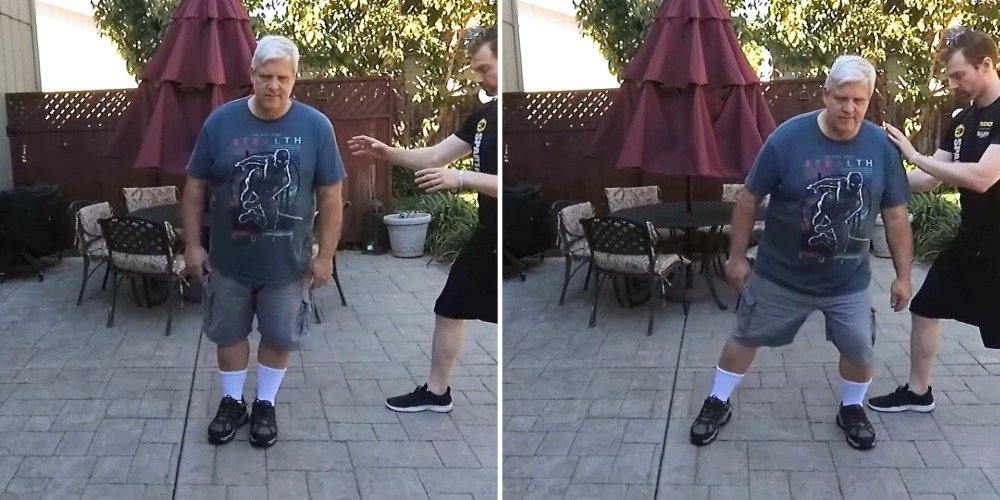
Once balance limits are understood, the next step is learning what happens after those limits are crossed. Self-initiated falls introduce controlled, intentional loss of balance in predictable directions. This allows the individual to experience the mechanics of a fall without surprise.
In stepping strategy training, initiating your own fall builds trust; trust in your stepping ability, your body’s reactions, and your capacity to recover without panic.
Primary goal
Introduce controlled fall initiation while developing timely, committed protective steps
Key concepts emphasized
Gravity, not anticipation, should trigger the response
A fall requires commitment, hesitation disrupts coordination
Early step placement reduces trunk acceleration
Common breakdowns seen in practice
Simulating a fall instead of actually allowing one
Taking very small steps that fail to stop momentum
Keeping the body behind the stepping foot initially
Ways to scale the challenge
Reduce fall speed
Shorten fall distance
Limit directions to forward and backward initially
How this evolves in later phases
Faster fall initiation
Larger movement excursions
Preparation for cross-stepping fall recovery
By allowing gravity to take over in predictable directions, confidence replaces hesitation and stepping responses become more decisive. With forward, backward, and sideways recovery established, attention can shift to the movements that challenge most people the most, cross-body coordination while falling sideways.
5. Carioca / Grapevine (Cross-Stepping)
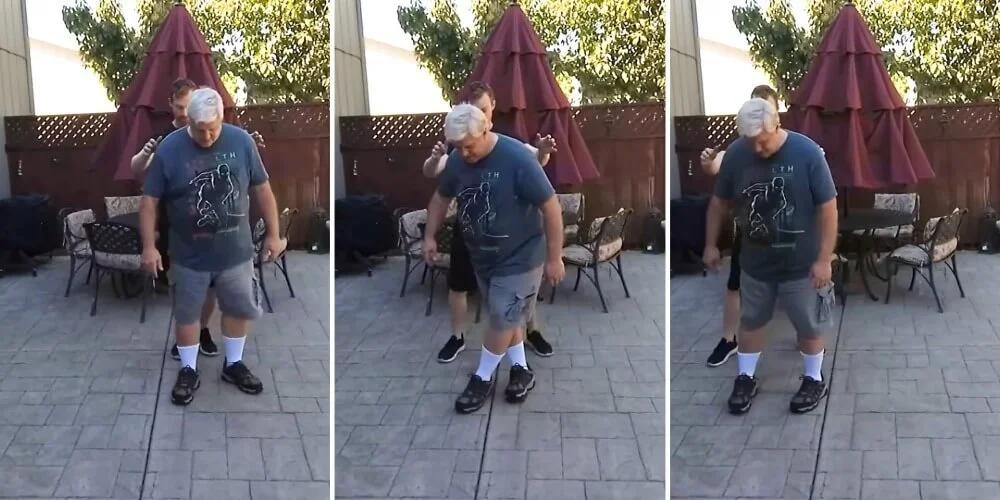
Sideways falls present a unique challenge because the most effective recovery often requires crossing one foot over the other. Many adults lack comfort with this movement, making lateral instability particularly dangerous. Carioca (grapevine) stepping addresses this gap by building cross-body coordination in a controlled, rhythmic way.
This phase teaches the feet to move independently while the trunk stays controlled, a prerequisite for effective lateral fall recovery.
Primary goal
Improve cross-stepping coordination and lateral movement confidence
Key concepts emphasized
Cross-stepping is a normal and necessary protective response
The hips guide foot placement, not the knees
Long and high steps prevent secondary trips
Common breakdowns seen in practice
Minimal-to-no hip rotation
Narrow or hesitant cross-steps
Letting the upper body lag behind the feet
Short and low steps leading to secondary trip
Ways to scale the challenge
Slower tempo
Shorter step length
External support for confidence
How this evolves in later phases
Increased speed
Visual challenges
Transition into fall-like lateral instability
Cross-stepping introduces a new level of coordination, preparing the body to recover from sideways instability without panic or delay. Once this movement becomes familiar and fluid, it can be safely integrated into fall-like scenarios where direction and timing truly matter.
6. Self-Initiated Falls - Cross-Stepping Plane
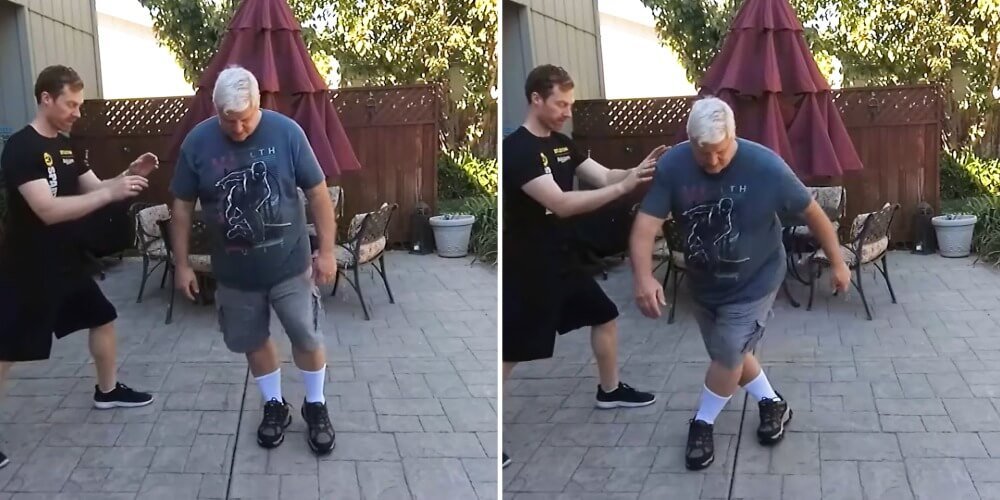
Many serious fall injuries occur during sideways or diagonal falls. In these situations, a same-side step is often too slow. A well-timed cross-step can be the difference between recovery and impact.
This phase applies cross-stepping skills to controlled fall initiation, teaching the body to select the correct stepping strategy under lateral threat.
Primary goal
Develop automatic cross-stepping responses during lateral or diagonal loss of balance
Key concepts emphasized
Direction matters more than habit
Cross-steps must be decisive and appropriately sized
Trunk alignment influences step success
Common breakdowns seen in practice
Attempting same-side steps during lateral falls, when cross-stepping is intention
Delayed stepping response
Stiff landings that fail to absorb force
Taking a single step, even if momentum continues the balance loss
Ways to scale the challenge
Slower initiation
Smaller movement range
Reduced direction variability
How this evolves in later phases
Faster lateral perturbations
Multi-directional fall initiation
Preparation for unexpected balance loss
When cross-steps are applied under controlled fall conditions, lateral recovery becomes faster and more reliable. At this point, stepping strategies are no longer isolated skills, they function as an integrated system, ready to be tested under unpredictable conditions.
7. Assisted-Initiated Falls (Unexpected Balance Loss)
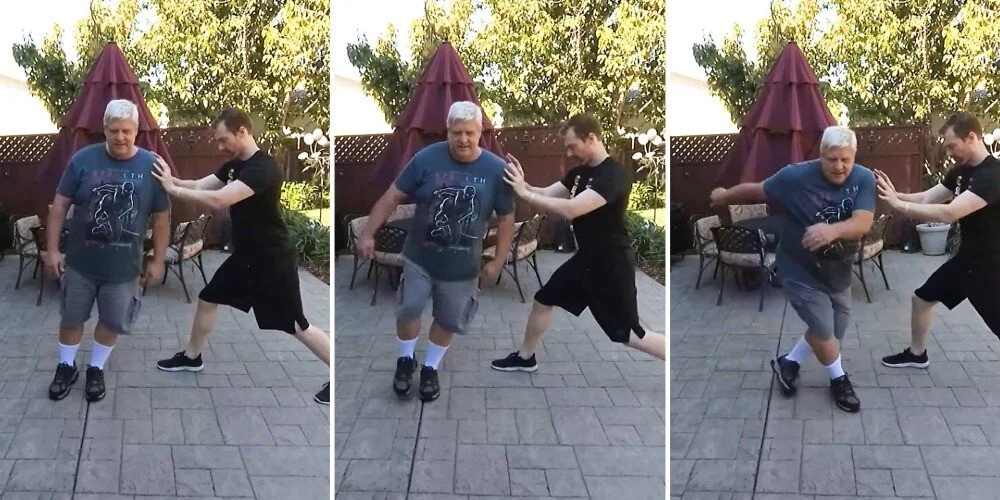
The final phase removes predictability. Real-world falls are rarely planned, and reactive stepping must occur without warning. Assisted-initiated falls safely recreate this unpredictability, forcing the nervous system to select and execute a response in real time.
This stage integrates everything learned so far, balance awareness, stepping mechanics, directional control, and confidence under pressure. It allows practice of all the steps prior to when you may need actually falling techniques.
Primary goal
Train fast, automatic stepping responses to unexpected balance disturbances
Key concepts emphasized
Reaction, not anticipation, drives recovery
The body must commit to the direction of movement
Freezing is a trainable response, not a permanent limitation
Common breakdowns seen in practice
Hesitation or freezing
Over-reliance on one stepping pattern
Guessing the direction of the perturbation
Ways to scale the challenge
Lighter or slower perturbations
Predictable timing
Reduced directional variety
How this evolves in later phases
Faster, more varied perturbations
Dual-task demands
Transition into safe falling skill development
Unexpected perturbations bring all previous skills together, revealing whether stepping responses are truly automatic. When reactions occur without hesitation or freezing, the individual is prepared for the final layer of resilience, learning how to fall safely when stepping is no longer enough.
When Are Your Stepping Strategies Ready?

A useful way to think about stepping readiness is this:
Could your body recover before you consciously realize you’re falling?
In real life, balance losses happen in fractions of a second. There is no time to think through what foot to move or where to place it. Your nervous system either reacts appropriately, or it doesn’t.
You can consider your stepping strategies well-developed if you can reliably recover from loss of balance across directions, speeds, and levels of predictability. More specifically, stepping readiness usually includes the ability to:
Take a fast, meaningful step in any direction without hesitation
Cross-step naturally when balance is lost sideways or diagonally
Catch yourself during a genuine fall initiation rather than a staged lean
Respond to unexpected perturbations without freezing
Maintain trunk control while stepping to stop momentum
If one or more of these are inconsistent, that’s not a failure, it’s simply feedback for you to work with. Stepping reactions are highly trainable, but they require exposure to the right challenges. Because falls unfold so quickly, stepping speed and decisiveness matter far more than perfect technique.
Why Stepping Training Reduces Fall Injuries

Stepping strategies don’t just determine whether someone falls, they strongly influence how hard they fall.
Early, well-placed steps reduce trunk acceleration before the body gains dangerous momentum. This is especially important in sideways falls, where the difference between a hip fracture and no injury is often a single, timely cross-step that redirects force and lowers impact velocity.
Well-trained stepping reactions tend to:
Keep the trunk more upright during recovery
Shorten the distance the body falls before contact
Reduce rotational and sideways torque
Prevent panic-driven freezing or overcorrection
Keep protective muscles engaged during recovery
When stepping succeeds, a fall is avoided entirely. When stepping fails, injury risk increases rapidly, which is why stepping is trained before falling skills in SoF fall prevention programs like Master Your Fall. However, because no strategy is perfect, learning how to fall safely and get back up becomes the next essential layer of protection.
Final Thoughts: Get Your Reactions in Lockstep

Stepping strategies are one of the most overlooked components of fall prevention and fall safety only second to falling techniques. Using this seven-step Science of Falling progression, you develop a nervous system that understands where balance ends, reacts quickly in any direction, and responds with confidence rather than hesitation.
Over time, this approach builds:
Clearer directional awareness
Faster, more automatic reactions
Stronger cross-body coordination
Better real-world resilience to slips, trips, and perturbations
Confidence in your body’s ability to recover when balance fails
Stepping, however, is only part of the equation. When a step isn’t enough, knowing how to fall safely, protect vulnerable joints, and get back up becomes just as important.
What’s Your Fall Risk Score?

Most people don’t notice their balance declining until something goes wrong.
This 10-minute self-assessment will show you:
• How stable your balance really is
• Where you're most at risk (strength, coordination, or falling ability)
• What to focus on first
No equipment. No guesswork. Just clear answers.