
Can You Learn to Fall Better?

Essential Points:
You can learn to fall better, even as you get older. Older adults can still learn new movement skills, and research shows that protective falling strategies can be practiced and improved.
Fall training should be gradual and individualized. You don’t need to start with full falls. Training can begin with reactive stepping, floor transitions, rolling, or controlled contact before progressing based on your abilities and risk level.
The goal isn’t to make every fall harmless. It’s to give you more options. Practicing how you react, move, and contact the ground may improve your response when balance is lost, although research on preventing real-world injuries is still developing.
Most people have no trouble believing that you can improve your strength as you get older. That’s almost a given. Balance is trainable too.
Walking can improve, mobility can improve, plus you can learn exercises, movements, strategies, and entirely new physical skills.
But falling? That tends to feel different.
A fall happens quickly. It’s unpredictable. It can be painful. And if you’ve already had a frightening fall, deliberately practicing anything that looks even remotely similar may sound ridiculous, or just downright irresponsible.
That reaction makes sense. I get it. A fear of falling isn’t irrational. In fact, I’d argue the exact opposite.
Falls can have serious consequences, especially as you get older. Fear of falling itself is also associated with reduced physical activity, lower quality of life, less life satisfaction, and social isolation. (1)
So I’m not going to tell you that you shouldn’t be afraid of falling.
What I do want to challenge is a different idea, the idea that being afraid of falling doesn’t mean there’s nothing you can learn to do about it. And getting older doesn’t mean your body has lost the ability to learn.
So, can you actually learn to fall better?
The evidence increasingly suggests that you can.
The important part is understanding what “better” actually means.
Falling Better Isn’t the Same as Falling Perfectly
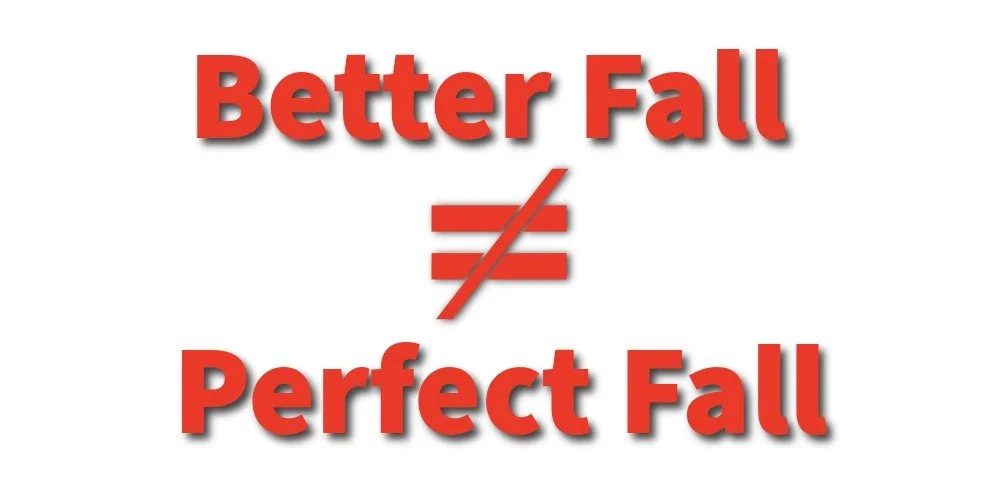
No technique can promise that a fall won’t hurt you.
You might land on furniture, hit an awkward surface, fall from a height, or even experience more force than your body can tolerate.
Even a technically excellent falling response can’t make every fall harmless.
That’s not what I mean by learning to fall better. I’m talking about improving parts of what happens after your balance begins to disappear.
That can include reacting quickly, taking a protective step, changing your position, protecting vulnerable areas, managing how you contact the ground, distributing or absorbing force, continuing into a roll rather than stopping suddenly, and becoming more familiar with what it feels like when things start to go wrong.
Some of those responses happen before you reach the floor, while others happen during contact.
But many of them are movement skills. And movement skills can be practiced, improved, and refined.
Age Changes Learning. It Doesn’t Eliminate It.

There’s a strange double standard around falling.
Most of us wouldn’t say that someone is too old to learn Tai Chi.
We wouldn’t automatically say they’re too old to learn a new strengthening exercise, use a cane, improve their walking, or practice getting up from the floor.
Yet once the skill involves falling, people sometimes assume the learning process no longer applies. Spoiler alert. It does.
Aging does affect movement and learning. That is a fact I’m not arguing against. Older adults can move more slowly, certain complex skills can be harder to acquire, and some aspects of skill retention may change.
But the ability to learn new movement doesn’t simply disappear.
A 2024 review looking at aging, brain plasticity, and motor learning found that older adults still retain the ability to improve motor skills with training and that the aging brain continues to adapt in response to practice. (2)
You may not learn a movement at 75 exactly the way you learned it at 25.
That isn’t the same as being unable to learn it.
Researchers Have Actually Tested This
This is where the idea becomes more interesting and real.
Older adults haven’t only been studied in general motor-learning experiments. Researchers have taught them how to fall.
A small 2010 study included 25 healthy older adults who completed five sessions of martial-arts-inspired fall training. Their performance improved, and better technique was associated with an average 8% reduction in hip impact force during controlled sideways falls from a kneeling position. Fear of falling also decreased. (3)
A much larger Swedish study used a program called Judo4Balance with community-dwelling older adults whose average age was about 72.
The program included safe falling strategies as part of broader strength, balance, and movement training. Participants were able to learn falling techniques over roughly six to nine weeks, and some of that fall competence was still present at long-term follow-up. The researchers still cautioned that more work is needed to determine whether those skills reduce injuries during real-world falls. (4)
Then came a more recent program with an almost perfect name for this discussion:
Falling Safely Training, or FAST.
In a 2025 pilot randomized trial, 24 older adults who were considered at risk for injurious falls completed either progressive safe-falling training or traditional balance exercise.
The FAST group trained twice per week for four weeks. They used cushioned mats and gradually practiced protective movements adapted from martial arts.
No training-related adverse events were reported. Afterward, during experimentally induced falls, the FAST group had fewer head impacts and lower head acceleration than the balance-training group. (5)
Admittedly, it was a small study. Laboratory falls also aren’t the same as unexpectedly tripping in your home in the middle of the night.
But the study still answers an important question:
Can older adults at increased risk of falling learn and apply protective falling strategies?
At least in this controlled setting, yes.
“But I Won’t Have Time to Think During a Real Fall”

This is probably the number one objection I get when I talk about falling with anyone who has actually gone down. And guess what, it’s true.
And it may be one of the most reasonable criticisms of fall training, because a real fall doesn’t usually give you time to think:
Move my arm. Now bend my knees. Now rotate.
By the time you finish that thought process, you’re probably already on the ground.
But movement skills generally aren’t practiced so that you can consciously recite instructions every time you use them. You practice so that the response becomes more familiar and potentially automatic without thinking.
That idea shows up clearly in another area of fall research called reactive balance training.
In reactive balance training, people are deliberately exposed to controlled disturbances such as slips, trips, pushes, pulls, or moving surfaces so that they can practice recovering their balance.
A 2026 systematic review and meta-analysis found that perturbation-based balance training improved reactive balance in older adults and was associated with reductions in falls and injurious falls, although the certainty of some of that evidence remains limited. (6)
That doesn’t prove that every landing technique you practice will automatically appear when you fall unexpectedly.
It does tell us something important about the larger idea though. Even very fast responses to a loss of balance can change with training.
Fall Training Doesn’t Have to Begin With a Fall

One reason this topic sounds so intimidating is that people imagine the worst version of it.
They hear fall training and picture someone standing behind them saying, “Okay. I’m going to push you now.”
That’s not how good training needs to begin, or even should begin.
Strength training doesn’t start with your maximum lift. Fall training doesn’t have to start with a full-speed fall.
You can break the task apart into more manageable chunks.
The first step might simply be becoming more comfortable near the ground. From there, you might practice moving between positions, shifting your weight, rolling, contacting a padded surface, or learning how different parts of your body should move during contact.
Later, more movement can be added, then more speed, then different directions.
Eventually, depending on your ability and risk level, the movement may start to look more like an actual fall.
That gradual progression is important.
Participants in the FAST study didn’t start by getting thrown onto the floor. The program used supervision, cushioned surfaces, and progressive practice. (5)
You can practice components of falling without immediately practicing the whole thing.
That makes the idea much more accessible and palatable for the majority of people.
Fear Can Be Part of the Process, That’s OK.

I don’t think successful fall training requires you to become fearless.
If you’ve fallen before, watched someone close to you sustain a serious injury, or noticed your own balance changing, some amount of concern is understandable.
The problem comes when fear convinces you that avoiding movement is your only option.
Fear of falling is consistently associated with lower activity and participation, and research suggests that physical, psychological, and combined interventions can help reduce it. (1)
Researchers have also asked older adults what it actually felt like to complete safe-falling training.
In a qualitative study of FAST participants, the training was generally viewed as acceptable. Participants described increased confidence in their perceived ability to fall without being injured, and some people who later experienced falls said they were able to use techniques they had practiced. (7)
That doesn’t prove the techniques prevented injury, but it does point toward another potential benefit.
Fall training may change more than mechanics. It might change your sense of what happens when control begins to slip away.
Instead of:
“Once I start falling, there’s nothing I can do.”
The thought can become:
“I can’t control everything, but I can build skills that give me more options.”
That’s a significant and life changing difference.
You Don’t Have to Train Like Someone Else

Safe falling isn’t an all-or-nothing skill. Some people can progress to practicing controlled full falls. Others may never need to.
If you have significant osteoporosis, a history of fragility fractures, certain medical conditions, substantial pain, or other factors that could make this type of practice unsafe, you shouldn’t assume this research applies to you in the same way. Fall training needs to be modified appropriately and may require professional supervision.
The research programs studying these ideas didn’t simply invite every older adult to start hitting the ground. They used screening, padding, trained supervision, and gradual progression. (5)
So instead of asking:
“Can I practice full falls?”
Try asking:
“Which parts of falling can I safely prepare for today?”
For you, that might be reactive stepping, or it could be learning to get down to the floor. It might involve rolling, learning how to use your arms, practicing controlled contact from a lower position, or simply becoming more comfortable moving in ways you currently avoid.
The right starting point should match your body.
Not somebody else’s.
The Research Is Encouraging, But It Isn’t Finished
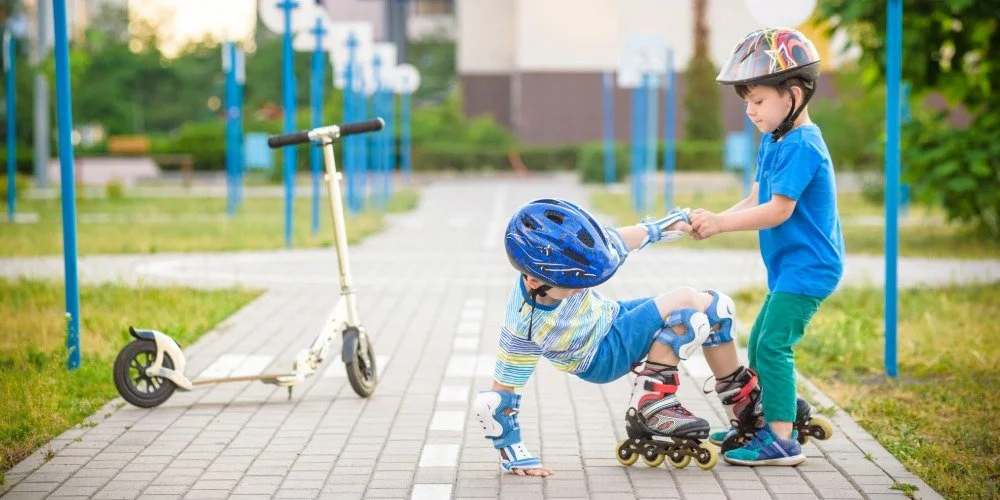
This is where we need to stay grounded.
A systematic review of safe landing strategies found that several techniques can reduce impact loads during controlled falls. But much of the earlier research involved younger people, experienced martial artists, predictable falling situations, or laboratory conditions. The authors specifically noted the need for more research in older adults and during unexpected, real-world falls. (8)
The newer research involving older adults helps, but it still doesn’t justify statements like, “Learn this technique and you won’t fracture your hip” or “Practice falling and you’ll never hit your head.”
We just simply aren’t there yet.
What the evidence does support is more measured. Older adults can learn new motor skills. Older adults have learned falling techniques in research settings. Reactive responses to balance loss can improve with training. Certain landing strategies can change impact mechanics. And appropriately screened, progressive safe-falling training appears feasible for some older adults.
That’s enough to make fall training worth taking seriously.
Final Thoughts: The Real Goal Is Familiarity, Not Invincibility
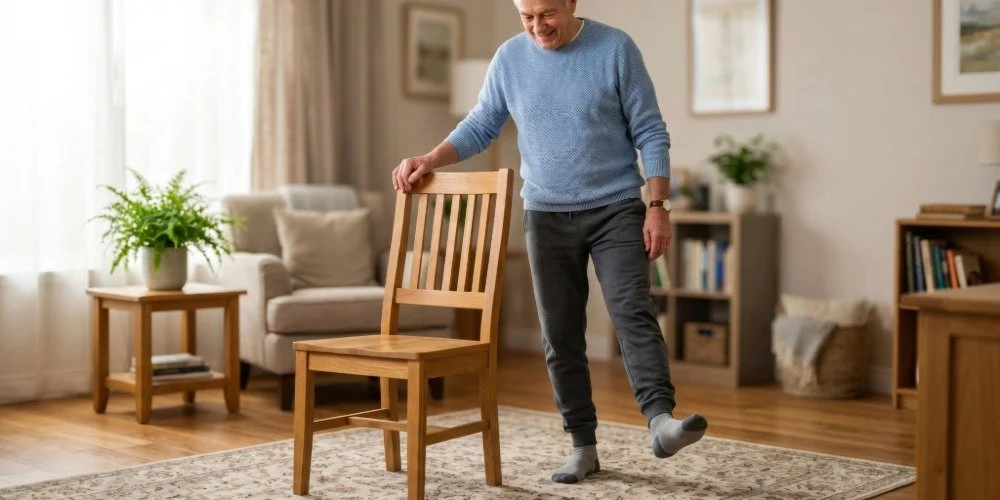
You may never enjoy practicing how to fall. That’s fine.
You may always feel some fear around falling. That’s also fine.
The purpose isn’t to convince you that falling is safe or turn you into a martial artist. The purpose is to give you more options.
We train strength because strength gives you options. We train balance because balance gives you options. We practice reactive stepping because a faster recovery response gives you options. It makes sense to also think about what happens if those systems aren’t enough.
That’s part of the larger idea behind Fall Preparedness.
Prevent the falls that can be prevented. Train your response when balance is lost. Prepare for contact with the ground. And know what to do afterward.
You’ll never control every fall. Nobody will. Falls themselves are too messy to say that you could.
But that doesn’t mean everything after the first loss of balance has to remain completely unfamiliar.
Falling is still movement, and movement can be practiced.
What’s Your Fall Risk Score?
Most people don’t notice their balance declining until something goes wrong.
This 10-minute self-assessment will show you:
• How stable your balance really is
• Where you're most at risk (strength, coordination, or falling ability)
• What to focus on first
No equipment. No guesswork. Just clear answers.
References
Oliveira ARC, Magueja CMP, Almeida AMG. Actions to control the fear of falling in older people: an umbrella review. Arch Gerontol Geriatr. 2026;141:106087. doi:10.1016/j.archger.2025.106087
Gooijers J, Pauwels L, Hehl M, Seer C, Cuypers K, Swinnen SP. Aging, brain plasticity, and motor learning. Ageing Res Rev. 2024;102:102569. doi:10.1016/j.arr.2024.102569
Groen BE, Smulders E, de Kam D, Duysens J, Weerdesteyn V. Martial arts fall training to prevent hip fractures in the elderly. Osteoporos Int. 2010;21(2):215-221. doi:10.1007/s00198-009-0934-x
Arkkukangas M, Strömqvist Bååthe K, Ekholm A, Tonkonogi M. High challenge exercise and learning safe landing strategies among community-dwelling older adults: a randomized controlled trial. Int J Environ Res Public Health. 2022;19(12):7370. doi:10.3390/ijerph19127370
Zanotto T, Chen L, Fang JR, et al. Strategies to minimize fall-related injuries in older adults at risk of falls: the Falling Safely Training study. J Gerontol A Biol Sci Med Sci. 2025;80(7):glaf076. doi:10.1093/gerona/glaf076
Sharma S, Szabo IZ, Danielsen MB, et al. Perturbation-based balance training reduces falls and fall injuries in older people: insights on mechanisms and training parameters from a systematic review. J Am Med Dir Assoc. 2026;27(8):106316. doi:10.1016/j.jamda.2026.106316
Zanotto A, Zanotto T, Alexander NB, Sosnoff JJ. Views and experiences of older people taking part in a safe-falling training program: lessons learned from the FAlling Safely Training (FAST) trial. BMC Geriatr. 2024;24:818. doi:10.1186/s12877-024-05382-7
Moon Y, Sosnoff JJ. Safe landing strategies during a fall: systematic review and meta-analysis. Arch Phys Med Rehabil. 2017;98(4):783-794. doi:10.1016/j.apmr.2016.08.460