
Why It’s Getting Harder to Get Up Off the Floor (And How to Fix It)

This Article is part of the SoF Quick Read Series: Trimmed-down, real-life strategy guides for handling everyday balance moments. Lighter reads. Still grounded in science. Always worth your time, and linked to deeper articles for when the itch to learn arises.
Essential Points:
It’s not just strength, you’ve lost the skill: Getting up off the floor becomes harder with age largely because you stop practicing it, leading to reduced mobility, coordination, strength, and confidence.
Avoiding the ground actually increases risk: The less time you spend on the floor, the more foreign and threatening it feels, making falls more dangerous because you’re unprepared for what happens after you land.
Consistent “ground time” rebuilds ability fast: Spending just 30 minutes a day on the floor (like in the 10-day challenge) can quickly restore mobility, control, and confidence in getting up and moving safely.
Prefer to listen? Here’s a quick breakdown with a few extra insights:
You’re Not Bad at Getting Up, You Just Never Go Down
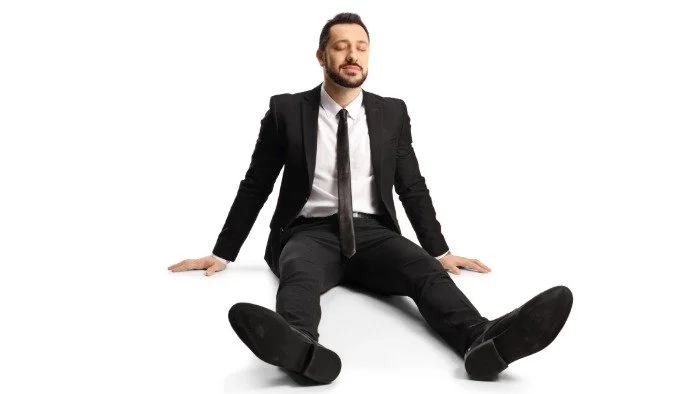
When was the last time you sat on the floor? Truly just…sat there.
For most adults, the answer is years, or possibly decades.
Kids, on the other hand, live on the ground. They sit, roll, crawl, and transition between positions constantly. My son does all of the above, then somehow gets his hands on the most dangerous object in the room. I, of course, have to crawl after him and play bodyguard. It’s exhausting for him and I both. But, getting up and down isn’t something he thinks about, it’s just part of how he moves through the world.
At some point, that will change, just as it has for every adult.
Chairs replace the floor.
Couches replace movement.
Life becomes a series of elevated surfaces, and you become the “weirdo” if you sit on the ground without a good reason. And as an adult, those legitimate reasons are few and far between.
Then without realizing it, you lose something important…
The Skill You Didn’t Know You Were Losing
Difficulty getting up and down from the ground often feels like just a “strength” problem as we get older. And while strength is a large factor in losing the ability to get off the ground, it’s also a familiarity problem.
If you rarely go to the ground, everything about it starts to feel harder as your body loses the adaptations that made it capable:
Your hips feel tighter
Your movements feel awkward and clunky
You’re unsure how to position yourself for safe lowering or rising
You just can’t quite find enough leverage to get up when you’re done on the ground
So you avoid it. And that avoidance slowly turns into inability.
This is one of the most overlooked changes that happens with aging, not just because the body suddenly loses capacity for ground movements, but because it loses exposure that maintained that capacity effortlessly.
The Ground Is Where Falls End
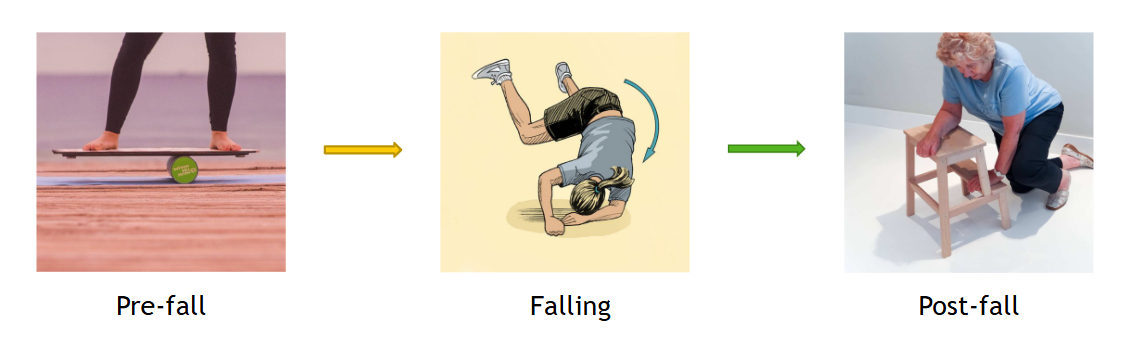
If you’re familiar with my Falling Continuum, you’ll know every fall follows a general path:
Most people only think about preventing the fall itself. Some (rarely) think about how to fall safely. Almost no one prepares for what comes next on the ground.
But the reality is simple, if you end up on the ground, you need to be able to function there.
That includes:
Repositioning your body
Managing discomfort or disorientation
And ultimately, getting back up
Without those abilities, even a minor fall can become a major event.
Avoiding the Ground Makes It More Dangerous

There’s a natural instinct to stay off the ground as we get older. It feels safer, because it’s easier to just not go down in the first place. But it creates a quiet trade-off.
The less time you spend there, the more foreign it becomes → The more foreign it becomes, the more threatening it feels → The more threatening it feels, the more you avoid it → Finally that threat becomes an actual danger
Over time, the ground shifts from being a normal environment…to something that feels unpredictable and risky.
Not because it always is, but because you’ve lost your ability to interact with it, and that loss of control is what makes it feel dangerous.
What Ground Time Actually Builds

Spending time on the ground doesn’t just “stretch you out” or “build strength” in the traditional sense. It rebuilds your relationship with ground movement at a fundamental level.
As you sit, shift, and transition, you naturally develop:
Hip and spine mobility
Coordination between upper and lower body
Strength in unconventional, yet very useful, positions
Awareness of how to move when things aren’t perfectly aligned
Perhaps most importantly, you rebuild confidence in yourself.
Confidence that you can get down, that you can move, and that you can get back up.
The 10-Day Ground Challenge
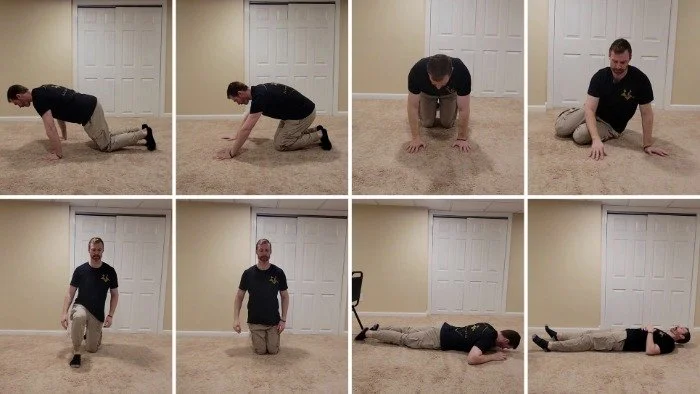
If the ability to be confident on the ground is something you’ve lost, the solution isn’t complicated.
You don’t need a perfect program or special equipment. You just need to start spending time on the ground again. Simple as that.
The 10-Day Ground Challenge:
For the next 10 days, spend at least 30 minutes on the ground every day.
That’s the only rule. You can break it up however you want. You can make it easy or more challenging.
What matters is consistency.
How to Approach the 10-Day Ground Challenge
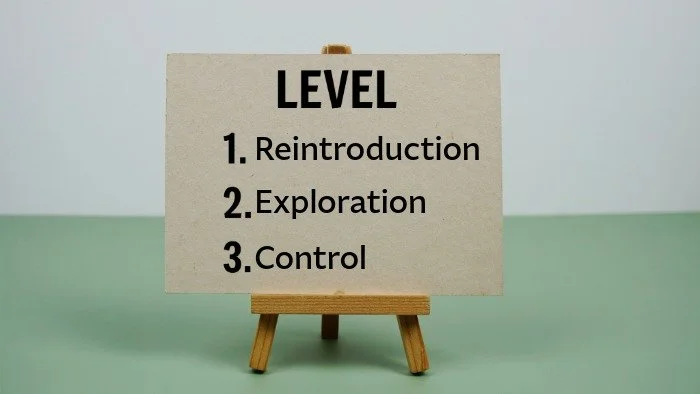
If you’re not sure where to start, think in levels:
Days 1-3: Level 1 (Reintroduction)
Sit on the floor while watching TV or reading. Shift positions occasionally for comfort. Use your hands freely to prop yourself up as needed.
Days 4-6: Level 2 (Exploration)
Move between different sitting positions such as cross-legged, side-sit, kneeling. Practice getting down and back up a few times. It might feel clunky, but you are actively teaching your body how to move again.
Days 7-10: Level 3 (Control)
Reduce hand support. Flow between positions, while challenging your balance and flexibility. Add light rolling or crawling if it feels comfortable and your sitting surface allows.
This challenge isn’t about intensity. It’s about exposure without judgement.
What You’ll Notice

If you actually do this for 10 days, you’ll likely notice changes faster than you expect.
At first, it might feel stiff, awkward, even frustrating. After all, it has probably been years, maybe even decades since you sat on the ground this long.
But then, the improvements start to come:
Movements start to feel smoother
Positions feel more accessible
Getting up feels less like a task and more like a choice
And maybe most importantly: The ground stops feeling like a problem to fear, and instead more like a new frontier to conquer.
Why This Matters More Than You Think

After a fall, the most important question isn’t just, “Did I get hurt?”
But instead, “Can I recover?”
This is the third part of the falling continuum, the post-fall, what happens after you land.
It’s the difference between:
Regaining control
Or becoming dependent on help
And it’s the part no one trains enough, despite being the safest and most accessible way to improve your fall-readiness.
Final Thoughts: Start Your Challenge Tonight
I know this 10-day ground challenge can seem intimidating, but you don’t need to wait for the perfect plan.
Tonight, instead of sitting on the couch, sit on the floor. Shift around a bit, and try getting up a few times if you feel comfortable. Again, sitting on the ground for 30 minutes a day is the only rule. How you do that is completely up to your imagination.
That’s all it takes to begin rebuilding a skill most people don’t realize they’ve lost, but will most assuredly need one day in the future.
Just remember, you aren’t bad at getting up, you just never go down to practice. Give yourself grace and enjoy the challenge. And be sure to let me know how it goes in the comments below!
What’s Your Fall Risk Score?
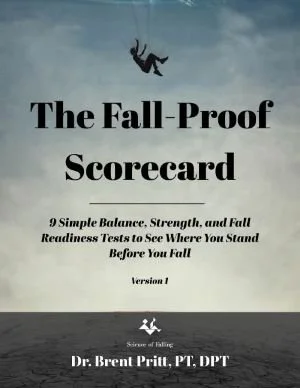
Most people don’t notice their balance declining until something goes wrong.
This 10-minute self-assessment will show you:
• How stable your balance really is
• Where you're most at risk (strength, coordination, or falling ability)
• What to focus on first
No equipment. No guesswork. Just clear answers.