
Balance With Brent Part 3: Ground Recovery (Getting Off the Ground)
Updated: 5.16.26
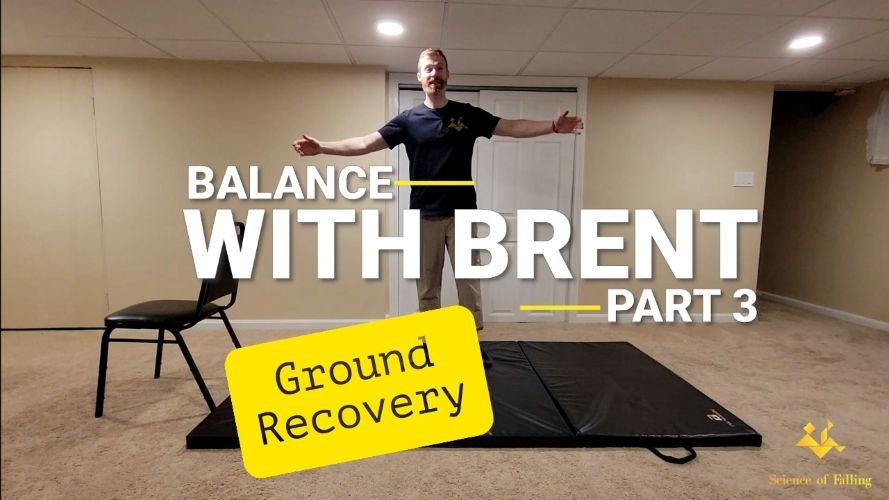
Balance With Brent is a 3-part presentation series I delivered at Stone Hill an assisted living facility in Andover, MA in December 2025. Each talk explores a different stage of the falling continuum:
Part 3: Post-Fall (Ground Recovery / Getting Off the Ground)
These presentations were intentionally unrehearsed, with only the topic of the day prepared. This allowed for real-time audience questions, discussion, and participation, making each session interactive and responsive to the group.
The third presentation focused on ground recovery, also known as getting off the ground after a fall.
Although this talk was originally delivered live at the assisted living facility, a microphone issue resulted in video footage without usable audio. To ensure the series was complete and fully accessible, I reshot the presentation in a streamlined format, preserving the original teaching content while improving clarity and flow.
In this session, I walk through my general approach to teaching someone how to get off the ground safely and independently. I discuss why ground recovery is such an essential skill, how to move and reposition yourself on the ground to reach safety, and why attempting to help someone else off the ground may not always be the safest option, for them or for you.
Key Takeaways From This Ground Recovery Session
Getting Off the Ground After a Fall (The Final Step in the Falling Continuum)
This section covers the third phase of the “falling continuum”:
Balance → Fall → Recovery (Getting Off the Ground)
Most fall education stops at prevention. But in real life, what happens after a fall is just as important, especially for independence, safety, and avoiding secondary injury.
WHY Getting Off the Ground Matters
Being able to get up after a fall is a critical survival skill.
Without it, a fall can turn into:
Hours spent on the ground
Secondary injuries from dragging or struggling
Dehydration, fatigue, or worsening medical issues
Delayed rescue or assistance
Even strong, healthy individuals can end up unable to stand after a fall. The goal is not perfection, it’s having a safe pathway back to stability.
BUILDING the Strength First (Chair Test Rule)
Before practicing ground recovery, you should be able to:
Stand up from a chair without using your hands
Repeat it smoothly multiple times
Progress to holding light weights while standing/sitting
If you can’t reliably rise from a chair, getting up from the ground will be significantly more difficult.
Think of this as your baseline prerequisite strength for fall recovery.
THE Reverse Movement Strategy (Ground-to-Stand Sequence)
A simple way to learn getting up is to practice the movement in reverse order:
Standing
Half kneel (supported lunge position)
Tall kneel
All fours
Side sit / laying position
Fully on the ground
Then reverse it back up.
This builds familiarity with every transition so your body understands the pathway out of a fall.
PROGRESSION Training (Step-by-Step Strength Building)
If any step is difficult (for example, half-kneel to stand), treat it as its own exercise:
Repeat that movement 5–10 times
Rest and return another day
Build strength gradually over weeks
Improving just one weak link in the chain can dramatically improve your overall ability to recover from a fall.
IF You Fall: First 3 Priorities
If you end up on the ground unexpectedly:
1. RELAX
Pause and control breathing
Reduce panic and adrenaline response
2. CHECK YOUR BODY
Check for bleeding, dizziness, or severe pain
Assess whether movement is safe
3. DECIDE YOUR ACTION
If seriously injured: stay still and call for help
If stable: begin planning movement toward safety
This decision point matters more than speed.
SAFE MOVEMENT OPTIONS on the Ground
If you are not seriously injured, there are multiple ways to reach safety:
Crawling (hands and knees)
Butt scooting (using arms and legs)
Rolling or sidling across the floor
Dragging toward support (chair, couch, bed)
The goal is not elegance, it is progress toward safety.
Even slow movement is effective if it gets you closer to help or support.
WHEN SPEED DOESN’T MATTER
In real falls, movement may be slow:
Getting across a room can take minutes or hours
Rest breaks are expected and allowed
Scrapes or bruises may happen during movement
The priority is always:
Move toward safety, not toward speed.
USING ENVIRONMENTAL SUPPORT (CHAIRS, COUCHES, BEDS)
Once near support, prioritize larger surfaces:
Chairs may be too narrow or unstable
Couches and beds provide better leverage
Higher surfaces reduce required strength to stand
A wide, stable surface can dramatically improve your ability to recover.
HELPING OTHERS AFTER A FALL
If someone else falls:
Only assist if you are strong enough to do so safely
Avoid trying to lift someone significantly heavier than you alone
Instead, help them into a safe recovery position
Then get additional help
Why this matters: Helping incorrectly can result in two injured people instead of one.
KEY SAFETY PRINCIPLES
Across all situations, the priorities are:
Strength determines safety
Patience prevents secondary injury
Movement should always be controlled, not rushed
Environment is part of your recovery system
Safety > speed every time
Final Takeaway
Getting off the ground is not just a strength task, it’s a survival system.
If you remember anything:
Build chair-rise strength first
Learn the reverse movement pattern
Stay calm immediately after a fall
Move toward safety, not perfection
Use the environment to your advantage
Even small improvements in ground recovery ability can significantly reduce the long-term consequences of a fall.