

I was working with a patient recently who was trying to get back to more independent walking. When she walked straight ahead and stayed focused on the task, she did pretty well.
But then I'd ask her to turn her head, I'd start talking to her, or something in the environment would grab her attention.
Suddenly, her walking changed.
She'd start to veer. Her balance became less predictable. She needed more corrections. And after practicing this for a while, she was much more tired than she was from simply walking straight ahead.
At one point, I explained to her that part of what we were working on wasn't just strength or endurance.
We were trying to make her walking more efficient.
Right now, her brain and body were working extremely hard to solve a complicated movement problem. With practice, I hoped all of those little corrections, muscle contractions, and conscious decisions would become better coordinated.
Ideally, the same walk would eventually require less effort.
Afterward, I started wondering how literally true that explanation was.
As it turns out, quite a bit.
Walking can actually become more energetically expensive when your balance and coordination are challenged. And with practice, your nervous system may learn to solve some of those challenges more efficiently.
That gives us another way to think about rehabilitation.
Sometimes you don't just need to build a bigger engine; sometimes you need to stop wasting so much fuel. Efficiency can make a world of difference for your function.
Walking Is Supposed to Be Efficient

Walking looks simple because you've probably been doing it for most of your life.
But underneath that simple movement is an incredibly complicated interaction between your brain, muscles, joints, vision, vestibular system, sensation, reflexes, and environment.
When everything is working well, you don't have to consciously think about much of it. You don't have to calculate how far to move your right foot. You don't have to decide exactly how much your left calf should contract. You don't have to consciously determine how far your body can move beyond your foot before the next step needs to happen.
You just walk.
That's partly because your nervous system has spent years learning how to coordinate the movement. And humans have developed an extremely low energy way of doing it.
Your body takes advantage of momentum, pendulum-like movement, elastic tissues, carefully timed muscle activity, and the exchange of energy from one step to the next.
The result is a movement that can be repeated thousands of times per day without requiring maximal effort.
But that efficiency isn't necessarily guaranteed.
Research shows that the metabolic cost (how many calories it takes) of walking tends to increase with age, and changes in gait mechanics, neuromuscular function, muscle activation, and other factors may all contribute. (1)
And once walking becomes less efficient, something important happens.
The same distance starts costing you more energy to traverse.
Poor Balance Can Make Your Muscles Work Harder
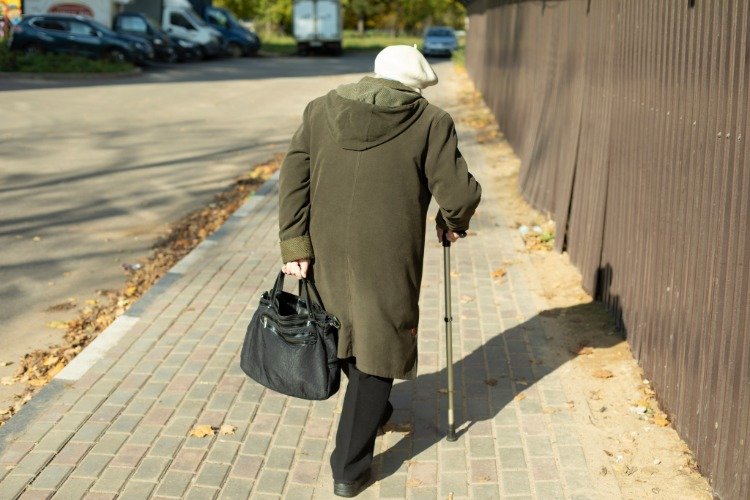
One possible reason is something called muscle co-contraction.
Normally, muscles around a joint coordinate their activity so one group can produce movement while the opposing group allows that movement to happen, or rather relaxes.
But when you feel unstable, your nervous system may decide that movement needs to be controlled more tightly to keep you safe.
One way to accomplish that is by contracting muscles on both sides of a joint at the same time, increasing overall stiffness and perceived control.
Think about holding your hand loosely versus making your entire arm rigid.
The rigid arm may feel more stable. It also takes more effort.
Something similar can happen during walking.
Research comparing younger and older adults has found greater leg muscle activation and antagonist (opposite muscle of the working muscle) coactivation in older adults, and those changes have been associated with a higher metabolic cost of walking. (2, 3) Or in simple terms, you turn on more muscles and burn more calories even when not needed.
That doesn't mean co-contraction is inherently bad.
If you're unstable, stiffening a joint may actually be a useful strategy, and may actually keep you safe.
Your nervous system isn't necessarily trying to win an award for perfect walking efficiency. It's just trying to keep you upright, and avoid a fall.
But stability can come with a price.
If every step involves extra muscle activity, unnecessary tension, more corrections, wider steps, or excessive stiffening, walking may become more tiring than it needs to be. And that means you can’t go nearly as far, consequently limiting your life.
Balance Itself Costs Energy
This is where things get really interesting.
Researchers have tried to separate the energy needed simply to move forward from the energy needed to control balance while moving forward.
In one study, healthy adults walked while trying to follow specific foot-placement patterns on a treadmill.
Their walking speed didn't suddenly become dramatically faster. They weren't climbing a hill. They simply had to control their steps more precisely.
Their metabolic energy cost increased by approximately 8 to 13 percent compared with normal walking without designated foot-step guides. (4)
In other words, some of the extra energy wasn't being spent getting from Point A to Point B. It was being spent controlling how they got there. That's an important point to recognize.
Two people could walk down the exact same hallway at roughly the same speed while experiencing very different physical demands.
One person's nervous system might essentially say, “We've done this a million times. Keep moving.”
Another person's system might be dealing with, “Where should I put my foot? I'm drifting left. Correct right. Don't lose your balance. Hold yourself stiffer. Where's the wall? Move your foot wider. Watch the walker. Don't trip. Correct again.”
It’s exhausting just reading that. Same hallway, but very different workload.
Then You Turn Your Head

This brings me back to my patient.
Why did something as simple as turning her head make walking so much harder?
Because turning your head while walking isn't actually a tiny task from a balance perspective.
Your brain is constantly combining information from several sensory systems to figure out where you are in space:
Vision provides information about your surroundings.
Your vestibular system provides information about head movement and orientation.
Somatosensory information tells you what your feet, joints, and body are doing.
Now turn your head while continuing to walk:
Your vestibular system detects the head movement.
Your head moves relative to your trunk.
Your body still needs to travel in the original direction.
Your feet still need to land in useful locations.
And your brain has to sort all of that information out without allowing you to drift into the wall.
Studies of head turning during walking show measurable changes in how people control the head, pelvis, foot placement, and margins of stability. Older adults might also use different movement strategies to manage the changing sensory information created by the head turn, although that doesn’t necessarily mean their balance is worse. (5)
So when someone suddenly starts veering while looking around, that head turn may be exposing a balance problem that wasn't obvious during simple straight-line walking.
And Then I Start Talking to You

Sorry, I’m trained in finding your weaknesses and exploiting them nicely. As a physical therapist, I'm probably going to do it often. I’m mean but for your benefit.
Walking while having a conversation introduces another challenge called dual-tasking.
You're no longer just walking. You're walking while processing another task such as talking. It’s tough and there are many ways that dual-tasking occurs:
Maybe you're answering my question.
Maybe you're counting backward.
Maybe you're carrying groceries.
Maybe you're looking for a street sign.
Maybe you're trying to remember where you parked.
In everyday life, we almost never walk through a perfectly empty hallway while staring straight ahead and concentrating exclusively on our feet. That’s not real life. Walking happens in a messy world.
Research consistently shows that adding a cognitive task can change gait in older adults. A systematic review and meta-analysis found reductions in walking speed and cadence along with changes in stride timing and gait variability when cognitive tasks were added. More difficult secondary tasks generally produced larger effects. (6) In plain English, dividing your attention can make your walking slower, less consistent, and harder to coordinate.
This is one reason someone can look relatively stable during a simple walking test and then suddenly struggle once you add conversation, head turns, obstacles, or environmental distractions.
The basic walking pattern may be there, but it hasn't become resilient or automatic enough to handle everything else yet.
Your Brain Has an Efficiency Problem Too

We sometimes talk about walking as if the legs do all the work.
They don't and I always tell my patient that to set expectations. The brain has to coordinate the whole operation.
Well-learned movements can become relatively automatic, meaning they require less conscious attention to perform. But when walking becomes difficult due to imbalance or injury, that relationship can change.
Research using brain imaging techniques during walking suggests that older adults often recruit more prefrontal brain activity during challenging walking and dual-task conditions. The prefrontal cortex is heavily involved in attention and executive control. (7) We quite literally have to focus more.
That doesn't mean thinking burns enough calories to explain why someone's legs feel exhausted after therapy.
The physical and cognitive sides of fatigue aren't that simple.
But it does show us something important.
Walking can shift from being a mostly automatic activity toward something requiring much more active control.
You might recognize this feeling from a common scenario. Think about the first time you drove a car. You probably thought about everything, and probably overthought it as well.
“How hard am I pressing the gas? Where's the brake? How close am I to the line?”
After years of driving, many of those actions happen with far less conscious thought. In fact, I’m sure you have had a drive where you completely zoned out and your driving skills went on autopilot.
You didn't just become physically stronger at driving. Your nervous system became better at organizing the task without excessive conscious input.
Walking rehabilitation can involve a similar process.
Of course, feeling tired, using more physical energy, and needing to concentrate harder aren't exactly the same thing. They're related, but each can influence walking differently.
Someone might use more energy without noticing much difference in fatigue, while someone else might feel mentally exhausted from having to concentrate on every step. That's part of why walking difficulties can be so complicated, and why improving someone's ability to walk may involve more than simply building strength and endurance.
Practice Can Actually Make Walking “Cheaper”
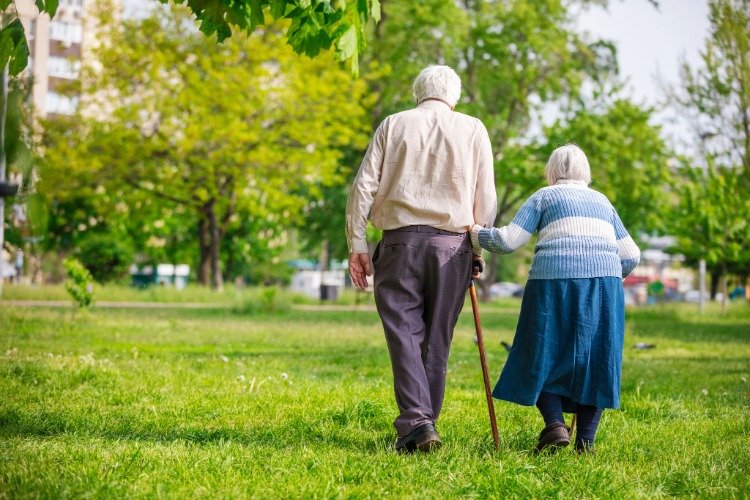
This might be my favorite part of the research on this topic.
If inefficient coordination can make walking more expensive, can improving coordination make it cheaper?
Apparently, yes.
A randomized trial studied older adults with slow and variable walking. At baseline, their energy cost of walking was almost twice what would be considered normal.
Researchers compared a traditional program emphasizing walking, endurance, balance, and strength with another intervention focused specifically on the timing and coordination of movement.
Both groups improved their walking speed. But the timing-and-coordination group reduced the energy cost of walking significantly more than the traditional group. (8)
A later randomized trial found something similar.
Older adults with mobility limitations completed 12 weeks of either timing-and-coordination training, aerobic walking, or stretching and relaxation.
The timing-and-coordination group reduced the average energy cost of walking by about 15 percent compared with the stretching group. The aerobic walking group didn't show the same improvement in walking economy. (9)
Think about what that means.
These participants didn't simply build bigger cardiovascular engines. Their bodies learned to travel the same distance using less energy.
That's movement efficiency in action.
Your Balance System Can Adapt Too
We can take this idea even further.
In another fascinating experiment, researchers deliberately made walking balance more difficult by visually perturbing (throwing off balance) healthy young adults while they walked.
When the perturbations were first introduced, participants shortened their steps, widened their steps, became considerably more variable, and increased their metabolic spend (how many calories they used) by about 12 percent.
Their nervous systems basically responded by noticing something was off, and consequently increasing caution and muscle use to avoid falling.
But the researchers kept the perturbations going. The participants actually adapted.
Their step width and length gradually moved closer toward their normal baseline, and their metabolic spend decreased by about 5 percent from the initial perturbation response. (10)
They hadn't magically become stronger over those few minutes leading to better performance. Their brain became better at solving the balance problem, and became more efficient at the task.
Your nervous system is constantly searching for movement strategies that balance safety, stability, accuracy, and energy cost.
Early in learning, the solution may be messy, and have a ton of different errors. It might feel extraordinarily hard. But with consistent practice you learn and find strategies that can be used to become more efficient.
Eventually, something that once required enormous concentration can start to feel surprisingly normal, and even automatic.
This Changes How We Think About Fatigue
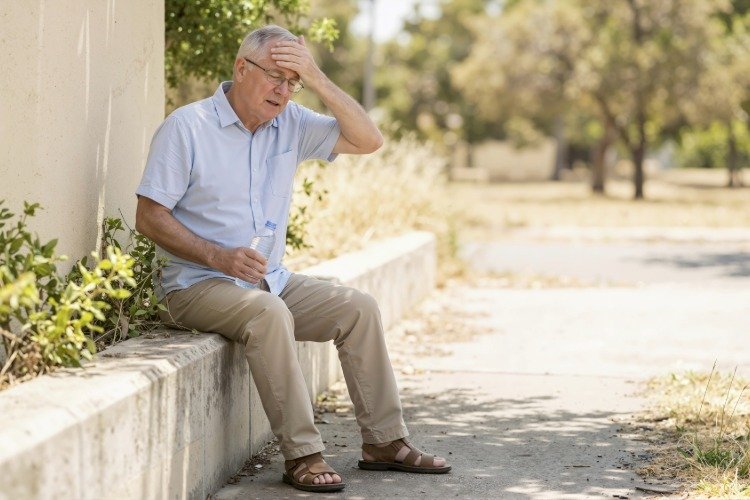
When someone tells me that walking is exhausting, it's tempting for me to immediately think they need more endurance. And sometimes they absolutely do. But, in reality, there are dozens of reasons someone might become tired while walking.
And, as we’ve discussed, there is another question worth asking. How expensive is their walking strategy?
To have a general idea of the answer, we just have to observe and investigate:
Are they constantly correcting their balance?
Are they gripping everything?
Are they co-contracting their muscles to create stiffness?
Are their steps extremely variable?
Are they fighting to control their trunk?
Do they veer when their head moves?
Does conversation completely change their gait?
Do obstacles suddenly make every step deliberate?
If so, improving endurance might only be part of the answer. The person may also need to become better at walking with efficiency.
Rehabilitation Isn't Just About Doing More
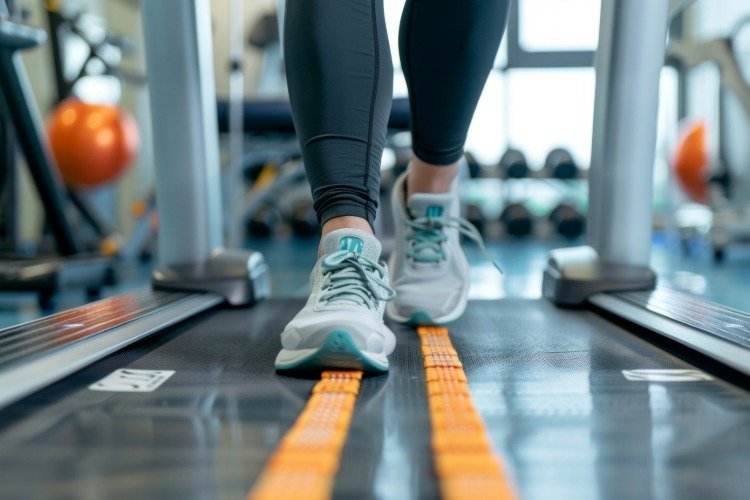
This is one reason progressive rehabilitation matters.
If you only practice walking straight ahead while staring forward in a quiet hallway, you probably will get very good at exactly that.
But everyday walking isn't like that. It’s messy and busy.
Eventually, depending on the person and their safety level, rehabilitation may need to introduce things like head turns, direction changes, speed changes, obstacles, uneven surfaces, conversations, visual distractions, and other tasks.
At first, these could make walking look worse. They may also make someone tired surprisingly quickly. That isn't automatically a sign that the exercise is failing or isn’t right.
Sometimes you're finally challenging the parts of walking that aren't efficient yet.
Of course, challenge still has to be appropriate. More difficulty isn't automatically better, particularly when someone has significant fall risk or medical limitations.
But the long-term goal isn't simply to survive increasingly difficult walking exercises.
It's for the nervous system to adapt to them, become better, and become more efficient overall.
What Can You Do With This Information?
If walking seems to take more energy than it should, don't automatically assume you just need to get stronger or build more endurance.
Take a closer look at how you're walking. Are you constantly correcting your balance? Does turning your head, changing directions, or talking while walking suddenly make things harder?
These might be clues that your balance and coordination could use some work.
A physical therapist can help identify these challenges and progressively train your walking to become safer, more coordinated, and potentially more efficient. Of course, fatigue can have plenty of other medical causes too, so new or worsening fatigue is worth discussing with your healthcare provider.
The goal isn't just to walk farther or longer. It's to make every step work a little better for you.
Final Thoughts: The Hallway Didn't Get Shorter
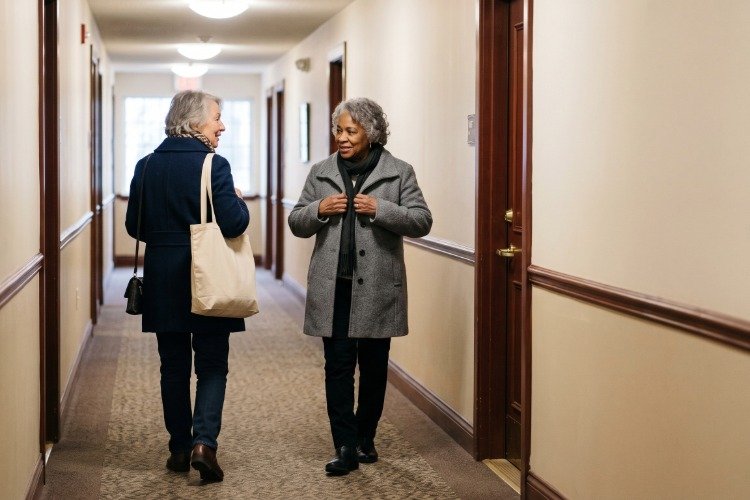
My patient might still get tired when we add head turns and distractions for a while. That's okay.
I'd actually expect the harder version of walking to cost her more right now. Her brain and body are solving a more complicated problem.
What I hope happens with practice is that she needs fewer unnecessary muscle contractions, fewer large corrections, less conscious control, and less effort to maintain the same walking path.
Maybe the hallway eventually feels easier. Not because the hallway got shorter or walking suddenly stopped requiring energy. But because her body became better at spending it.
And I think that's a useful way to look at movement far beyond walking.
Getting stronger gives you more capacity. Building endurance gives you more fuel. Improving balance helps keep you upright. But coordination determines how efficiently you use all of it.
Sometimes rehabilitation isn't just about teaching your body to work harder. It's teaching your body that it doesn't have to.
What’s Your Fall Risk Score?
Most people don’t notice their balance declining until something goes wrong.
This 10-minute self-assessment will show you:
• How stable your balance really is
• Where you're most at risk (strength, coordination, or falling ability)
• What to focus on first
No equipment. No guesswork. Just clear answers.
References
Boyer KA, Hayes KL, Umberger BR, et al. Age-related changes in gait biomechanics and their impact on the metabolic cost of walking: report from a National Institute on Aging workshop. Exp Gerontol. 2023;173:112102. doi:10.1016/j.exger.2023.112102
Peterson DS, Martin PE. Effects of age and walking speed on coactivation and cost of walking in healthy adults. Gait Posture. 2010;31(3):355-359. doi:10.1016/j.gaitpost.2009.12.005
Hortobágyi T, Finch A, Solnik S, Rider P, DeVita P. Association between muscle activation and metabolic cost of walking in young and old adults. J Gerontol A Biol Sci Med Sci. 2011;66(5):541-547. doi:10.1093/gerona/glr008
Wezenberg D, de Haan A, van Bennekom CAM, Houdijk H. Mind your step: metabolic energy cost while walking an enforced gait pattern. Gait Posture. 2011;33(4):544-549. doi:10.1016/j.gaitpost.2011.01.007
Fitzgerald C, Thomson D, Zebib A, Clothier PJ, Gupta A. A comparison of gait stability between younger and older adults while head turning. Exp Brain Res. 2020;238(9):1871-1883. doi:10.1007/s00221-020-05846-3
Smith E, Cusack T, Cunningham C, Blake C. The influence of a cognitive dual task on the gait parameters of healthy older adults: a systematic review and meta-analysis. J Aging Phys Act. 2017;25(4):671-686. doi:10.1123/japa.2016-0265
Kahya M, Moon S, Ranchet M, et al. Brain activity during dual task gait and balance in aging and age-related neurodegenerative conditions: a systematic review. Exp Gerontol. 2019;128:110756. doi:10.1016/j.exger.2019.110756
VanSwearingen JM, Perera S, Brach JS, Cham R, Rosano C, Studenski SA. A randomized trial of two forms of therapeutic activity to improve walking: effect on the energy cost of walking. J Gerontol A Biol Sci Med Sci. 2009;64(11):1190-1198. doi:10.1093/gerona/glp098
Collins KJ, Schrack JA, VanSwearingen JM, et al. Randomized controlled trial of exercise to improve walking energetics in older adults. Innov Aging. 2018;2(3):igy022. doi:10.1093/geroni/igy022
Ahuja S, Franz JR. The metabolic cost of walking balance control and adaptation in young adults. Gait Posture. 2022;96:190-194. doi:10.1016/j.gaitpost.2022.05.031