
Why Landing Quietly Can Help You Absorb Force Better

Essential Points:
Landing quietly can encourage better force absorption. Research shows that quieter landings can reduce vertical ground reaction forces and change how your joints move during impact.
One simple cue can change several movement mechanics. Instead of consciously controlling your ankles, knees, and hips, focusing on making less noise may help your body organize a softer landing.
Quiet doesn't automatically mean safe. Landing sound is a useful training cue when landing through your feet, but real falls may require rolling, spreading impact, or other techniques that aren't necessarily quiet.
Sometimes one of the simplest movement cues can accomplish more than a long list of instructions.
When I teach someone how to absorb a landing, I can tell them to bend their knees, use their ankles, lower their center of mass, avoid becoming too stiff, and gradually decelerate their body. Or I can say something much simpler.
Try to land quietly.
Your body often figures out the rest, and it’s quite impressive to be honest.
You Can Hear a Hard Landing
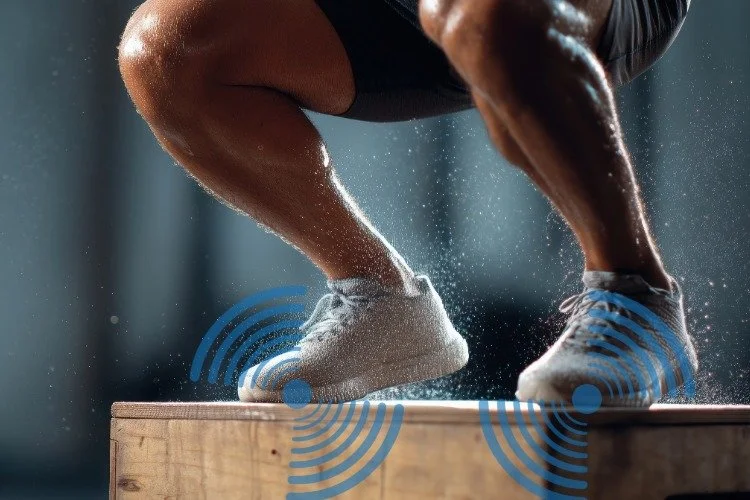
Think about the difference between jumping down and hitting the floor with a loud THUD versus landing with barely any sound, quiet as a mouse.
The noise itself isn't what makes one landing better than another, it’s just a guide. The sound can give you information about how your body is interacting with the ground.
Researchers have actually tested this.
In one study, people performed drop landings while intentionally landing normally, quietly, or loudly. Quieter landings were associated with lower vertical ground reaction forces (they land softer). Participants also used more movement through their ankles and knees when they tried to land quietly, effectively acting more like a spring to absorb shock. (1)
In other words, telling someone to make less noise changed the way they absorbed the landing.
Why Does "Land Quietly" Work?

Your body has to slow down when you hit the ground.
A stiff landing tends to bring that motion to a stop very quickly. A softer landing allows your ankles, knees, hips, muscles, and other tissues to participate in slowing you down over a longer period of time.
This is something I've discussed in other Science of Falling articles. Increasing the time and distance available to slow your body can help reduce how abruptly forces are applied.
What's interesting here isn't just the physics. It's that you don't necessarily have to think about all of those mechanics individually. Your body is pretty smart when given the right cues.
Trying to reduce the sound of your landing may encourage your body to organize many of those proper landing mechanics automatically.
Recent research has continued to support this idea. In one study, runners who were instructed to land quietly and softly reduced how quickly forces were applied to their bodies, even though peak ground reaction forces didn't significantly change. (2)
Another study found that young volleyball players who were told to land quietly, safely, or softly demonstrated improved knee-loading mechanics compared with landing without a particular focus. (3)
Different movements, but a similar lesson. Sometimes a simple instruction can change how your body handles impact.
Sometimes Simple Cues Are Better
Imagine trying to land while consciously thinking about six things at once.
Bend your knees
Move through your ankles
Keep your trunk controlled
Use your hips
Don't stiffen up
Slow yourself gradually
That's a lot to process during a movement that happens very quickly.
Now compare that with one goal: Make less noise.
This type of instruction gives you an outcome to focus on rather than asking you to consciously control every piece of your body. Your nervous system can then solve the movement problem.
That's one reason I like quiet landing as a training cue. You also get instant feedback. You don't need a force plate or motion-capture system, or even someone in the room with you.
You can hear whether the landing changed.
Quiet Doesn't Always Mean Safe
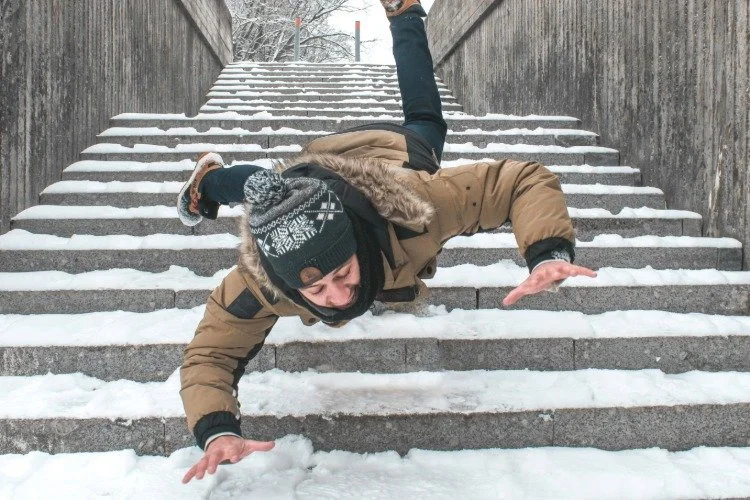
There is an important limitation here. The goal of falling isn't to be silent.
A real fall is much more complicated than stepping or jumping off a box in a laboratory.
Rolling across the ground may make noise. A purposeful slap during certain falling techniques can be loud. A parachute landing fall intentionally spreads contact across several parts of the body.
Those strategies may still help manage force even though they aren't quiet.
On the other hand, a scenario like falling on snow might make very little sound. But that doesn’t mean you can’t get an injury.
So, I wouldn't use sound as a universal measure of whether a fall was safe.
Instead, think of quiet landing as a training cue for learning how to absorb impact when landing through your feet. It teaches an important concept without requiring you to understand all of the biomechanics happening underneath it.
Final Thoughts: Listen to Your Landing

Good movement cues don't always need to be complicated, and sometimes your ears can tell you quite a bit about what your body is doing.
If two similar landings produce dramatically different sounds, something about the way you're interacting with the ground probably changed.
Learning to land more quietly can encourage you to use more movement, become less rigid, and spread deceleration over a little more time. And that's really the lesson in the quick read.
Quiet isn't the goal. Better force absorption is.
Quietness is simply one surprisingly useful way to learn it.
What’s Your Fall Risk Score?
Most people don’t notice their balance declining until something goes wrong.
This 10-minute self-assessment will show you:
• How stable your balance really is
• Where you're most at risk (strength, coordination, or falling ability)
• What to focus on first
No equipment. No guesswork. Just clear answers.
References
Wernli K, Ng L, Phan X, Davey P, Grisbrook T. The relationship between landing sound, vertical ground reaction force, and kinematics of the lower limb during drop landings in healthy men. J Orthop Sports Phys Ther. 2016;46(3):194-199. doi:10.2519/jospt.2016.6041
Sara LK, Gaudette LW, de Souza Júnior JR, et al. Cues to land softly and quietly result in acute reductions in ground reaction force loading rates in runners. Gait Posture. 2024;109:220-225. doi:10.1016/j.gaitpost.2024.02.008
Slovák L, Zahradník D, Land WM, et al. Knee joint biomechanics under external focus instructions promoting a quiet, safe and soft landing. Knee. 2026;58:104259. doi:10.1016/j.knee.2025.10.013