
Single Leg Balance: Why You Always Tip Toward the Leg You Lift (and How to Fix It)

This Article is part of the SoF Quick Read Series: Trimmed-down, real-life strategy guides for handling everyday balance moments. Lighter reads. Still grounded in science. Always worth your time, and linked to deeper articles for when the itch to learn arises.
Essential Points:
Foot tapping during single-leg balance isn’t weakness, it’s a safety strategy. Your brain keeps the lifted foot ready as an “emergency landing pad,” which prevents falls but also limits true balance learning.
Avoiding instability slows improvement. When you always bail toward the lifted leg, your body never learns how to control movement toward the standing leg, leaving one direction of balance undertrained.
Cross-step training builds real confidence and stability. Practicing cross-body stepping reactions (like grapevine steps) gives your brain a new recovery option, helping you balance longer, move more confidently, and reduce reliance on foot tapping.
Prefer to listen? Here’s a quick breakdown with a few extra insights:
Imagine this scenario:
You’re standing on one leg, maybe brushing your teeth, putting on pants, or trying a yoga pose, and within a few seconds your lifted foot starts lightly tapping the floor. Tap…balance…tap again. Before long, it feels less like balancing and more like you’re quietly rehearsing a dance routine.
If this sounds familiar, you’re not alone. In fact, this little habit is so common that I started calling it “tap dancing” with my patients. And here’s the surprising part, it’s usually not a strength problem, and not even a balance problem in the traditional sense.
It’s a safety strategy.
When you lift one leg, your brain automatically keeps that foot ready as an emergency landing pad. Each time you tap it down, you’re choosing control over risk, which is smart. But there’s a hidden tradeoff, your brain never fully learns how far it can safely lean over the standing leg.
Balance improves through exploration and recovery, not by avoiding instability. And when the lifted leg becomes your default escape route, your body stops exploring one entire direction of balance.
The good news? Once you understand this pattern, there’s a simple way to train around it.
Tap Dancing: The Subtle Sign You’re Wobbling
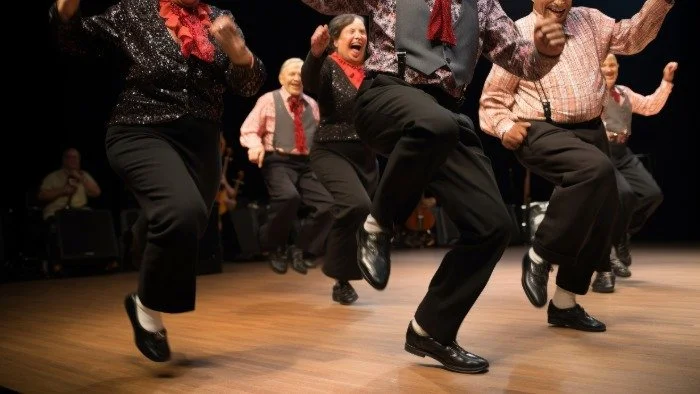
Over years of PT practice, I’ve noticed a pattern in my patients with balance issues. People repeatedly tap the lifted foot on the floor during single-leg balance. The thing is, it’s ALWAYS to the side of the lifted foot, never to the side of the balancing leg.
This struck me as odd, because we lose balance in all directions, not just one direction consistently.
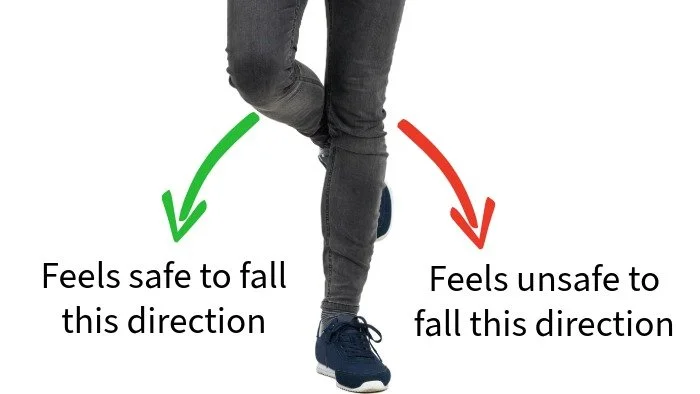
I started calling this behavior “tap dancing” because when someone is really unstable they just keep tapping and rebalancing themselves. After investigation, I discovered it’s usually a sign of poor stepping reaction ability, your ability to step out and catch yourself, especially to the side of your balancing leg. Your brain is saying, “I’d rather bail out in the direction of my free foot, than fall towards my balancing side.”
Recognizing this pattern is key.
The Secret Culprit: Your Lifted-Leg Safety Net
So why does this happen so consistently?
Your nervous system is always trying to keep you safe, not challenged. When you lift one leg, the brain immediately prioritizes having a quick escape option. The raised foot becomes a ready-to-deploy rescue plan, which is more effective if used on the same side, allowing you to instantly regain stability with minimal effort.
The problem isn’t that this strategy exists, it’s that it slowly becomes your only strategy.
And honestly, that instinct is smart. You’re choosing to control your fall instead of letting gravity decide. But here’s the catch, it keeps you from fully challenging your balance, you’ll bail early, so your body never fully explores balance toward the standing leg.
Think of it like riding a bike with training wheels…you’re stable, but not really learning to take full control of the bike yourself. In the case of your balance, you just aren’t quite confident enough to take the training wheels off and fully balance on the standing leg.
So the real goal isn’t stopping the safety instinct, it’s giving your brain a better, or at least alternative, backup plan if you do lose your balance towards your balance leg. This can unlock a large portion of you balance.
Cross-Step Training: The Balance Power-move
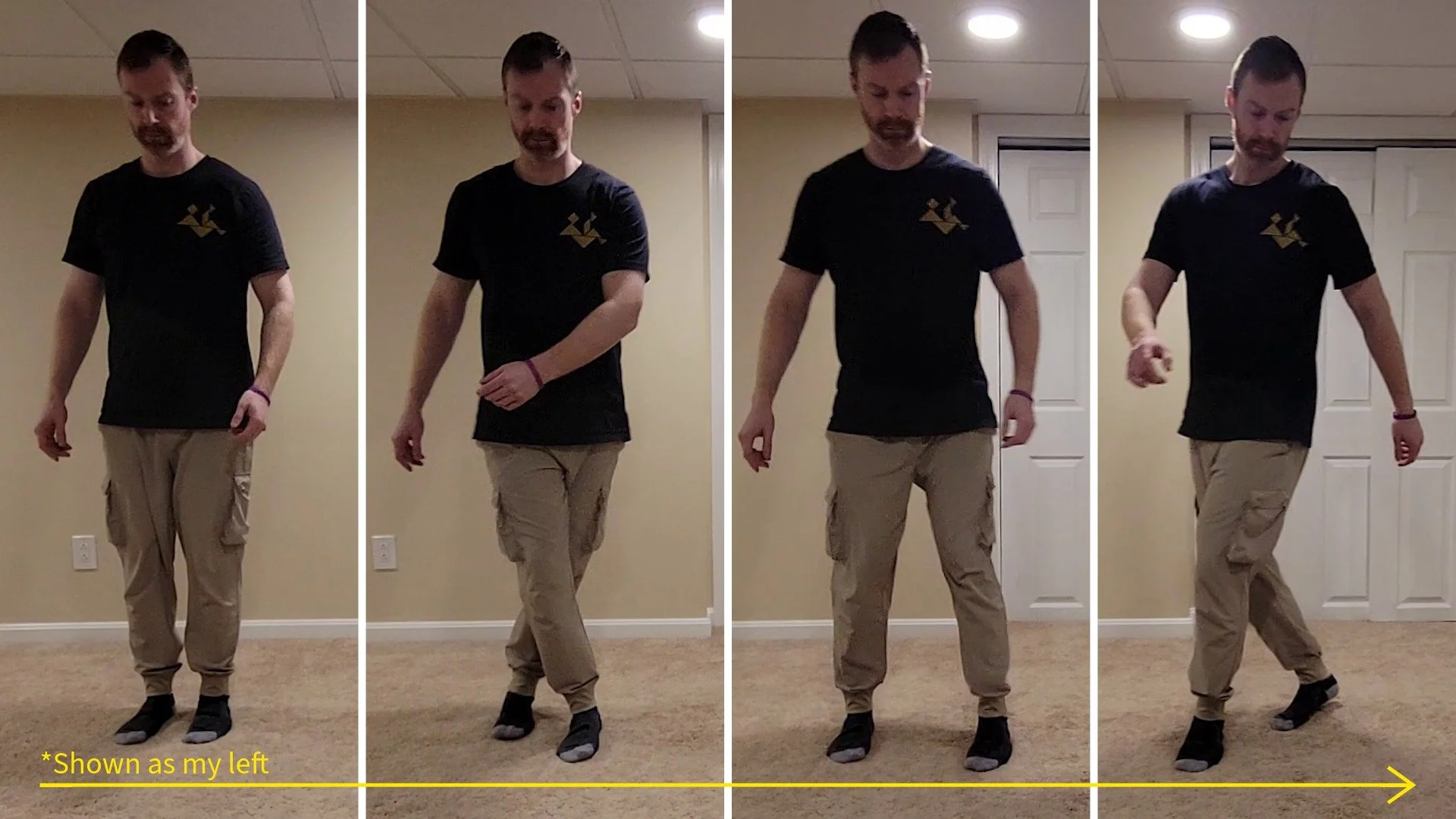
Grapevine to the left, image from Master Your Fall program
Here’s the balance power move: learning cross-leg stepping reactions.
Instead of bailing toward the lifted leg, you train your brain to step across the body if you start to tip
This creates a new safety option for the brain to rely on in addition to the catch to the side of the lifted leg
Over time, you gain confidence leaning toward your standing leg, improving balance in all directions, no foot-tapping needed
In practice, this looks a lot like the grapevine or carioca step you might see in sports drills, side steps that cross in front and behind. Not only does it teach a functional way to save yourself, but it also improves your overall stability.
Quick Wins You Can Start Today

Start simple:
Practice crossing one leg in front and behind the other while holding onto something sturdy
Once you get the pattern down, try it without holding support (keep support close though!)
Now try performing that while walking sideways
Then practice single-leg balance near a wall or counter with an intention of not falling to the side of the raised foot
If you lose balance towards the standing leg, simply cross-step and catch yourself while using external support as needed
Gradually reduce support until your confidence grows and you learn the pattern
Even a few minutes a day can make a huge difference. You’ll notice you can “hang on” longer and recover from wobbles instead of bailing out.
Final Thoughts: Confidence Is Key, And You Can Train It
Here’s the takeaway: losing balance toward the leg you lift isn’t a flaw, it’s a safety habit your brain developed because it doesn’t trust you can safely cross-step if needed. With cross-step practice, you retrain both your body and your confidence. Before long, single-leg balance becomes less of a gamble and more of a skill.
Remember, balance isn’t magic. It’s training, patience, and a little bit of “tap dancing” awareness. You can improve, one confident step at a time.
What’s Your Fall Risk Score?
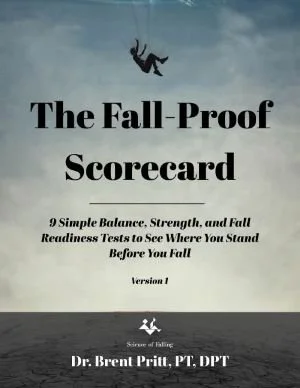
Most people don’t notice their balance declining until something goes wrong.
This 10-minute self-assessment will show you:
• How stable your balance really is
• Where you're most at risk (strength, coordination, or falling ability)
• What to focus on first
No equipment. No guesswork. Just clear answers.