
If You Fall from Height, Should You Land with Your Feet Together?
This Article is part of the SoF Quick Read Series: Trimmed-down, real-life strategy guides for handling everyday balance moments. Lighter reads. Still grounded in science. Always worth your time, and linked to deeper articles for when the itch to learn arises.
Essential Points:
Landing softly matters more than foot position: Research consistently shows that bending your hips and knees and avoiding stiff-legged landings are the biggest factors in reducing impact forces, not whether your feet are together or apart.
Feet together may improve stability, not reduce impact: Keeping your feet and knees together likely helps your body act as one connected system, limiting twisting, uneven loading, and rotational forces when landings aren't perfectly symmetrical.
Real-world falls are rarely perfect: Techniques taught in parkour, parachuting, and gymnastics all emphasize body organization because controlled, coordinated landings can better handle unpredictable forces and reduce injury risk during awkward or high-impact falls.
Prefer to listen? Here’s a quick audio breakdown with a few extra insights:
The first time someone told me to land with my feet together, I was standing on top of a painted wooden wall in my early twenties.
I was training parkour at the Flying Frog in Rohnert Park, California. It was my first adventure into the world of falling and mastering my body beyond lifting weights. Like many people learning parkour at the time, I spent countless hours jumping onto rails, walls, and narrow ledges while trying to make increasingly difficult landings look smooth and effortless.
During those early years of training with my coaches, one cue came up over and over again:
Keep the feet together.
When practicing precision jumps, where both feet land simultaneously on a narrow target like a rail, the instruction made pretty good sense. Two feet landing together created one large and stable platform. Plus, using both legs meant the load could be shared between them instead of asking one leg to absorb everything. If the landing surface was only a few inches wide, your feet either succeeded together, bailed together, or you used backup techniques like landing in a crane if possible (one leg slides down a wall, while the other remains on the ledge). No matter the scenario, both feet worked together as a team.
I accepted the advice and moved on. After all, I just wanted to jump around, do flips (which I was and still am awful at), and walk on rails.
Just recently, while discussing parachute landing falls, I heard the exact same instruction in a different context.
Feet together. Knees together. Squeeze the legs together.
This time, though, the intention of the technique wasn’t to land on walls or rails. The intention was to descend under a parachute, which is sometimes drifting sideways, sometimes swinging, and often touching the ground in less-than-perfect conditions.
Two entirely different activities.
The same advice.
Until recently, I had never stopped to ask why feet together really mattered beyond my surface level parkour and force absorption knowledge. And well, after a bit of thought, it seemed like a really important topic to dive into, especially if it can have some useful actionable advice for the everyday person like you.
Does Landing with Your Feet Together Actually Reduce Impact?
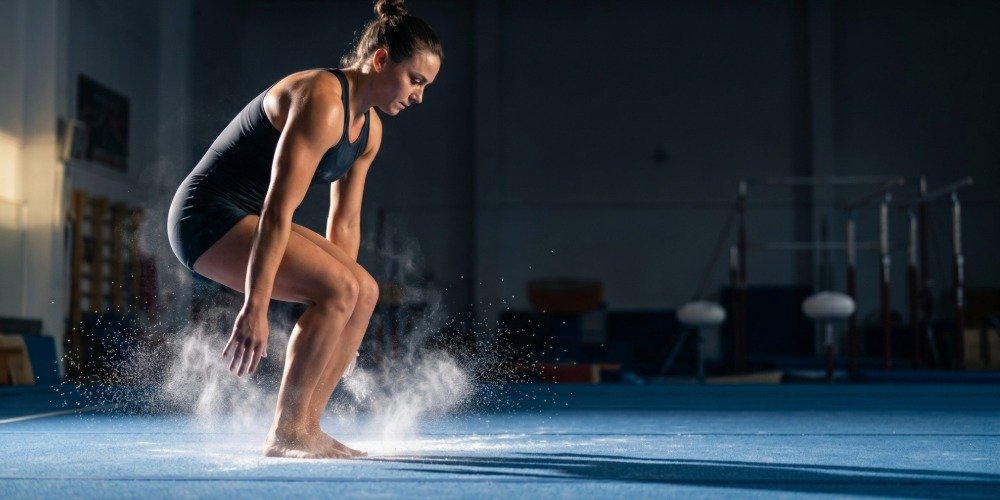
Let’s get straight to the surface level question. Does Landing With Your Feet Together Actually Reduce Impact?
The short answer is: Probably not. At least not directly.
Surprising right?
Intuitively we think landing with our feet together gives us increased force absorption because both legs are being used. In a way this is correct. Both legs do absorb more force than a single leg, but that doesn’t mean they have to stick together. From a purely vertical force absorption standpoint, whether the feet are together or shoulder-width apart probably doesn't matter very much. The legs can absorb just as much force in either position.
When researchers study landing biomechanics, the factors that consistently reduce impact forces are surprisingly simple (1, 2):
Bending the hips.
Bending the knees.
Increasing the distance over which you slow down.
Avoiding stiff-legged landings.
Your joints act like suspension in a truck. They smooth out the impacts.
The more your body can flex during landing, the longer it takes to come to a stop. That extra time lowers peak forces. (3)
If two people drop from the same height, the person who lands softly and bends their joints will generally experience lower forces than the person who lands stiffly.
Foot position, on the other hand, appears to matter much less.
In fact, landing research has shown that changes in body position and joint movement strategy can alter how forces are absorbed, suggesting that foot position alone is only one part of a much larger equation. (4)
If both feet contact the ground at the same moment and the body remains symmetrical, landing with your feet together probably doesn’t offer any meaningful reduction in force.
So why do sports that teach falling and landing techniques emphasize keeping the feet together?
The Problem with Real Falls
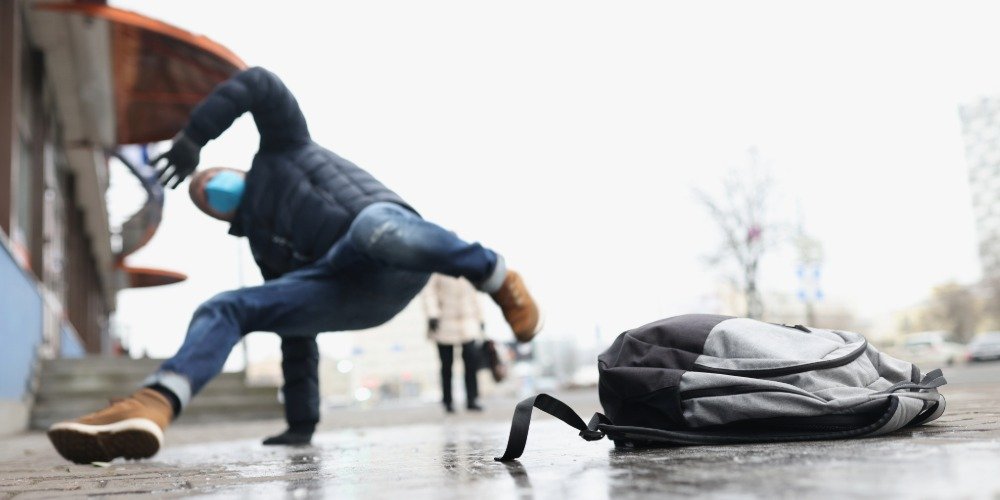
Real landings are rarely perfect.
Usually, you aren’t just going in one direction but instead you’re probably rotating, have forward or backward momentum, be drifting sideways awkwardly, and may even be landing on uneven ground.
Not to mention that you probably aren’t going to land symmetrically which means you’re already doomed to be off balance before you even hit the ground. This is especially true in parachuting, where canopy movements and changing wind conditions can make perfectly simultaneous foot contact nearly impossible.
So the question may not be, "Does landing with your feet together reduce force?"
But instead the real question might be, "What happens when one foot lands before the other?"
The Hidden Problem: Rotation
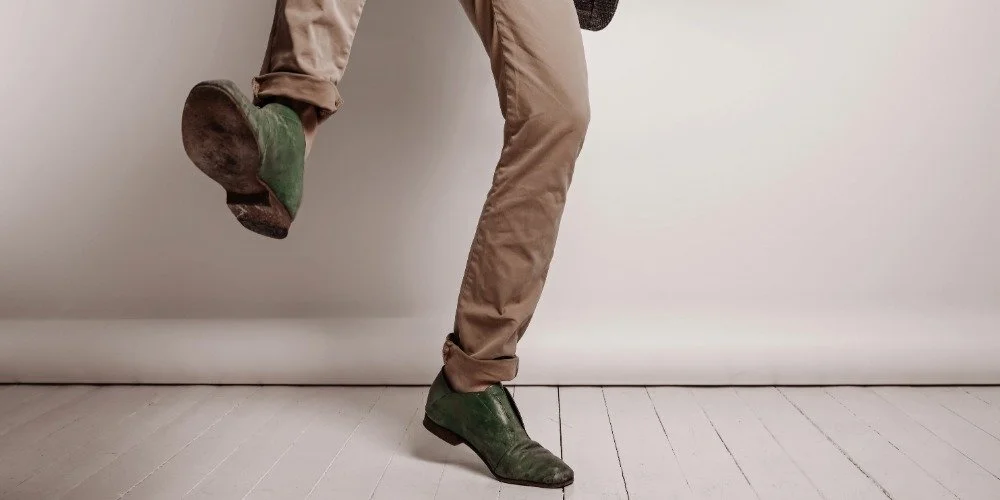
Imagine dropping from a height and landing primarily on your left foot. That left leg begins slowing down immediately, while the right side of your body continues moving.
The pelvis tilts. The trunk rotates. The knee experiences sideways forces. The body now has to deal with more than simple compression.
It must also manage:
Rotation
Shearing
Side bending
Pelvic tilt
Uneven loading
Research on single-leg landings has shown greater joint moments and greater demands on stability compared to symmetrical landings. (5)
The knee generally tolerates compressive forces quite well. On the other hand, it tolerates twisting and rotational forces much less effectively. (6)
This may be where the feet-together concept becomes important.
Two Legs or One System?
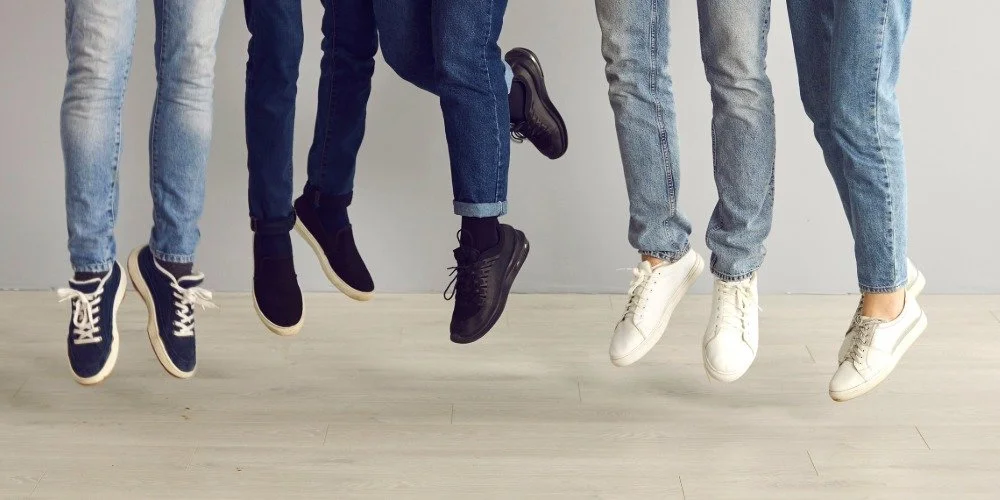
When the legs are separated, there is more opportunity for each side of the body to experience the landing differently.
When the knees and thighs stay together, the body may function more like a single connected structure. The muscles of the inner thigh, hips, pelvis, and trunk create tension between both sides of the body.
Even if one foot contacts slightly before the other, that connection may help:
Reduce pelvic tilt
Limit trunk rotation
Distribute forces between both legs
Decrease asymmetrical loading
Think about carrying a heavy table with another person. The goal isn’t just having two people share the weight. The goal is coordination. If one person suddenly stops, turns, or drops their side, the entire table twists and becomes harder to control. But when both people move together, the load stays organized and predictable.
The body may work similarly during a landing. Keeping both legs connected may help both sides respond together instead of allowing one side to suddenly stop while the other continues moving.
This could be one reason parachute instructors often emphasize squeezing the knees together before landing, even when perfectly simultaneous contact is impossible.
The goal may not be reducing impact itself; the goal may be reducing the additional forces created by uneven landings and allow proper preparation for a roll.
This may also explain why similar advice appears across completely different activities. A parkour athlete, gymnast, and parachutist may all be told to keep their feet together, but they are not always solving the exact same problem. Same cue used, different problem solved.
A parkour athlete may use it to land precisely on a small target. A gymnast may use it to control body position and stick a landing for a high score. A parachutist may use it to prepare for unpredictable ground contact and transition into a controlled fall to mitigate injury.
The common theme is organization. Keeping the body connected can make it easier to manage whatever happens after contact with the ground.
Why This May Matter More From Height
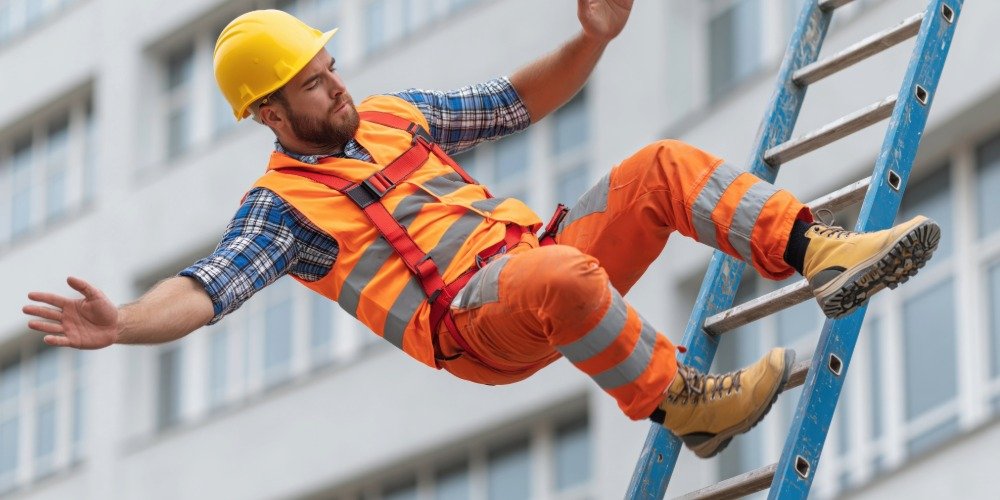
Small jumps often allow for correction. If one-foot lands first, you can take a step and adjust. After all, the impact is low.
Falls from greater heights leave less room for error in landing mechanics.
As landing energy increases, asymmetry becomes riskier. A slight difference in timing between the feet may introduce larger rotational forces that shoot up the kinetic chain.
The body has less opportunity to recover before those forces travel through the knees, hips, pelvis, and spine.
High-fall techniques such as parachute landing falls and certain parkour landings may have independently arrived at similar solutions because they are trying to solve the same problem: How do you keep the body moving as one system during an imperfect landing?
What Does The Research Actually Say?

The evidence strongly supports several conclusions.
Soft landings reduce impact forces. (3)
Greater hip and knee flexion lower peak forces. (3, 4)
Single-leg and asymmetrical landings increase joint loading and stability demands. (5)
Rotational and sideways forces can place additional stress on joints and ligaments beyond simple compression, particularly during awkward or asymmetrical landings. (6)
Current research has not demonstrated that landing with your feet together directly reduces impact forces. In fact, very little research has specifically examined feet-together landings as an isolated technique.
Parachute instructors have taught it for decades. Military airborne schools teach it. Parkour athletes often use it. Yet, these techniques were not born in a research facility.
This leaves us with an interesting possibility. Rather than reducing the total impact force itself, landing with your feet together may help reduce asymmetrical loading, unwanted rotation, and uneven force distribution between the legs. While this idea fits what we know about landing biomechanics, it has not yet been directly tested.
Final Thoughts: So, Should You Land with Your Feet Together During a Fall?
The answer is, as my graduate professors would always say, it depends.
If both feet contact the ground simultaneously and your body remains balanced, foot position doesn’t really seem to matter. But real falls are rarely perfect.
When landing from height, uneven timing, awkward positions, or changing directions can introduce forces beyond simple impact. Keeping the legs together may help the body remain aligned, reduce unwanted rotation, and help both sides of the body share the load.
It may not reduce the total force of the landing, but it may reduce the unwanted twisting, uneven loading, and instability that often accompany a real fall. And maybe that's why completely different movement disciplines have independently arrived at similar landing strategies.
Keep the feet together. Keep the knees together. Land as one system.
Because when a fall isn't perfect, and most real falls aren't, your body is strongest when it works together.
What’s Your Fall Risk Score?

Most people don’t notice their balance declining until something goes wrong.
This 10-minute self-assessment will show you:
• How stable your balance really is
• Where you're most at risk (strength, coordination, or falling ability)
• What to focus on first
No equipment. No guesswork. Just clear answers.
References
Baus J, Harry JR, Yang J. Jump and Landing Biomechanical Variables and Methods: A literature review. Critical Reviews in Biomedical Engineering. 2020;48(4):211-222. doi:10.1615/critrevbiomedeng.2020034795
Moon Y, Sosnoff JJ. Safe Landing Strategies During a Fall: Systematic Review and Meta-Analysis. Archives of Physical Medicine and Rehabilitation. 2016;98(4):783-794. doi:10.1016/j.apmr.2016.08.460
Effect of landing stiffness on joint kinetics and... : Medicine & Science in Sports & Exercise. Ovid. Published January 1, 1992. https://www.ovid.com/jnls/acsm-msse/abstract/00005768-199201000-00018~effect-of-landing-stiffness-on-joint-kinetics-and-energetics?redirectionsource=fulltextview
McNitt-Gray JL. Kinetics of the lower extremities during drop landings from three heights. Journal of Biomechanics. 1993;26(9):1037-1046. doi:10.1016/s0021-9290(05)80003-x
Pappas E, Hagins M, Sheikhzadeh A, Nordin M, Rose D. Biomechanical differences between unilateral and bilateral landings from a jump: gender differences. Clinical Journal of Sport Medicine. 2007;17(4):263-268. doi:10.1097/jsm.0b013e31811f415b
Quatman CE, Quatman-Yates CC, Hewett TE. A ‘Plane’ explanation of anterior cruciate ligament injury mechanisms. Sports Medicine. 2010;40(9):729-746. doi:10.2165/11534950-000000000-00000