
Can Virtual Reality Prevent a Real Fall?
Essential Points:
Virtual reality can improve balance, but only when it's used intentionally. Research suggests VR-based balance training can enhance standing balance, reaction speed, and confidence by combining movement with engaging, real-world challenges, making rehabilitation more motivating and effective.
The right challenge matters more than the technology itself. VR isn't a magic solution. Programs that target specific balance skills, obstacle negotiation, and dual-task activities are far more effective than simply playing VR games, and they work best as part of a comprehensive rehabilitation plan.
VR offers exciting potential, but it also comes with important limitations. While virtual environments can safely simulate real-world balance challenges, they can also temporarily increase dizziness and instability through sensory conflict. For that reason, VR should be used thoughtfully, with appropriate supervision and individualized training.
Prefer to listen? Here’s a quick audio breakdown with a few extra insights:
When I was growing up, virtual reality (VR) felt like something that belonged in science fiction. I was massively into video games, and the idea of VR always seemed to worm its way into popular stories, movies, and TV shows.
The idea was simple. You would put on a headset, leave the real world behind, and suddenly find yourself inside a video game. You could be and do anything you wanted. It was the kind of technology many kids from my generation dreamed about but never expected to be real one day. It just felt too good to be true, almost on the level of flying cars (which funny enough are technically real now too).
Now I use it multiple times per week, as if it was nothing special. We truly live in a fascinating world.
I own a Meta Quest 3, and I use it for much more than traditional gaming. I exercise in virtual environments, explore experiences that would be impossible to recreate in my living room, and even spend time with family members who live on the other side of the country. Playing mini-golf with your mom in Nebraska, and your brother in California, while simultaneously standing in your living room is quite an experience, and truly a great way to stay connected.
The technology still feels fairly new, and it hasn’t reached anything close to the mass adoption of smartphones, televisions, or traditional gaming consoles. However, modern VR has progressed far beyond a simple nerdy experiment.
It can be used for entertainment, exercise, education, social connection, professional training, pain management, and even rehabilitation.
As a physical therapist who spends a great deal of time thinking about balance and falls, one use is especially interesting to me. Can virtual reality help prevent someone from falling in the real world?
The early answer appears to be yes, at least in certain situations. It’s even being used in clinics right now for specific populations of people.
But there is an interesting contradiction hiding inside that answer.
VR can be used to improve balance. It can help clinicians measure balance. It may even help some people avoid future falls. At the same time, putting on a VR headset can temporarily make a perfectly healthy person less stable and motion sick.
So, with that being said, let’s dive into a virtual world and see what VR can really do for balance and falling.
What Does Virtual Reality Actually Mean?

When most people hear “virtual reality,” they probably imagine a headset covering someone’s eyes while that person swings their arms around their living room.
That is one type of VR, one I am deeply familiar with, but it is not the only kind being used in rehabilitation.
Virtual reality systems are often grouped into three broad categories.
Non-immersive VR presents a digital environment on a television or computer screen. Older Nintendo Wii and Xbox Kinect exercise games are common examples. The user can still see the room around them, while also affecting the in-game environment or character.
Semi-immersive VR uses larger screens or projected environments that fill more of the person’s visual field. A patient might walk on a treadmill while obstacles and pathways are projected in front of them. Think of a situation similar to IMAX movies while sitting in the front row, then add in some physical implements to interact with the virtual world. I often think of police training simulators in this category.
Fully immersive VR usually involves a head-mounted display. The headset replaces most or all of the person’s view of the real world with a digital environment. A pair of hand controllers are often used (but not always required) to interact with all aspects of the virtual world. Additional equipment can be used as well to further enhance the immersion including specialized treadmills, haptic gloves, haptic vests, and more. The Meta Quest 3 falls into this category.
These systems may all be described as VR, but they create very different levels of sensory and balance demands. A person stepping toward targets on a television is not having the same experience as someone walking through a completely immersive virtual landscape.
That difference is important when interpreting the research. A 2024 systematic review found that immersive VR training improved standing balance in older adults, but its effects on walking, general mobility, and fear of falling were less clear. In subgroup analyses, programs providing at least 4.5 total hours of training and immersive systems that did not use a head-mounted display were more likely to improve standing balance. (1)
In other words, more immersion does not automatically mean better rehabilitation. It’s how you use it that makes the difference.
How Is VR Used After a Fall?
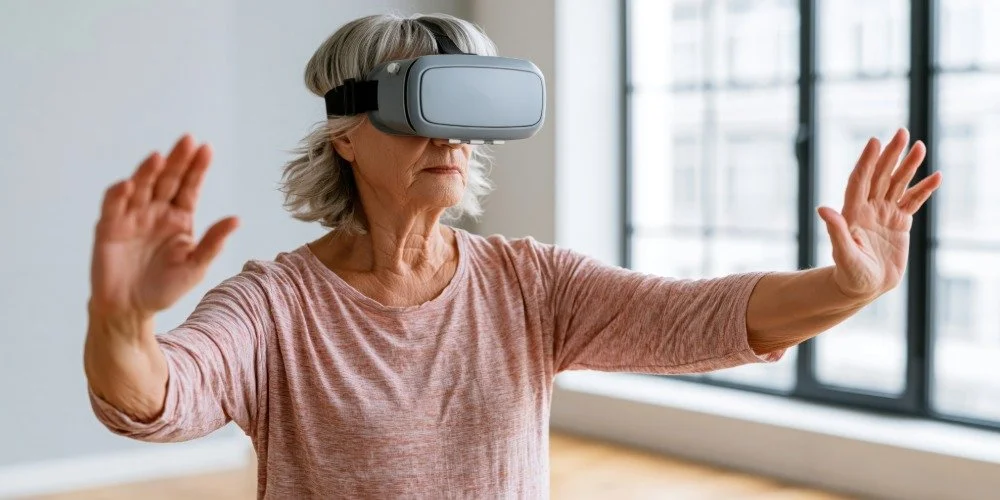
For obvious reasons, you can’t really rehabilitate “a fall.” You rehabilitate what happened before and after it.
A person may have fallen because of poor balance, reduced strength, difficulty with stepping reactions, a neurological or cognitive condition, medication effects, or a moment of distraction. The fall itself could cause a fracture, hospitalization, pain, weakness, reduced mobility, or a significant loss of confidence.
Even when the physical injury heals, the person may move differently afterward. A fear of falling can drastically change a person’s life.
They may walk more slowly, avoid leaving home, stop using stairs, or become afraid of situations they once managed without thinking. That reduced activity can create even more weakness and poorer balance, increasing the risk of another fall. It’s a significant downward spiral. (2, 3)
VR can be introduced at several points in that cycle to mitigate these issues.
A patient might use VR to practice:
Shifting weight from one leg to the other
Reaching outside their normal base of support
Stepping toward visual targets
Walking at different speeds
Navigating around obstacles
Turning and changing direction
Responding to distractions
Combining movement with a thinking task
Gradually returning to environments that feel intimidating
The exercises themselves aren’t unique. Physical therapists already train weight shifting, stepping, walking, reaction speed, and obstacle negotiation. I do these every day in assisted livings with nothing higher tech than multi-colored cones.
The difference is that VR can place those exercises inside a responsive and highly engaging environment.
Instead of telling someone to take ten steps to the right, a game might require them to dodge an object, follow a pathway, reach a target, or respond to something unexpected. The system can provide immediate feedback, keep score, adjust the difficulty, and encourage the person to repeat the task many times. They might not even realize they are rehabbing themselves if the game is engaging enough.
A 2023 systematic review and meta-analysis of 23 studies involving older adults with impaired balance found that VR interventions improved several measures of strength, physical function, balance, and fall-related self-efficacy. These included five-times sit-to-stand (5x STS) performance, Timed Up and Go (TUG) performance, Berg Balance Scale (BBS) scores, and falls efficacy scores. Balance-focused VR programs produced significant improvements in both TUG and BBS scores. In subgroup analyses, programs lasting 20 to 45 minutes per session, performed at least three times per week for five to eight weeks, produced significant improvements in TUG performance. (4)
That doesn’t mean every person struggling with balance needs that exact program. Instead it does suggest that VR must be treated like a real training intervention to gain the benefits.
Playing one game, one time is not rehabilitation, it’s just an interesting experience at most and a potential gimmick at worst.
Can VR Help Prevent a Fall Before It Happens?
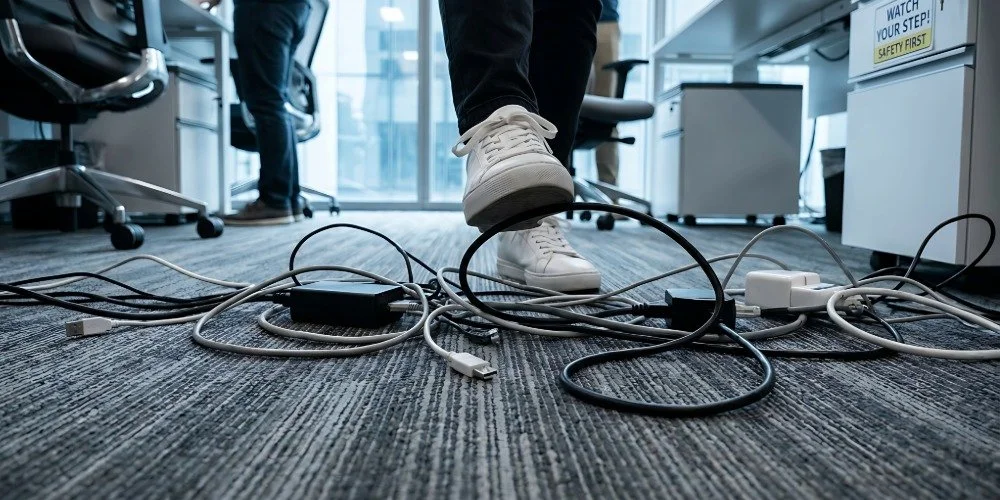
Many falls aren’t caused because a person can’t stand still. They occur because the person cannot adapt quickly enough to a changing situation.
A foot catches the edge of a rug. Someone steps into the person’s path. The sidewalk changes height. The person looks over their shoulder while walking. They try to carry something while navigating a crowded room.
These are movement problems, but they are also attention and decision-making problems. Most people don’t realize how much of their brain is actually being used to stay stable. While navigating any environment your brain must notice potential obstacles, decide what to do, and adjust quickly enough to avoid them.
Traditional balance exercises can build the physical capacity needed to respond. However, a predictable sterile clinic doesn’t always reproduce the complexity of the real world.
Virtual reality can create that complexity while keeping the environment controlled and safe.
One of the largest and most frequently discussed studies in this area was the V-TIME trial. (5) Researchers randomized 302 adults (282 included for analysis) between 60 and 90 years old who were at high risk of falling. Each participant had experienced at least two falls during the previous six months. One group completed treadmill training, while the other completed similar treadmill training combined with a non-immersive virtual environment projected onto a large screen.
The virtual environment presented obstacles, multiple pathways, and distractions that required participants to continually adjust their steps in response to what appeared on the screen. (5)
During the six months after training, the group receiving treadmill training plus VR had a significantly lower fall rate than the treadmill-only group. (5) The incidence rate ratio was 0.58, meaning the fall rate was approximately 42% lower in the VR group. No serious training-related adverse events were reported.
The VR program didn’t just ask the participants to walk more. It required them to make decisions and repeatedly alter their steps while walking. Although the study can’t prove exactly why the fall rate decreased, the results suggest that practicing gait adaptation within a complex environment may be beneficial beyond treadmill walking alone.
This points toward one of VR’s greatest potential strengths.
Traditional exercise can improve the machinery involved in balance. VR may help someone practice using that machinery in a complicated environment.
Walking Is Also a Thinking Task

As I’ve previously mentioned, balance often feels automatic, but it requires far more mental processing than most of us realize.
Think about a simple trip to a grocery store.
You are controlling your body, looking up and down the aisle, searching for an item, avoiding another shopper, remembering what is on your list, and deciding where to go next.
That is a highly complex situation which researchers often simplify into what we call a dual-task activity. You are moving while performing another mental task.
Dual-tasking becomes especially important in fall prevention because balance can deteriorate when attention is split. (6) Someone may walk safely in a quiet and blank hallway, but struggle when asked a question, shown an obstacle, or placed in a busy environment.
VR is particularly good for combining movement and cognitive challenges.
A virtual program can ask someone to step over an obstacle while remembering a series of facts, identify a target while walking, respond to changing directions, or make decisions while navigating a simulated environment.
A 2025 systematic review and meta-analysis found that VR training improved several aspects of dual-task walking in older adults, including dual-task gait speed, stride length, and performance on a dual-task Timed Up and Go (TUG) test. (6) Although it’s important to note, the researchers advised longer follow-up and more research to further connect those improvements to real-world fall prevention.
That last part matters.
Improving a balance test is directionally good, but it’s not automatically the same as preventing a fall. To establish that connection fully, researchers will have to track whether the improvements last and whether participants actually experience fewer falls over time within future studies.
VR May Also Help Measure Balance
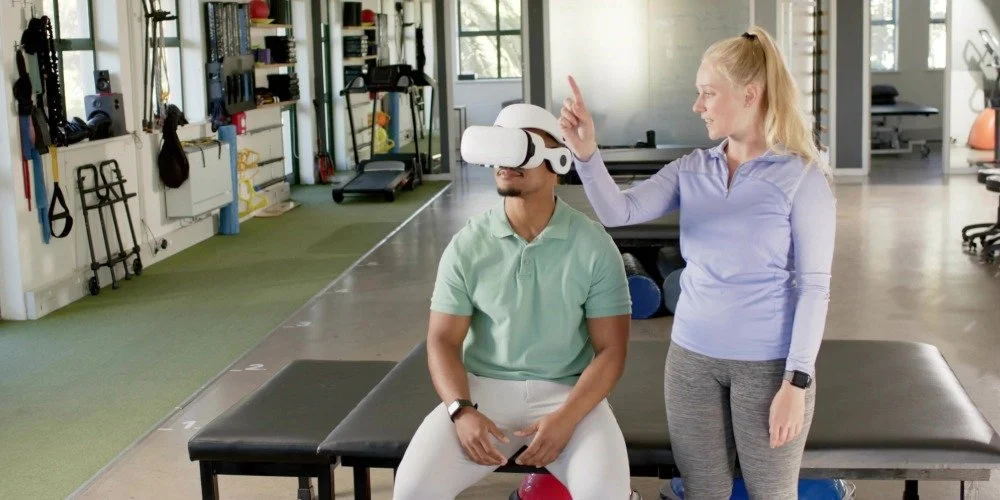
Most clinical balance tests take place in simple environments. After all, PT clinics are designed to be safe and accessible.
Stand with your feet together. Reach forward. Rise from a chair. Walk a short distance. Turn around. Step over an object. These tests are valuable, but they cannot fully reproduce the environments where people actually fall.
VR gives researchers and clinicians the ability to change the visual environment while carefully measuring how someone responds, all from the safety of a clean and accessible clinic.
The VR world can alter:
Visual motion
Walking speed
Obstacle placement
Environmental distractions
Perceived height
Pathway width
Cognitive demands
The amount of visual information available
Depending on the equipment being used, the headset and additional sensors may also record head movement, body sway, response time, step placement, and movement variability. Some measurements can be collected by the headset itself, while others require motion trackers, force plates, instrumented treadmills, or similar specialized equipment found in some research labs.
A systematic review of 19 studies involving 637 participants found that VR headset systems could create realistic scenarios for assessing and training functional balance. (7) The review also found some evidence that VR-based testing could help distinguish between healthy people and those with balance impairments, although only one included study specifically examined that capability. However, the overall quality of the included studies was low, so these findings should be viewed as promising rather than conclusive. (7)
Unfortunately, we aren’t yet at the point where putting on a VR headset can reliably predict who will fall next year. This is relatively new technology after all, and research has not found that type of predictive accuracy as of yet.
However, VR may eventually allow clinicians to see balance problems that do not appear during a quiet, predictable clinic test.
Why Might VR Work?
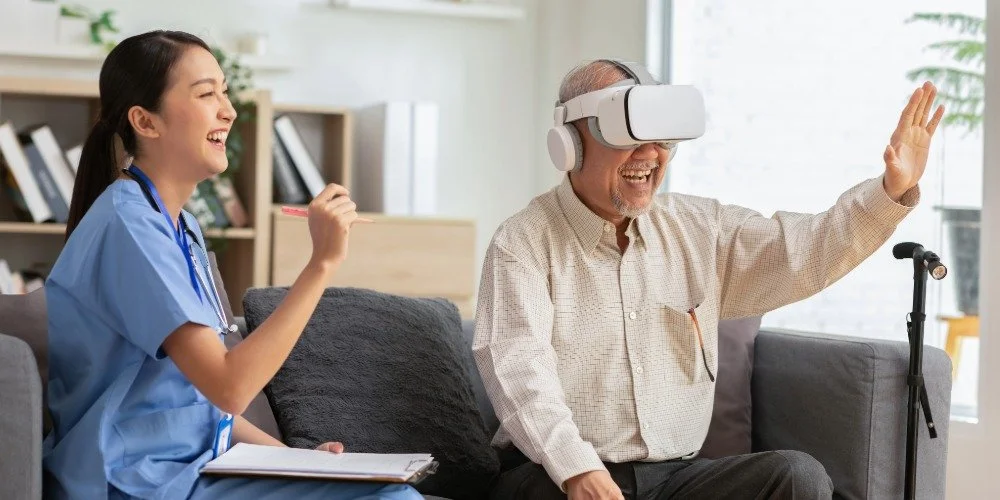
Virtual reality is not a treatment by itself. A poorly designed VR game can be just as ineffective as a poorly designed exercise program. The potential benefit comes from what the technology allows a person to practice.
Repetition
Balance and walking improve through practice. VR can make repetitive exercises feel less repetitive by turning them into goals, challenges, or games.
Immediate feedback
A patient can see whether they reached a target, cleared an obstacle, shifted their weight far enough, or reacted quickly enough.
Progressive difficulty
The environment can become faster, busier, less predictable, or more physically demanding as the person improves almost instantly if needed through therapist or user-led intervention.
Task-specific practice
Someone who struggles with obstacles can practice obstacles. Someone who becomes unstable while distracted can practice moving while distracted.
Controlled exposure
VR can simulate busy streets, crowded rooms, heights, obstacles, or other challenging situations without perfectly recreating those hazards in the clinic.
Engagement
People are more likely to benefit from an exercise program they actually perform. Games, scores, visual rewards, and new environments may help some patients remain interested. However, novelty should not be confused with effectiveness. The patient still needs an appropriate challenge, a sufficient training dose, and a reason to believe the virtual task will transfer to real life.
Can VR Make a Healthy Person Less Balanced?
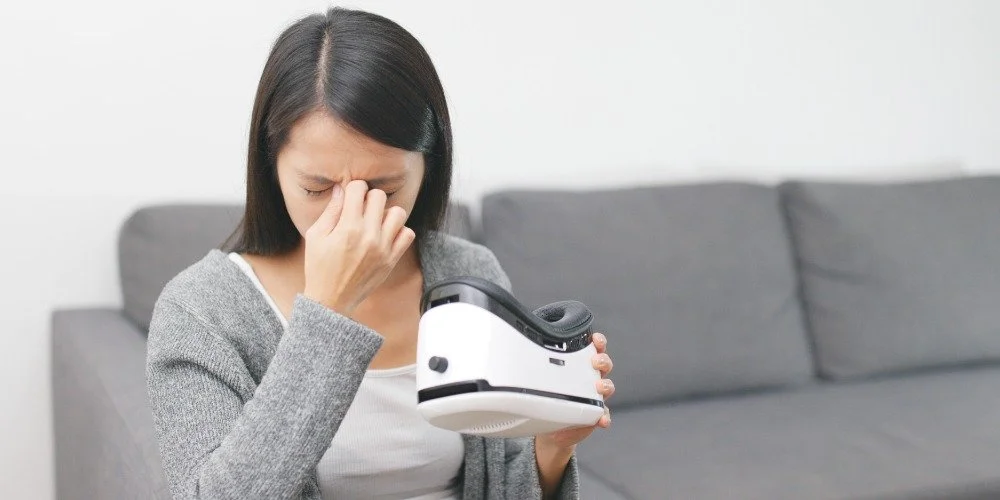
This is where the story becomes more complicated.
When I put on my Quest 3, my eyes may tell me that I’m moving through a completely different environment. I might appear to be traveling forward, standing at a height, or surrounded by moving objects.
My inner ear and the sensation coming from my feet may tell a different story. Physically, I’m most likely still standing still in my house.
Balance depends on the brain combining information from vision, the vestibular system, and the somatosensory system. When those systems disagree, it’s called sensory conflict, and the brain must decide which information to trust.
VR can naturally create this sensory conflict and lead to cybersickness, also known as VR sickness, which is similar in feeling to motion sickness. Although VR sensory conflict is one way to become cybersick, researchers have acknowledged that it is not the only way. (8)
Researchers call the sensation of visually induced self-motion “vection”. You may intellectually know that you are standing still, but the movement of the virtual environment can make your brain and body feel as though it is moving.
The result can include:
Dizziness
Disorientation
Nausea
Eyestrain
A feeling of continued movement
Temporary difficulty reorienting to the real world
One study found that simply wearing VR headsets increased body sway in healthy young adults during standing. (9) The researchers suggested that altered sensory integration and the physical presence of the headset may both have contributed to the change. It’s important to note that the findings could not be explained by the virtual imagery alone though.
A systematic review of 55 head-mounted-display studies found that VR sickness varied according to the content, visual motion, movement method, and length of exposure. (10) Gaming content produced some of the highest symptom scores, although there was substantial variation between users and experiences.
This does not mean that VR is inherently dangerous.
It means that entering a virtual environment changes the sensory problem your brain is trying to solve. For some people, these problems can and do get solved the more they use VR. Unfortunately, this is not true for everyone. Cybersickness with VR should be an area for investigation if it occurs, especially in those with preexisting balance problems.
What Happens After the Headset Comes Off?
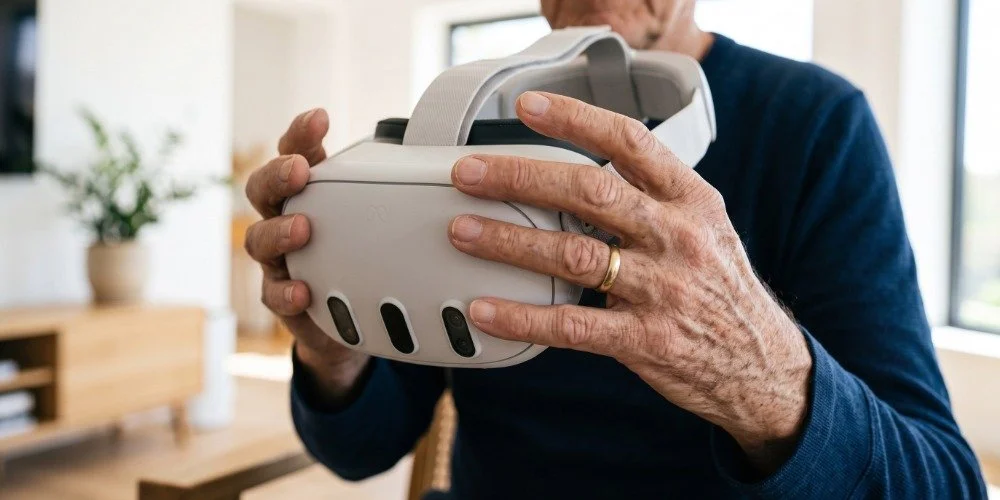
Most regular users have probably experienced some form of transition when leaving VR.
The room may briefly feel strange. Your eyes may need a moment to readjust. You may feel as though your body is moving differently, especially after an intense experience.
For most healthy young users, these effects appear to be temporary. This type of experience has not been studied in depth in older populations at this time. Overall, it’s important to note that this can vary considerably from person to person.
In one study, participants played the VR rhythm and exercise game Beat Saber for either 10 or 50 minutes. (11) Symptoms were greater immediately after the longer session, although most measures returned to baseline within 40 minutes. A smaller portion of participants continued to report stronger symptoms after the longer exposure.
This is one reason it’s reasonable to pause after an intense VR session before immediately walking down stairs, driving, or moving through a cluttered environment, especially if you are feeling VR aftereffects of any kind.
It also has obvious impact for clinical rehabilitation.
A healthy, experienced VR user standing in an open living room is very different from an older adult with impaired balance using a headset for the first time. That person may require shorter play times, closer supervision, hands-on physical support, and additional time to reorient after the headset is removed.
Can Healthy People Train Balance With VR?
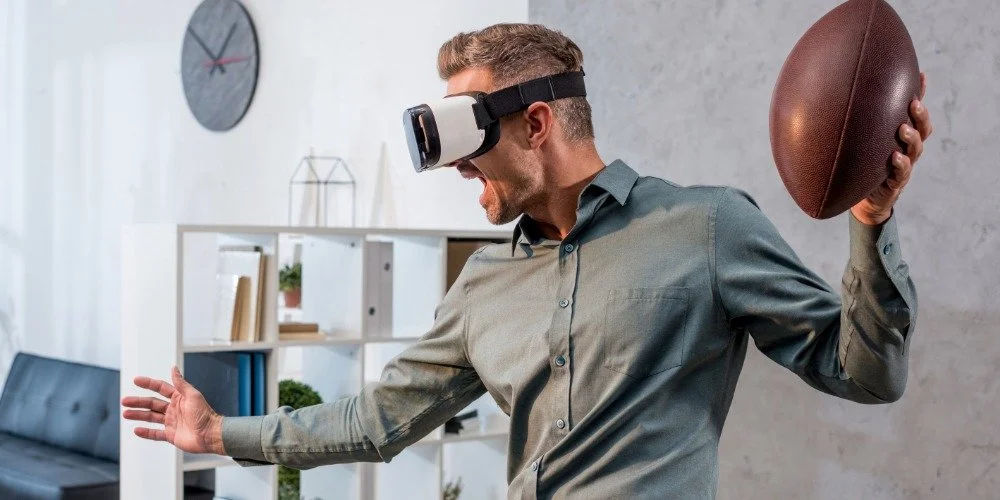
So can a healthy person benefit in the realm of balance from VR? Probably, but simply using VR does not guarantee meaningful balance training.
A seated roller-coaster simulation may create dizziness without building useful balance skills. A standing game may require movement but still offer too little challenge to produce adaptation. Another game might improve reaction speed, squatting endurance, coordination, or cardiovascular fitness without meaningfully improving the person’s ability to recover from a trip.
Research supports this caveat. VR programs designed specifically around balance training appear to produce better balance outcomes than more general game-based programs. (4)
The question should not be, “Does VR improve balance?”, but rather, “What balance problem does this VR experience require the person to solve?”
A useful balance-focused experience might require the user to:
Shift their center of mass (CoM)
Control movement near the edge of their base of support (BoS)
Step quickly in different directions
React to unpredictable visual information
Coordinate the eyes, head, and body
Maintain stability while attention is divided
Adapt to changing sensory conditions
Those are real balance demands, and useful skills to improve. Even then, it’s important to ask whether improvements inside the game transfer outside the headset.
Becoming excellent at a virtual task is not automatically the same as becoming more resilient during a real trip, slip, or loss of balance. In healthy people, balance training tends to produce its largest improvements in the specific tasks that are practiced, with considerably less improvement in unfamiliar or untrained balance tasks. (12)
VR Is a Tool, Not a Replacement for Rehabilitation
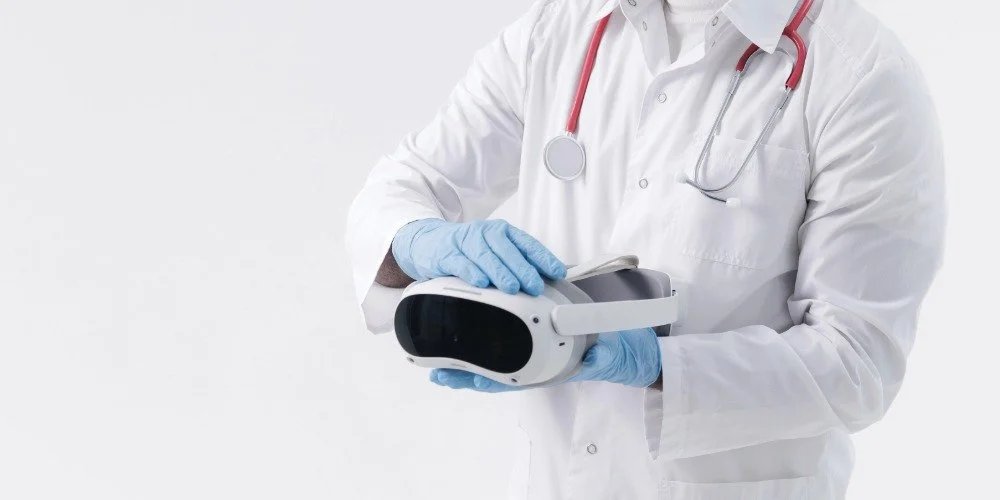
VR should be viewed as one possible addition to fall prevention or rehabilitation, not as a replacement for strength training, walking practice, appropriate medical care, home modifications, medication review, or skilled physical therapy. (13, 14)
It also won’t be right for every patient.
Some people may find the headset uncomfortable. Others may experience significant nausea or dizziness. A person with severe visual dependence, vestibular symptoms, cognitive impairment, neck discomfort, or major standing instability may need a heavily modified experience or a different approach entirely.
Depending on the person’s abilities, fall risk, and the equipment being used, precautions may include:
Close supervision
A gait belt or safety harness
Stable hand support
A clear physical space
Short initial sessions
Seated or supported activities
Gradual progression
Monitoring during and after the session
Research examining headset-based VR for balance training emphasizes that safety depends on the type of display, the virtual environment, the length of exposure, the usability of the system, and the user’s age, health, and severity of impairment. (7)
Non-immersive or semi-immersive systems may sometimes be more appropriate than a fully immersive headset because the person can retain some awareness of the physical environment around them. A fully immersive headset blocks most of the surrounding visual information, which can be a large problem for someone who is already unstable.
The goal is not to use the most impressive technology available. The goal is to select the safest tool that creates the right movement challenge. After all, the goal is better balance, not just using technology for technology’s sake.
Where Does This Technology Go Next?
Modern consumer VR is still in an unusual stage.
The technology is good enough to be genuinely useful and fun, but it has not yet become an ordinary part of daily life or rehabilitation. From my perspective as both a physical therapist and regular VR user, it still feels caught somewhere between novelty and normality. Even many people of my generation and younger have never used a VR headset.
The research is in a similar stage. Studies use different types of VR, patient populations, programs, training doses, comparison groups, and outcome measures. (1) Some use consumer headsets, while others use projected screens, motion-tracking cameras, treadmills, or specialized rehabilitation equipment. These differences make it difficult to compare studies and determine which parts of an intervention are producing the benefit.
As we have explored, the existing research is promising, particularly for improving certain measures of standing balance, practicing obstacle negotiation, combining movement with cognitive demands, and encouraging repeated exercise.
The evidence becomes less certain when we ask whether VR is consistently better than well-designed traditional rehab or whether it reliably prevents real-world falls across different populations. Reviews have found noticeable improvements in some balance outcomes, but not in every measure of walking, mobility, confidence, or fall risk. (1)
At this point, VR appears best viewed as another tool in the rehabilitation toolbox. It may be extremely useful in the right situation, but it is not automatically the best choice for every patient or every balance problem.
Future systems may be able to adjust difficulty automatically, detect subtle movement problems, recreate features of a patient’s home or community, and use sensor data to track changes over time. Those possibilities are plausible, but they still require careful testing before they can be treated as reliable clinical tools.
Home-based VR and interactive exercise rehabilitation are also beginning to emerge. A 2025 systematic review identified six studies enrolling 407 older adults with frailty or prefrailty who used home-based VR, exergaming, or similar interactive systems. The combined results showed an improvement in balance, although improvements in strength and functional mobility were less clear. Future consumer systems may make it easier for therapists to prescribe, review, and adjust these programs remotely. (15)
That future is possible, but only if safety, accessibility, affordability, clinical usefulness, and transfer to the real world remain part of the conversation.
Final Thoughts: Can a Virtual World Prevent a Real Fall?
Virtual reality doesn’t improve balance simply because it is virtual. It works when it gives the brain a meaningful problem to solve beyond what it can do normally.
VR can create obstacles without placing a real obstacle in front of the patient. It can add distractions without putting someone in a dangerous crowd. It can challenge visual processing, decision-making, stepping, and coordination inside an environment that can be adjusted to the person’s ability.
That makes it an exciting tool for rehabilitation after a fall and potentially for prevention before one occurs.
But the same sensory conflict that makes VR powerful can also make someone temporarily less stable. The challenge must be selected carefully, especially for someone who already has impaired balance.
As an avid VR user, I’m excited about where the technology is heading. It already allows me to exercise, play, explore, and spend meaningful time with family members hundreds of miles away. As a physical therapist, I’m even more interested in what happens when the technology is designed around human movement, and balance specifically.
A missed virtual obstacle doesn’t have to carry the same consequences as missing one in the real world, as long as the training environment itself is safe. Maybe that gives us an opportunity to practice the movements, decisions, and reactions that can prevent an everyday fall.
What’s Your Fall Risk Score?
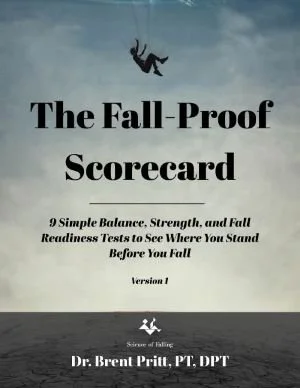
Most people don’t notice their balance declining until something goes wrong.
This 10-minute self-assessment will show you:
• How stable your balance really is
• Where you're most at risk (strength, coordination, or falling ability)
• What to focus on first
No equipment. No guesswork. Just clear answers.
References
Lee J, Phu S, Lord S, Okubo Y. Effects of immersive virtual reality training on balance, gait and mobility in older adults: A systematic review and meta-analysis. Gait & Posture. 2024;110:129-137. doi:10.1016/j.gaitpost.2024.03.009
Scheffer AC, Schuurmans MJ, Van Dijk N, Van Der Hooft T, De Rooij SE. Fear of falling: measurement strategy, prevalence, risk factors and consequences among older persons. Age And Ageing. 2008;37(1):19-24. doi:10.1093/ageing/afm169
MacKay S, Ebert P, Harbidge C, Hogan DB. Fear of falling in Older Adults: A scoping review of Recent literature. Canadian Geriatrics Journal. 2021;24(4):379-394. doi:10.5770/cgj.24.521
Ren Y, Lin C, Zhou Q, Yingyuan Z, Wang G, Lu A. Effectiveness of virtual reality games in improving physical function, balance and reducing falls in balance-impaired older adults: A systematic review and meta-analysis. Archives of Gerontology and Geriatrics. 2023;108:104924. doi:10.1016/j.archger.2023.104924
Mirelman A, Rochester L, Maidan I, et al. Addition of a non-immersive virtual reality component to treadmill training to reduce fall risk in older adults (V-TIME): a randomised controlled trial. The Lancet. 2016;388(10050):1170-1182. doi:10.1016/s0140-6736(16)31325-3
Wei X, Huang C, Ding X, et al. Effect of virtual reality training on dual-task performance in older adults: a systematic review and meta-analysis. Journal of NeuroEngineering and Rehabilitation. 2025;22(1):141. doi:10.1186/s12984-025-01675-z
Soltani P, Andrade R. The influence of Virtual Reality Head-Mounted Displays on Balance Outcomes and Training Paradigms: A Systematic review. Frontiers in Sports and Active Living. 2021;2:531535. doi:10.3389/fspor.2020.531535
Weech S, Kenny S, Barnett-Cowan M. Presence and cybersickness in virtual reality are negatively related: a review. Frontiers in Psychology. 2019;10:158. doi:10.3389/fpsyg.2019.00158
Imaizumi LFI, Polastri PF, Penedo T, et al. Virtual reality head-mounted goggles increase the body sway of young adults during standing posture. Neuroscience Letters. 2020;737:135333. doi:10.1016/j.neulet.2020.135333
Saredakis D, Szpak A, Birckhead B, Keage H a. D, Rizzo A, Loetscher T. Factors Associated with Virtual Reality Sickness in Head-Mounted Displays: A Systematic Review and Meta-Analysis. Frontiers in Human Neuroscience. 2020;14:96. doi:10.3389/fnhum.2020.00096
Szpak A, Michalski SC, Loetscher T. Exergaming with Beat Saber: An investigation of virtual reality aftereffects. Journal of Medical Internet Research. 2020;22(10):e19840. doi:10.2196/19840
Kümmel J, Kramer A, Giboin LS, Gruber M. Specificity of Balance Training in Healthy Individuals: A Systematic Review and Meta-Analysis. Sports Medicine. 2016;46(9):1261-1271. doi:10.1007/s40279-016-0515-z
Centers for Disease Control and Prevention. Preventing falls and hip fractures. Centers for Disease Control and Prevention. Published January 2026. Accessed July 26, 2026. https://www.cdc.gov/falls/prevention/index.html
Montero-Odasso M, Van Der Velde N, Martin FC, et al. World guidelines for falls prevention and management for older adults: a global initiative. Age And Ageing. 2022;51(9). doi:10.1093/ageing/afac205
Alhasan H, Alandijani E, Bahamdan L, et al. Home-Based Virtual Reality Training for Enhanced balance, strength, and mobility among Older Adults with frailty: Systematic Review and Meta-Analysis. JMIR Serious Games. 2025;13:e67146. doi:10.2196/67146