
The Fall Breakdown Episode 7: Gate Trips, Barrel Rolls, and Slippery Slides
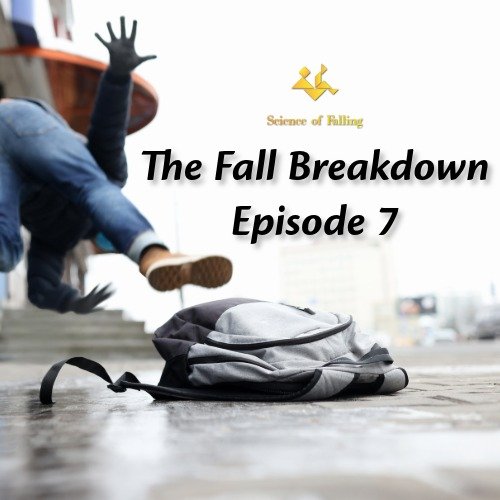
Most people think falls are random accidents, just bad luck at the wrong time. But when you slow them down, a different story emerges. Small mistakes in body position, foot placement, awareness, or reaction time often set the stage long before someone actually hits the ground.
In The Fall Breakdown, we analyze real-world falls to uncover what happened, why it happened, and what can be learned from it. Whether it's an athlete making an incredible recovery, someone tripping over an everyday obstacle, or a slip on a wet surface, every fall contains valuable lessons about balance, movement, and injury prevention.
In this episode, we'll look at a trip over a gate, an elite cricket catch that showcases excellent falling mechanics, and two very different slip-and-fall scenarios. Along the way, you'll see how better movement strategies can help you react faster, stay safer, and sometimes avoid the fall altogether.
Watch the video below and see if you can spot the key mistakes, and successes, before we break them down.
Fall Breakdown Episode 7 Recap: What You Can Learn from These Falls
Fall #1: Tripping Over the Gate
What Happened in This Fall
A woman attempts to step over a gate but catches her trailing foot on the top rail. She tries to recover with a quick hop but can't regain control and falls forward.
Why the Fall Happened
She focused on getting the lead leg over the gate but didn't clear the trailing foot.
Her toe dragged across the obstacle.
Once she committed her body weight forward, there wasn't enough time to recover.
How It Could Have Been Prevented
When stepping over a gate, don't assume you'll clear it.
Get your front foot planted securely, then intentionally drag the trailing foot over the top of the obstacle so you always know where it is.
How to Train This Skill
Practice stepping over low objects slowly and deliberately. Focus on lifting both feet high enough and maintaining balance before transferring your weight forward.
Fall #2: The Perfect Cricket Catch and Roll
What Happened in This Fall
A cricket player makes a difficult catch while moving at speed. Instead of trying to stop abruptly, he rolls through the momentum and pops right back to his feet.
Why It Worked
He committed to the movement.
He used a roll to lengthen the fall.
He redirected momentum instead of fighting it.
This is an example of a controlled fall done exceptionally well.
How It Could Have Been Prevented
No prevention was needed here. The athlete handled the situation exactly the way you would want.
How to Train This Skill
Practice forward rolls, shoulder rolls, and controlled transitions on soft surfaces. Learning how to move with momentum instead of against it makes both sports and falls safer.
Fall #3: Sliding Down the Wet Hill
What Happened in This Fall
A man walks straight down a slippery slope, loses traction, and crashes onto his tailbone and back.
Why the Fall Happened
He underestimated how slippery the surface was.
He walked straight downhill with a high center of gravity.
He never adjusted his technique for the conditions.
How It Could Have Been Prevented
If possible, choose a different route.
If you have to descend a slippery slope, move sideways, stay lower to the ground, and test each step before committing your weight.
How to Train This Skill
Practice side-stepping on gentle hills and uneven terrain. Hiking, trail walking, and balance drills can improve your ability to adapt to changing surfaces.
If the Fall Starts Anyway
Get low immediately.
The sooner you squat and lower your body, the smaller the impact will be if you lose balance.
Fall #4: Slipping on Wet Stairs
What Happened in This Fall
A woman walks down wet stairs, loses traction, and slips backward.
Why the Fall Happened
She saw the wet surface but didn't adjust her strategy.
She wasn't using the handrail.
She descended normally instead of treating the stairs as a higher-risk environment.
How It Could Have Been Prevented
The moment you see wet stairs, assume they are slippery.
Use the handrail and slow down. A sideways descent with one or both hands on the railing dramatically increases stability.
How to Train This Skill
Practice stair navigation while lightly using a handrail. Focus on placing each foot carefully and maintaining control instead of rushing.
If the Fall Starts Anyway
Avoid reaching straight behind you with your hands.
Try to protect your head, keep your limbs from getting trapped underneath you, and allow some of the momentum to dissipate rather than fighting every inch of the fall.
Big Takeaway
Most falls in this episode happened because people assumed a surface or obstacle was safer than it actually was. Whether it's a gate, a slippery hill, or wet stairs, the solution is usually the same: slow down, test the environment, and adjust your movement before committing your weight.
The cricket player showed the opposite approach. Instead of fighting momentum, he worked with it. That's often the difference between a hard fall and a controlled recovery.
What’s Your Fall Risk Score?
Most people don’t notice their balance declining until something goes wrong.
This 10-minute self-assessment will show you:
• How stable your balance really is
• Where you're most at risk (strength, coordination, or falling ability)
• What to focus on first
No equipment. No guesswork. Just clear answers.