
The Fall Breakdown Episode 4: Work Safety (PERMA Conference)
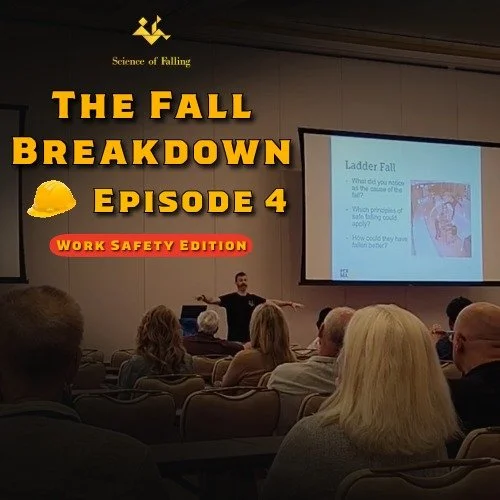
Most people think falls are random accidents like bad luck, a slip, a moment you can’t really do anything about. But when you slow them down and actually look at what’s happening, you start to see something different.
Falls are usually the predictable result of small breakdowns in movement, awareness, and decision-making stacking up in real time.
That’s the idea behind The Fall Breakdown series. Each episode takes real-world falls and breaks them down frame by frame to understand what actually went wrong, what went right, and what principles could have changed the outcome.
In this episode, we shift into workplace safety, using the ROLL SAFE framework as a lens to highlight how positioning, awareness, and reaction shape whether a fall turns into a minor slip or a serious injury.
The goal isn’t just to critique what happened, it’s to build better movement under pressure. How to react faster when balance is lost. How to position yourself so a fall is less severe. And how to train the kind of awareness that shows up before things go wrong. These aren’t abstract ideas, they show up in ladders, stairs, chairs, and everyday work environments.
Watch the breakdowns below and start seeing falls for what they really are, problems you can learn to solve.
Fall Breakdown Episode 4 Recap: What You Can Learn from These Falls
Fall #1: Ladder Fall onto a Trash Can
What Happened in This Fall
A worker standing on a ladder lost his balance and fell backward into a large trash can below. He struck his side and head during the fall.
Why the Fall Happened
The worker was standing on the top portion of the ladder.
No one was stabilizing the ladder.
A large trash can was directly below the work area.
Once the fall started, he had very few options to safely redirect his body.
How It Could Have Been Prevented
Have a coworker stabilize the ladder.
Avoid standing on the top rung.
Remove obstacles and hazards from below the ladder before climbing.
Think about worst-case landing zones before starting the task.
How to Train This Skill
Practice scanning your environment before performing elevated tasks. Build the habit of identifying what you could fall onto, not just what you're working on.
Fall #2: Slip on Cardboard in a Office
What Happened in This Fall
A worker slipped on cardboard lying on the floor while carrying a container. She lost traction and fell backward, hitting the ground.
Why the Fall Happened
Loose cardboard created a slippery surface.
The walking area was cluttered.
She was carrying an object that limited her ability to react during the fall.
How It Could Have Been Prevented
Keep walkways clear.
Remove cardboard and other slip hazards immediately.
Maintain good housekeeping in work areas.
How to Train This Skill
If a fall becomes unavoidable:
Let go of objects that could land on you and throw them off the line of the fall.
Protect your head.
Go with the fall rather than fighting it.
In this example, the worker got lucky because one foot briefly regained traction and slowed her momentum before impact.
Fall #3: Stair Fall While Carrying Boxes
What Happened in This Fall
A worker carrying multiple boxes down a staircase lost her balance and fell forward on the stairs.
Why the Fall Happened
Both hands were occupied.
She wasn't using the handrail.
The load limited her ability to see and react.
Her footwear reduced stability.
Convenience and efficiency were prioritized over safety.
How It Could Have Been Prevented
Carry fewer items at one time.
Keep one hand free for the handrail.
Wear appropriate footwear.
Slow down when navigating stairs with a load.
How to Train This Skill
Practice maintaining balance while carrying objects of different sizes and weights. More importantly, build the habit of keeping one hand available whenever you're using stairs.
One thing she did well: She protected her face and absorbed some of the impact instead of landing directly on her head.
Fall #4: Office Chair Tip-Over
What Happened in This Fall
An employee leaned too far back in an office chair and tipped over backward.
Why the Fall Happened
He shifted his center of mass beyond the chair's base of support.
The chair appeared to be reclined excessively or possibly worn out.
He trusted the chair to support a position it wasn't designed to handle.
How It Could Have Been Prevented
Avoid excessive backward leaning.
Inspect chairs for wear and looseness.
Use properly adjusted office equipment.
How to Train This Skill
When a backward fall starts:
Avoid reaching behind you to stop the fall.
Protect your head and cover up with your hands.
Roll with the momentum, if possible, instead of trying to abruptly stop it.
In this case, the worker appeared to partially roll through the fall, which likely reduced the overall impact.
Big Takeaway
Most workplace falls aren't caused by bad luck. They're caused by small decisions that stack together like cluttered environments, rushed movement, poor positioning, or overconfidence.
The best fall is the one that never happens. But if a fall does occur, protecting your head, removing hazards from your landing zone, and going with the momentum instead of fighting it can significantly reduce the risk of injury.